Exploring the foundations of food-energy-water-nexus education through interdisciplinary educator perspectives
Link to the JSE March 2026 General Issue Table of Contents
Link to Article PDF
Abstract: Food-Energy-Water (FEW)-Nexus-based education supports understanding complex relationships in FEW systems, promoting socio-ecological systems thinking and decision-making about natural resources and sustainability challenges. Our study centers the perspective of educational practitioners to define and describe FEW-Nexus-based education and identify challenges with FEW-Nexus-based education. Using artifacts from workshops and existing literature, we explored the foundations of an integrated framework for FEW-Nexus-based education. These foundations include ontological and epistemological dimensions, which we used to probe deeply into workshop participants’ responses using directed and thematic content analysis. Thematic analysis resulted in themes within four categories: Ecological Contexts within the FEW-Nexus, Social Dimensions of the FEW-Nexus, Collective Beliefs about FEW-Nexus Education, and Social Contexts of Formal and Informal FEW-Nexus Education.
Keywords: Food-energy-water-nexus, educational research, socio-ecological systems, sustainability education, systems thinking
The Food-Energy-Water (FEW)-Nexus provides a context for education about the complex intersections among systems, promoting socio-ecological systems (SES) thinking about natural resources and sustainability (Learning in Places Collaborative [LiP], 2022; Badami, 2025). The National Collaborative for Research on FEW Education (NC-FEW) is a cross-institutional network of educators and education researchers dedicated to advancing the theory and practice of FEW-Nexus-based education. NC-FEW supports collective inquiry into how FEW topics are taught, the challenges students and educators face, and how educational research can address these challenges through contextually responsive and equity-informed frameworks.
Unique to NC-FEW is the collective of educators and education researchers engaged in FEW-Nexus-based educational programming and research across K-12 and postsecondary classrooms, and non-formal learning environments. Research has advanced various aspects of FEW-Nexus-based education, including definitional clarity (Anandhi et al., 2023), perspective from NC-FEW members (Tabassum et al., 2025), guidance for using the FEW-Nexus in K-12 STEM teaching (Campbell et al., 2024; Scherer & Azano, 2025), and a framework and examples for using the FEW-Nexus to implement post-secondary interdisciplinary sustainability education (Romulo et al., 2024). Despite this work, a unifying framework for FEW-Nexus-based education is still absent. Existing resources emphasize instructional design or content but rarely examine how assumptions about systems, educational goals, and learner roles shape teaching and students’ opportunities to engage and apply learning.
This paper builds on previous work in FEW-Nexus-based education, socio-ecological systems, and sustainability education by not only bringing these bodies of work together conceptually, but doing so through an empirical study grounded in the perspectives of a unique interdisciplinary combination of natural and social science educators. Here, we propose a foundation for a four-part framework derived from workshop artifacts generated by participants across disciplinary areas and educational roles. We leveraged these perspectives to address three objectives:
- define and describe the FEW-Nexus;
- define and describe FEW-Nexus-based education; and
- identify and describe challenges with FEW-Nexus-based education.
This foundation includes two ontological dimensions (educators’ assumptions about the nature of social and ecological systems) and two epistemological dimensions (their assumptions about how knowledge and learning occur within educational structures and collective beliefs about teaching, learning, and equity). This foundation supports more intentional design and more coherent research on FEW-Nexus education, contributing to the broader purpose of determining how the FEW-Nexus can advance education, moving local, regional, and global SES toward sustainability and security.
Review of Literature
The FEW-Nexus as a Socio-Ecological System
The FEW-Nexus is a powerful concept in SES research, offering a way to examine the intertwined dynamics of human and natural processes that sustain communities and ecosystems. The FEW-Nexus arose to prominence in the 2010s as a system of interest due to its importance for human survival (Simpson & Jewitt, 2019), relevance at local and global scales (Food and Agriculture Organization of the United Nations, 2014), and outstanding questions about land use change that underlie the FEW-Nexus (Kramer et al., 2017). SESs are complex and adaptive, shaped by nonlinear dynamics across spatial and temporal scales, displaying feedbacks, time lags, and resilience (Caniglia & Mayer, 2021; Liu et al., 2007). SES research benefits from interdisciplinary research teams (Liu et al., 2007), local ecological knowledge (Gadgil et al., 2002), and computational modeling (Holland, 2006).
Resilience is a foundational concept in SES research that is also important in recent FEW-Nexus work (e.g., Jones-Crank, 2024). It serves to bridge social and ecological systems (Adger, 2000), extending recognition of complex adaptive system behaviors from ecosystems to social processes (Folke, 2006). Social resilience describes reactions to external disturbances that could be social, political, and environmental (Adger, 2000). The persistence of ecological dynamics concepts and methodologies (i.e., modeling) in SES research, however, led to the underemphasis of normative questions informed by critical social science approaches that cannot simply be added to system models (Cote & Nightingale, 2012). Cote and Nightingale (2012) draw on work in political ecology and nature-society geographies to help center culture, history, and ethics in SES research. Instead of adapting systems models, they prompt researchers to ask different questions, such as “resilience for who and at what costs to which others?” (p. 485). Similar critiques have emerged for the FEW-Nexus as it has grown in prominence (Simpson & Jewitt, 2019).
Beyond simply understanding the functioning of SES is the need to facilitate practical applications in driving systems change. To this end, Anandhi et al. (2023) developed a framework for helping scientists and practitioners develop their own operational definitions for the FEW-Nexus to aid in planning and implementation of projects. Encompassing a range of SES properties and real-world decisions, Anandhi et al.’s (2023) framework delineates how to describe FEW-Nexus system elements and connections, and identify salient perspectives and approaches that will be used in the FEW-Nexus focused project.
Socio-Ecological Foundations of FEW‑Nexus Education
The FEW-Nexus holds potential as a context for advancing SES thinking in education. Teaching about the FEW-Nexus goes beyond facts about resource use; teaching requires helping students understand how decisions are embedded in systems shaped by ecology, values, governance, and community priorities (Romulo et al., 2024; Van Poeck, 2019). This approach helps students reflect on how competing visions shape FEW-Nexus decisions and futures, including relational perspectives that emphasize reciprocity and humans as part of socio-ecological systems (LiP, 2022). This requires designs that reflect real-world complexity and encourage learners to grapple with uncertainty within authentic contexts (Scherer et al., 2017). Ecological literacy offers a parallel, emphasizing understanding, relationality, context, and participation (Desmarais, 2024).
Equally important is the role of students’ agency in responding to FEW-Nexus challenges. Pedagogical approaches that encourage students to identify, evaluate, and act on sustainability problems in their own lives and workplaces have been shown to foster deeper engagement, stronger motivation, and lasting shifts in perspective (Papania, 2019). Personalizing sustainability through real-world action planning can empower students to see themselves as contributors to change (Fortner et al., 2016). Similarly, Bandura and Cherry (2020) emphasized that both self-efficacy and collective efficacy are critical to developing individuals’ belief in their ability to effect positive outcomes, particularly in the face of global problems that often seem overwhelming. These claims resonate with efforts to cultivate intergenerational resilience and sense of place in community-centered projects, including foregrounding community relationships, storytelling, and youth–elder dialogue as essential to fostering agency in response to socio-ecological disruptions (MacKinnon et al., 2018). Grounded in personal values and oriented toward community action, framing FEW-Nexus education as an opportunity for students to exercise agency can provide both emotional engagement and intellectual rigor, helping students locate themselves in complex systems and imagined pathways (Lombardi & Bailey, 2023; Perez & Isaacson, 2025).
SES perspectives challenge educators and students to examine how individuals and communities are positioned within and shaped by the systems they study and inhabit. In science learning contexts, such relational understanding is supported when instruction emphasizes learners’ identities, prior experiences, and sense of agency (Bae et al., 2025). Van Poeck (2019) suggested that moving beyond the objectivism–relativism dichotomy in sustainability and environmental education involves recognizing that learners make sense of complex issues through situated, value‑laden encounters with both knowledge and lived experience. In FEW‑Nexus education, this means acknowledging how social identities, geographies, and disciplinary backgrounds shape how people interpret sustainability challenges (Schraw et al., 2013; Van Poeck, 2019). These concerns also highlight relational ways of knowing, like kincentric conceptions of human–environment connection, as critical for resilience in complex SES (MacKinnon et al., 2018), extending beyond Western epistemilogies by centering interdependence, respect, and reciprocity as important considerations to understand sustainability. SES thinking is not just an educational goal but a pedagogical foundation for navigating sustainability challenges.
Perspectives and Practices in FEW-Nexus Teaching and Learning
Members of the NC‑FEW community have begun integrating socio-ecological dimensions into conceptualizations and instructional strategies that reflect interdependence, even as foundational questions about meaning, purpose, and design remain open. Tabassum et al. (2025) documented how NC-FEW members conceptualize the FEW-Nexus, emphasizing that disciplinary background, institutional context, and underlying goals shape how educators define and teach about interconnected systems. They investigated how members conceptualized the FEW-Nexus perspective, and their self-efficacy in teaching and education research, revealing that the community views the FEW-Nexus as an interdependent system intertwining sustainability goals and educational possibilities. Respondents described the FEW-Nexus as interdisciplinary and connected to human well-being, resource interdependence, and social equity. They emphasized systems thinking, science literacy, and educational networking, but noted variability in self-efficacy; educators felt more confident in general STEM instruction than in FEW-Nexus-specific contexts.
The conceptual variability and uneven self-efficacy identified by educators point to a broader challenge: how to design instruction that reflects FEW-Nexus complexity and helps educators and students navigate its social and ecological stakes with confidence. Campbell et al. (2024) offered one response to this challenge by encouraging teachers to design instruction around the entanglement of human and natural systems and to help students explore how FEW decisions shape community well-being at multiple scales. They recommended instructional tools (e.g., causal-loop modeling, community asset mapping, and photovoice) foregrounding systems thinking, participatory design, and co-creation of more just futures. Scherer and Azano (2025) extended this orientation, emphasizing how integrated STEM instruction must also engage with place, story, and rural community contexts, and situating SES thinking to foreground equity, history, and local knowledge through a critical pedagogy of place and rural literacies. Their framework anchors STEM learning to local narratives about FEW-Nexus issues, framing these narratives as both pedagogical resources and epistemological positions shaping how knowledge is understood.
In higher education settings, recent work has explored how sustainability competencies can be developed through interdisciplinary approaches. Romulo et al. (2024) presented ten postsecondary curricular examples, illustrating how the FEW-Nexus can serve as both content and structure for interdisciplinary sustainability education. Their analysis drew on established sustainability frameworks (Redman & Weik, 2021) to connect instruction with competencies such as systems thinking, collaboration, futures thinking, and values reasoning. They identified three design strategies that cut across institutional contexts: grounding learning in real-world systems, addressing tensions around equity and sustainability, and supporting integration across disciplinary boundaries. These strategies offered practical entry points for teaching about the FEW-Nexus while also raising deeper questions about how students engage with complexity, uncertainty, and value-laden decision-making. Additional work highlighted innovations in interdisciplinary research training, graduate student research experiences, and tribal community partnerships situated within the FEW-Nexus (Chief et al., 2021; Murray et al., 2023). Collectively, this literature underscores the need for research clarifying how individuals conceptualize and enact FEW-Nexus in educational contexts, a focus that guided this study.
Methods
We conducted a qualitative content analysis of workshop artifacts, complemented by descriptive and inferential statistics to examine the distribution of responses across categories. Our analytic process included several steps: (a) gathering and preparing written artifacts generated in NC-FEW workshops, (b) segmenting and coding artifact quotations through a directed content analysis, (c) developing themes within ontological and epistemological dimensions through iterative thematic content analysis, and (d) conducting quantitative descriptive analyses to provide additional context for interpreting the thematic findings. We ensured reliability through consensus building, intraclass correlation coefficient (ICC) estimation, and memoing.
Study Context and Participants
NC-FEW members held workshops at annual conferences of eight professional and academic associations with an aligned interest in the Food-Energy-Water Nexus: American Association of Geographers, Association of Environmental Studies and Sciences, Earth Educators Rendezvous, International Association for Society and Natural Resources, Geological Society of America, North American Association for Environmental Education, North American Colleges and Teachers of Agriculture, and Soil and Water Conservation Society. Additionally, NC-FEW leadership hosted a virtual version of the workshop with open registration. Workshops were advertised with the topic of Improving Food-Energy-Water-Nexus-based Education: Defining new research directions from problems of practice and were open to anyone interested in the topic, drawing principally educators, including scientists with teaching roles.
Facilitators used a standardized structure (Scherer et al., 2025) that prompted participants to reflect on: (a) how the FEW-Nexus relates to their specific contexts, (b) the challenges they face in teaching and learning about the FEW-Nexus, and (c) their suggestions for addressing these challenges. Workshop groups ranged in size from 3 to 20 participants. We did not collect individual demographic data; instead, we treated intact workshop groups as one level of analysis. This decision aligned with our focus on the collective production of ideas rather than individual perspectives and reflects the diversity of disciplinary and institutional contexts present across the NC-FEW community.
Data Collection and Preparation
Workshop facilitators collected written artifacts from each session and submitted them to the research team. These artifacts consisted primarily of digital photographs of whiteboards and large-format tearsheets that recorded ideas generated during workshop activities. The Virginia Tech IRB determined this study to be “Not Research” under the federal definition. Following the procedures outlined in that determination, facilitators provided participants the opportunity to opt out by anonymously identifying any ideas or phrases they did not want included; we removed these entries prior to transcription.
We transcribed artifacts into text, preserving wording and shorthand. Spelling was corrected for readability, but grammar, punctuation, and stylistic elements remained intact. Resulting transcripts averaged 618 words per workshop, with a total of 5,564 words. This produced 435 artifact quotations, a semantically coherent statement expressing a single idea that was our fundamental unit of analysis, which ranged from single words (e.g., “equity”) to extended statements with multiple clauses (e.g., “curriculum connects social needs + physical science”). We excluded illegible entries but retained duplicated entries, as each instance represented independent emphasis by a different group. We developed segmentation guidelines to distinguish between compound and independent ideas. We treated multi-clause statements as a single quotation if the clauses were tightly connected (e.g., “ground water hydrology and impacts of coal runoff”), but separated them if they combined distinct foci (e.g., “student diversity in disciplinary background; need for collaboration”). We imported the dataset into Atlas.ti (version 25) to manage coding, retrieve coded quotations, and write analytic memos.
Analytic Approach and Procedures
Our analysis proceeded in two stages: a directed content analysis followed by thematic content analysis. We compared quotations, looked for commonalities, and refined categories to capture nuanced aspects of participants’ responses. Within each category, we developed themes that represented patterned meaning across quotations. Thus, the analytic process combined deductive and inductive elements: we began with categories grounded in literature and prior work, but we allowed participants’ responses to shape the final framework.
Directed Content Analysis
We used directed content analysis (Hsieh & Shannon, 2005) in the first stage because prior NC-FEW research and socio-ecological literature already suggested two guiding dimensions—ontological and epistemological—that describe how participants conceptualized the FEW-Nexus and its educational implications. Each dimension was divided into two categories based on our theoretical framing: ecological contexts and social dimensions for the ontological dimension, and collective beliefs and social contexts for the epistemological dimension. These categories provided an initial structure for analysis and ensured that analysis remained consistent with our conceptual framing. We began coding by independently applying these preliminary categories to one workshop. Where discrepancies arose, we resolved them by clarifying distinctions between categories, revising category descriptions and inclusion and exclusion criteria accordingly. We then independently coded a second workshop with the updated codebook, again identifying and resolving discrepancies. After this round, we finalized a working version of the codebook for the categories (Table 1 in Scherer & Lombardi, 2025). We then divided the remaining workshops between the two coders. Each of us coded independently but wrote memos to flag uncertainties and potential refinements. We met periodically [~10 times] to review difficult cases, confirm consistent application of the codebook, and ensure alignment across the dataset.
Thematic Content Analysis
We then conducted thematic content analysis to identify themes within each category, starting with inductively developing subcodes from the data. We examined quotations coded to a given category, compared their meanings, and generated subcodes that captured distinct emphases. We then clustered related subcodes and consolidated overlapping ideas to generate broader themes. We finalized themes when they demonstrated (a) coverage across the dataset, (b) conceptual coherence, and (c) distinctiveness from other themes. We also checked that themes appeared in multiple workshops rather than in a single group only. Each researcher concentrated on categories that matched their expertise: one coded the social dimensions of the FEW-Nexus and collective beliefs about education, while the other coded ecological contexts and social contexts. After completing independent coding, both researchers reviewed the full dataset to check for coherence across dimensions. Both researchers reviewed all candidate themes, discussed borderline cases, and refined theme labels to ensure clarity, resulting in a codebook for the final themes (Tables 2 & 3 in Scherer & Lombardi, 2025).
Analytical Rigor, Reliability, and Validity of Coding
We used several strategies to enhance the rigor, reliability, and validity of our analysis. We maintained an audit trail of analytic decisions by saving sequential versions of the codebook. We engaged in analytic memoing after each coding round. In these memos, we recorded questions, patterns, and reflections on how our disciplinary expertise influenced interpretation. We held peer debriefing sessions that allowed us to challenge assumptions, check interpretations against the data, and refine theme definitions. We also considered how workshop design may have shaped responses. Because prompts emphasized institutional and disciplinary contexts, we interpreted the prominence of social contexts as a product of both participants’ salience and workshop design.
To further assess the structural coherence and stability of the coding framework, we examined the distribution of quotations (N = 435) across the six categories. This examination was intended to gauge relative prominence and consistency in category use rather than to test substantive theoretical claims. Quotations were distributed as follows: social dimensions of the FEW-Nexus (26; 5.98%), ecological contexts within the FEW-Nexus (12; 2.76%), collective beliefs about FEW-Nexus education (125; 28.7%), social contexts of formal and informal FEW-Nexus education (230; 52.9%), research quotations not fitting into the above categories (5; 1.15%), and other quotations outside the scope of this study (37; 8.51%).
To characterize these patterns more formally, we estimated Bayesian binomial models comparing observed frequencies to an equal-distribution reference model. Evidence for or against differences was quantified using Bayes factors (BF₁₀). Values greater than 1 indicate support for quotation frequency differing from chance and values less than 1 indicate support for frequency consistent with chance.
The analyses provided overwhelming evidence for differences in several categories: collective beliefs (BF₁₀ = 2.38 × 10¹⁶), ecological contexts (BF₁₀ = 2.48 × 10¹⁰⁵), and social dimensions (BF₁₀ = 4.41 × 10⁸⁶). These very large BF₁₀ values indicate decisive evidence that these categories were either over or under represented relative to equal expectations. In contrast, responses coded as social contexts yielded a BF₁₀ = 0.12, providing moderate evidence that this category occurred at levels consistent with chance expectations. This is notable because we applied the social context code most often. While most categories departed from equal distribution, social contexts aligned with expectations; this suggests that participants consistently framed FEW-Nexus education through institutional and disciplinary conditions, reflecting the collective salience of social contexts within the NC-FEW community.
We also conducted a Bayesian contingency analysis to gauge differences across workshops, with workshop as the row factor and response categories as columns. To do this, we used a multinomial model, an extension of the binomial framework that is appropriate when a fixed number of observations are classified into more than two mutually exclusive categories. This model assumes (a) the total number of responses is fixed, (b) each response is placed into exactly one category, (c) the category probabilities remain constant across trials, and (d) responses are independent. In our study, participants generated a fixed number of artifact quotations (N = 435) coded into specific categories. The analysis yielded BF₁₀ = 2.99 × 10⁻⁸, providing extreme evidence for consistent distributions across workshops, suggesting that participants emphasized similar categories regardless of professional society context. Taken together, these descriptive findings provide a foundation for the thematic content analysis.
During code construction and to complement consensus processes, we estimated inter-coder reliability. We calculated an ICC on a sample of [N = 80] quotations coded by both researchers. Specifically using ICC model 3 (ten Hove et al., 2024), which assumes that the two raters are a fixed, non-random population (as was the case with this study where both authors served as raters), our initial rater reliability value was low (= 0.29). This low value likely reflected discrepancies when we applied multiple codes to a single quotation, and therefore, we restricted reliability analysis to primary codes, refined operational definitions, and re-coded the sample. The ICC then increased to a value greater than 0.75, which is generally considered above the threshold of acceptable rater reliability. Follow-on ICC checks indicated coding reliability values above 0.75. Finally, we treated reliability statistics as a supplement to consensus-building, not a replacement.
Results
Analysis revealed that participants’ responses engaged both with the nature of the FEW-Nexus itself and with ideas about how teaching and learning should occur in FEW-related contexts. We organized these perspectives into two overarching dimensions (Figure 1). The ontological dimension reflects how participants conceptualized the FEW-Nexus as a socio-ecological system, encompassing interdependent ecological processes and human social dynamics. The epistemological dimension reflects how participants described education about the FEW-Nexus, including collective beliefs, pedagogical commitments, and the structures that shape teaching and learning. Together, these dimensions provide the structure for the framework we present in the thematic analysis.
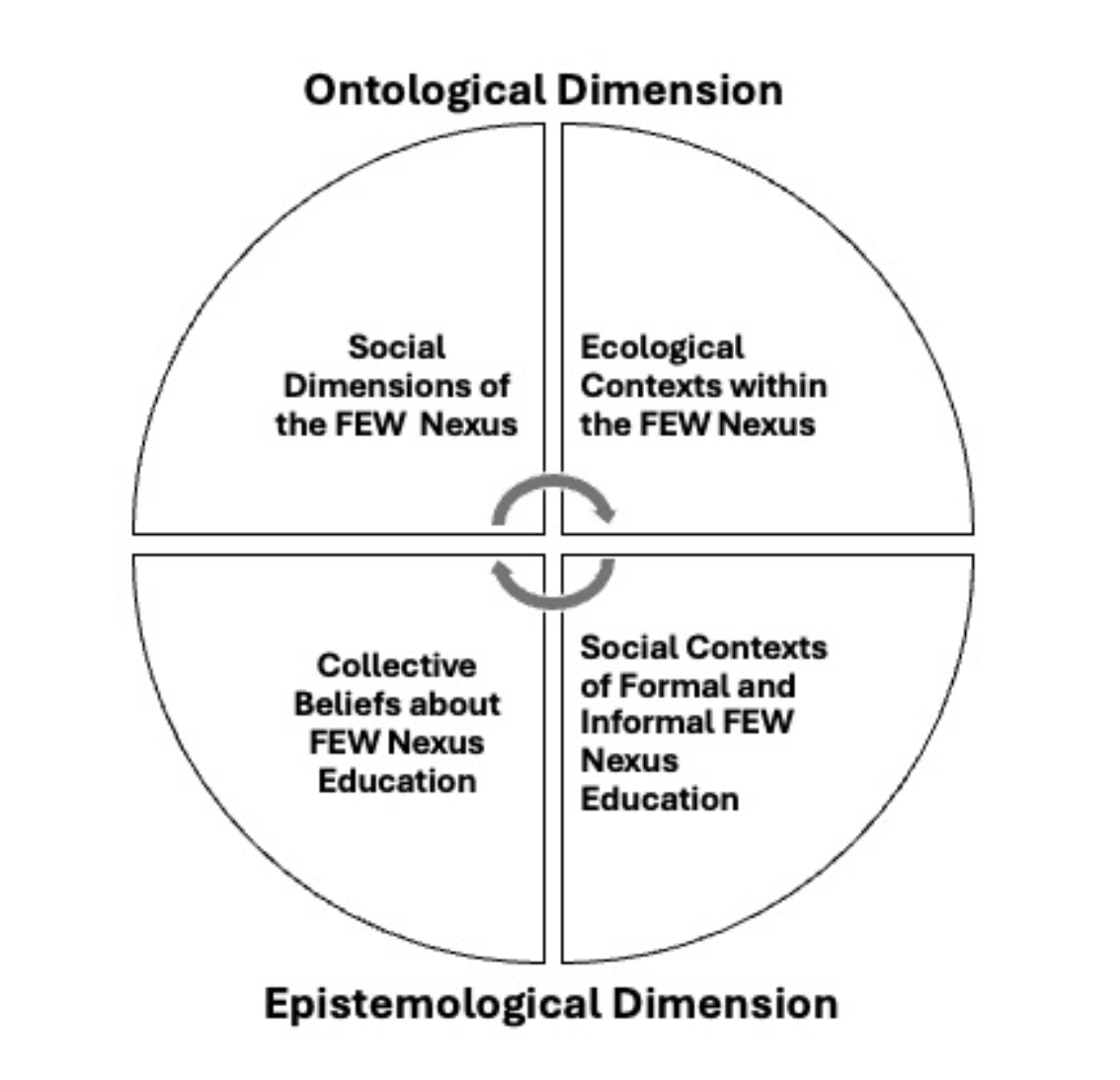
Figure 1. Dimensions and categories that guided thematic analysis.
Ontological Dimension
The ontological dimension reflected participants’ thoughts of the FEW-Nexus as a site of interdependence, shaped by ecological contexts and social forces (Caniglia & Mayer, 2021). We developed two categories within the ontological dimension: Ecological Contexts within the FEW-Nexus and Social Dimensions of the FEW-Nexus, with one crosscutting theme.
Scale, Complexity, and Systems Crosscutting Theme
In this crosscutting theme, participants described the complex systems nature of the FEW-Nexus, highlighting that it is layered and multiscalar with interdependent FEW systems. Participants emphasize system level concepts, such as “polycomplexity/ multiscalarity” and “temporal & spatial scale, Ex: dam impacts from individual to region; dam impacts in long term.” This theme focuses on general characteristics of the FEW-Nexus, with references to specific social or ecological aspects coded within the relevant categories.
Ecological Contexts within the FEW-Nexus
This category focuses on the biophysical and environmental systems that structure the FEW-Nexus. In this category, we developed one theme, Processes and Consequences. Participants briefly described concepts related to specific ecological and environmental processes, such as “ground water hydrology,” and impacts of human activity, such as “coal + river runoff + ag fields.”
Social Dimensions of the FEW-Nexus
This category captures statements about the human and societal dimensions of the FEW-Nexus. Because this category included more participant responses than the ecological contexts category, we developed four themes that characterize participants’ ideas. First, participants called for a Critical Social Science and Ontological Reframing of the FEW-Nexus. This includes rethinking dominant ways of knowing about FEW-related systems, drawing on ideas from political ecology, frameworks such as intersectionality, and addressing the social construction of knowledge/power. For example, recognizing that “science is not apolitical! (e.g., political ecology, moving away from ‘objective, unbiased science’).” Participants also emphasized Power, Inclusion, and Justice, noting how structures and marginalization shape FEW-Nexus experiences. For example, participants wrote “power dynamics ⇨ who is or is not included” and “connection to livelihoods, (livelihood disruption), inequity/disparity (winners & losers ⇨ some can recover & some can’t).” In Equity of Access and Interdependence, participants focused on material access to resources (FEW) and the functional interdependencies between FEW systems. While inequities were acknowledged, participants in this theme focused more directly on access to food, energy, and/or water systems, such as “access to one (i.e. energy) impacts access to other (i.e. water).” Finally, Governance, Policy, and Decision-Making focused on formal and informal systems for making decisions about FEW systems. Participants mentioned laws, decision-making boards, and participatory processes, again situating science within the social context. One participant wrote, “Policy… Water law!… Montana drought board – people make decisions, not just scientific.” Taken together, participants’ responses emphasized the need for a critical lens that situates access to FEW systems and participation in related decision-making as complex and contested.
Epistemological Dimension
In the epistemological dimension (Schraw et al., 2013), participants emphasized the importance of interdisciplinary collaboration, inclusive pedagogy, and place-based engagement in educational contexts that are inclusive of formal and non-formal settings at all stages (Pre-K through adulthood). These values shaped how they articulated both the goals and the practical realities of FEW-Nexus education, as reflected in the two categories developed within the epistemological dimension: Collective Beliefs about FEW-Nexus Education and Social Contexts of Formal and Informal FEW-Nexus Education.
Collective Beliefs about FEW-Nexus-based Education
This category reflects shared values and pedagogical perspectives about what FEW-Nexus education is for and how it should function. It includes beliefs about relevance, civic engagement, experiential learning, and the societal role of FEW-Nexus based education. In this category, we developed eight themes that characterize the findings.
Three themes center on beliefs about cognitive and affective outcomes for learners and educators who engage in FEW-Nexus-based education. In the theme Cognitive and Social Construction of Knowledge about FEW Science and FEW Interdisciplinarity, participants articulated the idea that instruction should support development of conceptual understanding related to the FEW-Nexus, engagement with uncertainty, metacognitive reflection, and critical thinking. For example, one participant wrote that “cognitive dissonance [is] useful.” In concert with these ideas, participants also emphasized Systems Thinking as a Core Educational Aim for addressing FEW-related challenges. This theme describes the belief that learners should develop the ability to reason across complex, interdependent systems (e.g., FEW), such as “embracing complexity; not everything needs to be a clean, linear story.” Finally, in Student and Instructor Identity and Agency Development participants shared the belief that education should cultivate both students’ and instructors’ sense of identity and agency. FEW-Nexus based education encourages confidence, autonomy, and belonging in complex domains, for example “empowering students such that they feel like they can do the work before they have the knowledge.” Together, these themes describe foundational beliefs about FEW-Nexus-based education supporting knowledge construction and identity development through complex systems thinking.
Two themes communicate beliefs about the broader purpose of FEW-Nexus-based education. In Civic and Societal Relevance of Education, participants articulated the belief that education should prepare students to engage with real-world challenges and societal needs, especially through civic involvement and public relevance. The FEW-Nexus can help situate disciplines themselves in a broader context, such as “demonstrat[ing] societal relevance of geoscience.” Relatedly, participants articulated the Relevance of FEW to Curriculum and Student Futures. In this theme, the belief that FEW-Nexus content should support broader educational aims is centered. This includes career readiness, problem-solving, or curriculum alignment with real-world issues, such as “curriculum connects social needs + physical science.” Together, these themes position the FEW-Nexus as a vehicle for deepening ways in which the curriculum and/or learning episodes are connected to the broader societal context in which learners operate.
Three themes emerged that relate to beliefs about how FEW-Nexus-based education should be implemented. First, participants placed an emphasis on Interdisciplinary Collaboration and Integration, expressing the belief that FEW-Nexus based education should integrate perspectives from multiple disciplines to address complex issues. In this theme, collaboration and synthesis across fields is something that should be experienced by learners, such as “the interaction among having 10 experts in a room and making something happen.” In the second theme, participants expressed a commitment to Inclusive and Equity-Oriented Pedagogy. This theme articulates the belief that education should intentionally include diverse perspectives and challenge dominant framings, particularly by addressing marginalization or colonial histories. This includes acknowledging that “there’s this colonized view of education” and that the FEW-Nexus is “important for incorporating marginalized voices in academia.” Finally, participants expressed a commitment to Experiential and Place-Based Learning as an impactful approach to FEW-Nexus-based education. In this theme, the belief that learning should occur through direct experience, such as “experiential learning outside the classroom,” was articulated, particularly when grounded in local or regional context, such as “place-based examples link to relatable outcome.” Fieldwork, outdoor learning, and situated understanding were emphasized by participants. Thus, these three themes communicate a vision for how FEW-Nexus-based education can (and should) be designed through interdisciplinary approaches, inclusive pedagogy, and a strong connection to place.
Social Contexts of Formal and Informal FEW-Nexus Education
This category described how educational systems, institutions, and educator communities structure teaching and learning about the FEW-Nexus and the needs, challenges or barriers encountered in attempts to carry out FEW-Nexus-based education. In this category, we developed eight themes that characterize the findings.
Three themes collectively articulate the variability and evolving nature of FEW-Nexus-based education. In Community Defining the Concept of FEW for Education, participants expressed that even the concept of FEW and the goals for FEW-Nexus education are not fixed, such as “Topics like oceanography have standard curriculum + text books. Every FEW course is different because no overarching principle or texts [exist].” Concerns about power dynamics in what knowledge is valued, lack of common goal/principles, abstractness of the FEW-Nexus, and the relationship with existing concepts/disciplines need to be addressed in order to move forward. Similar tensions arose as participants described the needs of learners, particularly students in formal educational settings. In Student Diversity in FEW-Nexus Education, participants articulated their knowledge of the diversity in student disciplinary and personal backgrounds, emphasizing that they are not monolithic in how they show up in FEW-Nexus educational spaces. Students have different background knowledge and personal experiences with FEW related values and access which require intentionality in addressing. For example, one participant wrote “students with physical vs social science backgrounds [are] bringing very different perspectives for foundational knowledge of FEW.” Finally, the role of Expertise and Educator Knowledge of the FEW-Nexus was salient to the ability of educators entering into the interdisciplinary context of FEW-Nexus education. Concerns about limitations in participant’s own knowledge about aspects of the FEW-Nexus that fall outside of their “comfort zone” were paired with a desire to expand knowledge and find collaborators in other disciplines: “limitations to knowledge across disciplines creating need for collaboration.” Collectively, these themes represent key aspects of the social context in which FEW-Nexus-based education occurs, articulating that using the FEW-Nexus as an organizing idea in educational spaces requires adaptation and adjustment.
Two themes relate to ideas about how FEW-Nexus-based education can be organized and enacted and how it is connected to stakeholders and policies. In Curricular Structures and Educational Contexts to Implement FEW-Nexus Education, participants gave examples of ways in which it can be implemented in postsecondary, K-12, and Extension and community educational settings, however existing structures are a source of constraint. Concerns include educator control, sequencing (when and how to introduce/teach FEW), (inter)disciplinary context, and scale/scope, but there is an impetus to “find ways to do things anyways.” Participants also described External Connections and Considerations, ways in which FEW-Nexus-based education is connected to and influenced by factors outside the immediate educational environment. Participants described wanting to connect with community partners, provide opportunities for civic engagement, and engage with external stakeholders, while acknowledging that “working with partners is so much messier than controlling the environment.” Additional concerns about constraints from existing policies, educational standards, stakeholder priorities, and political implications were expressed alongside desire to advocate for systemic change, such as “advocat[ing] for updated K-12 [standards].” Together, these themes paint a picture of the systems and structures in which FEW-Nexus-based education is situated, naming important constraints and opportunities.
Participants described three interrelated types of needs that would help them and the broader community of educators implement FEW-Nexus-based education. First, Educator Support is Needed to Implement FEW-Nexus Education. Support for both inservice and pre-service educators was articulated as trainings and workshops, networks, and opportunities for collaboration, such as a desire for “international collaboration among educators.” Second, Tools for Teaching with the FEW-Nexus are Desired. Participants were seeking resources to support FEW-Nexus education, highlighting the “lack of resources to bring this into the classroom.” Of particular interest are case studies, open access activity/module collections, online datasets, and assessments. As one participant wrote, “developing teaching material you feel comfortable [with] require[s] a lot of time & energy; have some plug & play modules.” Finally, there was a strong articulation of Human and Financial Resources needed to implement FEW-Nexus-based education. Participants emphasized the need for new investments in time, money, and personnel, plus institutional support for course loads, aligning expectations, collaboration or co-teaching, removing barriers, incentivizing FEW education, and valuing the scholarship of teaching and learning (SoTL). Financial investments in programs, curriculum development, student support, and faculty time were desired, with the potential for increased student retention and enrollment described as outcomes. Taken together, supports for educators, development of new tools, and providing human and financial resources represent significant areas of investment that participants identified to enable the growth of FEW-Nexus-based education.
Discussion
Our study contributes to emerging scholarship on FEW-Nexus-based education by showing how educators conceptualize both the socio-ecological nature of the FEW-Nexus and the pedagogical commitments that shape its teaching and learning. Drawing on workshop artifacts, we identified patterns in how workshop participants framed the FEW-Nexus as a system of interdependence and how they articulated collective beliefs and social contexts that influence FEW-Nexus learning. In the following discussion, we present our findings in relation to the ontological and epistemological dimensions of the framework, then turn to limitations, implications for practice and implications for future research. In doing so, we return to our guiding objectives: to define and describe the FEW-Nexus for education, to characterize FEW-Nexus-based education, and to identify the challenges educators face in enacting it.
Ontological dimension
Our findings for the ontological dimension support the idea that educators conceptualize the FEW-Nexus as a complex socio-ecological system. Participants’ understanding of the FEW-Nexus included the layered, interdependent, and multiscalar nature of complex SES (Liu et al., 2007). The ecological contexts described generally align with the authentic complex Earth and environmental systems framework from Scherer et al. (2017), which emphasized environmental decision making and focused on ecological systems. Participants emphasized social dimensions of the FEW-Nexus, calling for a critical lens on equity and justice. These findings align with SES research in human geography that highlights power and value systems (see Cote & Nightingale, 2012) and the parallel values-thinking competency in sustainability education (Brundiers et al., 2000). This is in contrast to foundational FEW-Nexus assessments that focused on global resource security, and were underdeveloped in their consideration of livelihoods and the environment (Simpson & Jewitt, 2019). Our findings, such as those related to the interdependence of material access, impacts of human activity, and the role of decision-making structures, correlate with the concept of resilience (Adger, 2000; Folke, 2006). If the theoretical treatment of both social and ecological resilience is appropriate, resilience can serve as a foundational bridging concept between social and ecological systems (Cote & Nightingale, 2012; Folke, 2006), helping educators and learners to develop an ontologically grounded conception of the FEW-Nexus as a socio-ecological system. Recognizing relational and non-Western ontologies within this conception foregrounds how different knowledge systems, particularly those emphasizing coexistence and responsibility, can expand how educators and learners approach socio-ecological interdependence (LiP, 2022).
Epistemological dimension
Our findings related to collective beliefs about FEW-Nexus education align with previous work in sustainability and environmental education as well as FEW-Nexus specific studies. FEW-Nexus-based education supports agency and identity development (Papania, 2019) and systems thinking (Romulo et al., 2024; Scherer et al., 2017). FEW-Nexus based education can (and should) be designed through interdisciplinary approaches (Romulo et al., 2024), equity-oriented pedagogy (Campbell et al., 2024), and a strong connection to place (Scherer & Azano, 2025). Our findings point to the need to challenge dominant framings and address marginalization in FEW-Nexus-based education through kin-centric approaches (MacKinnon et al., 2018), linking classroom learning to broader social contexts (Romulo et al., 2024) and communities (Chief et al., 2021), and supporting learners in addressing the value-laden nature of knowledge in SES (Van Poeck, 2019). Participants’ views of FEW-Nexus-based education align with the SES nature of the Nexus, emphasizing interdependencies and the role of power and values in education.
Our findings related to social contexts indicate that the interdisciplinary and evolving nature of the FEW-Nexus as a framework for education is both promising and a source of challenges for educators. Aligned with the findings of Tabassum et al. (2025), participants expressed concerns with the limits of their own expertise. Mirroring the SES research community (Liu et al., 2007), FEW-Nexus-based education benefits from interdisciplinary teams (Romulo et al., 2024), as does sustainability education (Brundiers et al., 2000). As participants expressed, this poses a challenge when working within existing educational systems and structures. In the area of tools for teaching, participants called for resources including case studies and activity collections; while online datasets were mentioned, computational modeling, a prominent tool in SES research (Holland, 2006), was not explicitly described. As Cote and Nightingale (2012) emphasized, however, normative questions cannot be addressed through computational approaches. As the collective beliefs found in our study align more with this critical lens, qualitative case studies may be more generative within FEW-Nexus-based education.
Limitations
Our study lays empirical groundwork for a framework to guide future work in FEW-Nexus-based education and shows promise in its alignment with previous work. There are, however, several limitations that must be acknowledged. First, our sole data source was written artifacts from workshop sessions. Thus, the dataset likely does not reflect the totality of what was discussed and shared in the workshops. Relatedly, not analyzing data at the individual level and relying on synthesis notes may have led to some homogenization of the dataset. These gaps could be addressed through additional research that includes interviews and/or open-ended questionnaires to add depth and individual perspectives to the foundations developed here. Additionally, our study is limited to educator perspectives and does not include empirical data on educational practice, such as classroom observations and student outcomes. Future studies should build on this foundation with educational research studies conducted in authentic educational settings.
Implications for practice
Our work has powerful potential implications for practice. Combined with social awareness, ontological categories allow people to use their scientific knowledge in a specific context (Bourke, 2018; Cote & Nightingale, 2012; Kayumova & Dou, 2022). Pursuing an ontologically grounded conception of SES may be conducive to obtaining deeper and more holistic insights into how we interact with others and the environment (Lombardi et al., 2024). Meaning making of FEW phenomena involves cognitive and social knowledge construction in traditional and active learning, informing educational design (Lombardi et al., 2021), which informs the design of educational experiences. While our findings highlighted the evolving nature of the FEW-Nexus as a framework for education, we recommend that educators anchor their efforts in SES as an established framework to guide design of learning experiences (see Van Poeck, 2019). Additionally, our work reinforces the connections between established sustainability education competencies (Redman & Wiek, 2021) and FEW-Nexus-based education in higher education that were identified by Romulo et al. (2024). Thus, we reinforce their recommendation that the FEW Nexus be used as a framework to develop these competencies. Findings related to Collective Beliefs about FEW-Nexus Education can help guide educators in the design of powerful FEW-Nexus-based learning experiences and the Social Contexts of Formal and Informal FEW-Nexus Education findings revealed several priority areas of need that should be addressed to support implementation of FEW-Nexus based education in a wide range of educational contexts.
Implications for research
Our study guides future educational research on specific elements of the framework. In the ontological dimension, research should examine how educators and students conceptualize the FEW-Nexus’s complex systems, ecological contexts, and social dimensions. Building on previous efforts in science education research, K-12 education researchers can further explore instructional scaffolding and curriculum spiraling based on learning progressions in SES (Gunckel et al., 2012), with a specific emphasis on the FEW-Nexus. Our findings suggest that positioning the FEW-Nexus as both content and structure could help students develop systems thinking, agency, and critical awareness, defining an important area for further research on student learning in FEW-Nexus-based education. Consistent with broader calls to integrate cognitive-epistemic and social-institutional perspectives on nature of science teaching and learning (Dagher & Erduran, 2016), work specific to the FEW-Nexus and focusing on place-based and justice-oriented pedagogies (Campbell et al., 2024; Herrick et al., 2025) suggests further study of classroom practices like modeling, causal-loop analysis, and community data talks to deepen engagement with value-laden decision-making. Such work might specifically address the collective beliefs and social contexts our study highlights, advancing a coherent framework for FEW-Nexus education that is responsive to both disciplinary knowledge and community priorities. More broadly in environmental and sustainability educational contexts, the framework developed by Van Poeck (2019) can be used in research on FEW-Nexus education. Our findings demonstrate that FEW-Nexus-based education aligns with an SES approach linking content (ontological dimension) and teaching methods (collective beliefs) in educational research (Van Poeck, 2019), while recognizing relational perspectives (MacKinnon et al., 2018) and local knowledge (Gadgil et al., 2002) across socio-ecological systems.
Acknowledgements
This material is based upon work supported by the National Science Foundation under Grant No. 2242276 (ECR-EHR Core Research). Any opinions, findings, and conclusions or recommendations expressed in this material are those of the authors and do not necessarily reflect the views of the funding agency. We would like to thank the workshop leaders from across NC-FEW, Jerry Burgess, Shondrika Burrell, Susan Caplow, Anil Kumar Chaudhary, Bradlee Cotton, Leah Jones-Crank, Chelsie Romulo, Nicole Sintov, and Robert Williams, and workshop participants for sharing their ideas with us. This manuscript benefited from insights provided by Todd Campbell and Bhawani Venkataraman.
References
Adger, W. N. (2000). Social and ecological resilience: are they related? Progress in Human Geography, 24(3), 347-364. https://doi.org/10.1191/030913200701540465
Anandhi, A., Srivastava, P., Mohtar, R. H., Lawford, R. G., Sen, S., & Lamba, J. (2023). Methodologies and principles for developing nexus definitions and conceptualizations: Lessons from FEW nexus studies. Journal of the ASABE, 66(2), 205-230. https://doi.org/10.13031/ja.14539
Badami, M. G. (2025). Education for sustainability – as if people and the environment matter. The Journal of Sustainability Education, 31(May 2025). https://www.susted.com/wordpress/content/education-for-sustainability-as-if-people-and-the-planet-matter_2025_05/
Bae, C. L., Matewos, A. M., & Fife, J. (2025). Supporting student voice in science classrooms: The limits of psychosocial approaches and the importance of sociocultural and critical perspectives on student agency. Educational Psychologist, 60(1), 48-68. https://doi.org/10.1080/00461520.2024.2370549
Bandura, A., & Cherry, L. (2020). Enlisting the power of youth for climate change. American Psychologist, 75(7), 945-951. https://doi.org/10.1037/amp0000512
Bourke, R. (2018). Self-assessment to incite learning in higher education: developing ontological awareness. Assessment and Evaluation in Higher Education, 43(5), 827-839. https://doi.org/10.1080/02602938.2017.1411881
Brundiers, K., Barth, M., Cebrián, G., Cohen, M., Diaz, L., Doucette-Remington, S., Dripps, W., Habron, G., Harré, N., Jarchow, M., Losch, K., Michel, J., Mochizuki, Y., Rieckmann, M., Parnell, R., Walker, P., & Zint, M. (2021). Key competencies in sustainability in higher education—toward an agreed-upon reference framework. Sustainability Science, 16(1), 13-29. https://doi.org/10.1007/s11625-020-00838-2
Campbell, T., Burrell, S., Fick, S. J., Herrick, I., McGowan, V. C., Fazio, X., & Lombardi, D. (2024). Practice Brief 96: Understanding how food, energy, and water decisions affect the thriving of local, regional, and global systems. STEM Teaching Tools. https://stemteachingtools.org/brief/96
Caniglia, B. S., & Mayer, B. (2021). Socio-ecological systems. In B. S. Caniglia, A. Jorgenson, S. A. Malin, L. Peek, D. N. Pellow, & X. Huang (Eds.), Handbook of environmental sociology (pp. 517-536). Springer International Publishing. https://doi.org/10.1007/978-3-030-77712-8_25
Chief, K., Arnold, R., Curley, A., Hoover, J., Kacira, M., Karanikola, V., Simmons-Potter, K., & Tellman, E. (2021). Addressing food-energy-water insecurities of the Navajo Nation through university-community collaboration. Water Resources IMPACT, 23(1), 31-33. https://wrrc.arizona.edu/sites/default/files/2022-10/Chief_et_al_WWPs_AWRA_IMPACT.pdf
Cote, M., & Nightingale, A. J. (2012). Resilience thinking meets social theory: Situating social change in socio-ecological systems (SES) research. Progress in Human Geography, 36(4), 475-489. https://doi.org/10.1177/0309132511425708
Dagher, Z. R., & Erduran, S. (2016). Reconceptualizing the nature of science for science education: Why does it matter? Science & Education, 25(1/2), 147-164. https://doi.org/10.1007/s11191-015-9800-8
Desmarais, R. (2024). Ecological literacy: Definition, early articulations, frameworks and empirical research. The Journal of Sustainability Education, 29(March 2024). https://www.susted.com/wordpress/content/ecological-literacy-definition-early-articulations-frameworks-and-empirical-research_2024_04/
Folke, C. (2006). Resilience: The emergence of a perspective for social–ecological systems analyses. Global Environmental Change, 16(3), 253-267. https://doi.org/10.1016/j.gloenvcha.2006.04.002
Food and Agriculture Organization of the United Nations. (2014). The Water-Energy-Food Nexus: A New Approach in Support of Food Security and Sustainable Agriculture. http://www.fao.org/3/a-bl496e.pdf
Fortner, S., Scherer, H. H., & Murphy, M. (2016). Engaging undergraduates in soil sustainability decision-making through an InTeGrate module. Journal of Geoscience Education, 64(4), 259-269. https://doi.org/10.5408/15-106.1
Gadgil, M., Olsson, P., Berkes, F., Folke, C., Berkes, E., Folke, C., & Colding, J. (2002). Exploring the role of local ecological knowledge in ecosystem management: three case studies. In F. Berkes, J. Colding, & C. Folke (Eds.), Navigating social-ecological systems: Building resilience for complexity and change (pp. 189-209). Cambridge University Press. https://doi.org/10.1017/CBO9780511541957.013
Gunckel, K. L., Covitt, B. A., Salinas, I., & Anderson, C. W. (2012). A learning progression for water in socio‐ecological systems. Journal of Research in Science Teaching, 49(7), 843-868. https://doi.org/10.1002/tea.21024
Herrick, I. R., Lawson, M., & Matewos, A. (2025). “How do these data make you feel?” The emergence of emotional pathways in community science data talks about climate justice issues. Science Education, 2025, 1-28. https://doi.org/10.1002/sce.21962
Holland, J. H. (2006). Studying Complex Adaptive Systems. Journal of systems science and complexity, 19(1), 1-8. https://doi.org/10.1007/s11424-006-0001-z
Hsieh, H.-F., & Shannon, S. E. (2005). Three approaches to qualitative content analysis. Qualitative Health Research, 15(9), 1277-1288. https://doi.org/10.1177/1049732305276687
Jones-Crank, J. L. (2024). Pathways for FEW nexus collaboration in U.S. city resilience planning. Ecology and Society, 29(3), Article 5. https://doi.org/10.5751/ES-15187-290305
Kayumova, S., & Dou, R. (2022). Equity and justice in science education: Toward a pluriverse of multiple identities and onto‐epistemologies. Science Education, 106(5), 1097-1117. https://doi.org/10.1002/sce.21750
Kramer, D. B., Hartter, J., Boag, A. E., Jain, M., Stevens, K., Nicholas, K. A., McConnell, W. J., Liu, & Jianguo. (2017). Top 40 questions in coupled human and natural systems (CHANS) research. Ecology and Society, 22(2), 44. https://doi.org/10.5751/ES-09429-220244
Learning in Places Collaborative [LiP]. (2022). Framework: Complex Socio-Ecological Systems. Learning in Places. https://learninginplaces.org/frameworks/complex-socio-ecological-systems-framework/
Liu, J., Dietz, T., Carpenter, S. R., Alberti, M., Folke, C., Moran, E., Pell, A. N., Deadman, P., Kratz, T., Lubchenco, J., Ostrom, E., Ouyang, Z., Provencher, W., Redman, C. L., Schneider, S. H., & Taylor, W. W. (2007). Complexity of coupled human and natural systems. Science, 317, 1513-1516.
Lombardi, D., & Bailey, J. M. (2023). Science learning and teaching. In P. A. Shutz & K. R. Muis (Eds.), Handbook of educational psychology (4th ed., pp. 531-552). Routledge. https://doi.org/https://doi.org/10.4324/9780429433726
Lombardi, D., Shipley, T. F., Bailey, J. M., Bretones, P. S., Prather, E. E., Ballen, C. J., Knight, J. K., Smith, M. K., Stowe, R. L., Cooper, M. M., Prince, M., Atit, K., Uttal, D. H., LaDue, N. D., McNeal, P. M., Ryker, K., St. John, K., van der Hoeven Kraft, K. J., & Docktor, J. L. (2021). The curious construct of active learning. Psychological Science in the Public Interest, 22(1), 8-43. https://doi.org/10.1177/1529100620973974
Lombardi, D., Sinatra, G. M., Bailey, J. M., & Butler, L. P. (2024). Seeking a comprehensive theory about the development of scientific thinking. Educational Psychology Review, 36(3), 72. https://doi.org/10.1007/s10648-024-09911-z
MacKinnon, I., Williams, L., & Waller, A. (2018). The re-indigenization of humanity to Mother Earth: A learning platform to cultivate social-ecological resilience and challenge the Anthropocene. The Journal of Sustainability Education, 16(December 2017). https://www.susted.com/wordpress/content/the-re-indigenization-of-humanity-to-mother-earth-a-learning-platform-to-cultivate-social-ecological-resilience-and-challenge-the-anthropocene_2018_01/
Murray, R. T., Marbach-Ad, G., McKee, K., Lansing, S., Winner, M. E., & Sapkota, A. R. (2023). A curricular model to train doctoral students in interdisciplinary research at the food-energy-water nexus [Original Research]. Frontiers in Education, Volume 8 – 2023. https://www.frontiersin.org/journals/education/articles/10.3389/feduc.2023.1114529
Papania, L. (2019). Taking sustainability personally: The impact of teaching sustainability agency on learning. The Journal of Sustainability Education, 20(April 2019). https://www.susted.com/wordpress/content/taking-sustainability-personally-the-impact-of-teaching-sustainability-agency-on-learning_2019_04/
Perez, Y., & Isaacson, K. (2025). Empowering Indigenous communities: Addressing FEWS insecurities and forging pathways through the Native FEWS Alliance. Tribal College Journal of American Indian Higher Education, 36(3). https://tribalcollegejournal.org/empowering-indigenous-communities-addressing-fews-insecurities-and-forging-pathways-through-the-native-fews-alliance/
Redman, A., & Wiek, A. (2021). Competencies for advancing transformations towards sustainability. Frontiers in Education, 6(785163). https://www.frontiersin.org/journals/education/articles/10.3389/feduc.2021.785163
Romulo, C., Venkataraman, B., Caplow, S., Ajgaonkar, S., Allen, C. R., Anandhi, A., Anderson, S. W., Azzarello, C. B., Brundiers, K., Blavascunas, E., Dauer, J. M., Druckenbrod, D. L., Fairchild, E., Horne, L. R., Lee, K., Mwale, M., Mischler, J., Pappo, E., Patel, N. S., . . . Vincent, S. G. (2024). Implementing interdisciplinary sustainability education with the food-energy-water (FEW) nexus. Humanities & Social Sciences Communications, 11(1), 928-917. https://doi.org/10.1057/s41599-024-03332-7
Scherer, H., Romulo, C., Sintov, N., Lombardi, D., Chaudhary, A. K., & Wang, H.-H. (2025). Workshop Resources for Improving Food-Energy-Water-Nexus-based Education: Defining new research directions from problems of practice. VTechWorks. https://hdl.handle.net/10919/137638
Scherer, H. H., & Azano, A. P. (2025). Storying the FEW Nexus: A framework for cultivating place-based integrated STEM Education in rural schools. Education Sciences, 15(6), 744. https://doi.org/10.3390/educsci15060744
Scherer, H. H., Holder, L., & Herbert, B. E. (2017). Student learning of complex Earth systems: Conceptual frameworks of Earth systems and instructional design. Journal of Geoscience Education, 65(4), 473-489. https://doi.org/10.5408/16-208.1
Scherer, H. H., & Lombardi, D. (2025). Findings Report: Qualitative Codebook for NC-FEW Disciplinary Workshop Study. VTechWorks. https://hdl.handle.net/10919/137639
Schraw, G., Marlow, B., & Thoma, S. (2013). Conceptual integration and measurement of epistemological and ontological beliefs in educational research. ISRN Education, 2013, Article ID 327680. https://doi.org/10.1155/2013/327680
Simpson, G. B., & Jewitt, G. P. W. (2019). The development of the Water-Energy-Food Nexus as a framework for achieving resource security: A review. Frontiers in Environmental Science, 7. https://doi.org/10.3389/fenvs.2019.00008
Tabassum, S., Dauer, J., Scherer, H. H., Sintov, N., & Wang, H.-H. (2025). Understanding the emerging food, energy, and water nexus (FEW-Nexus) systems in science education. Journal of Environmental Studies and Sciences, 15, 55-70. https://doi.org/10.1007/s13412-024-01000-5
ten Hove, D., Jorgensen, T. D., & van der Ark, L. A. (2024). Updated guidelines on selecting an intraclass correlation coefficient for interrater reliability, with applications to incomplete observational designs. Psychological Methods, 29(5), 967–979. https://doi.org/10.1037/met0000516
Van Poeck, K. (2019). Environmental and sustainability education in a post-truth era. An exploration of epistemology and didactics beyond the objectivism-relativism dualism. Environmental Education Research, 25(4), 472-491. https://doi.org/10.1080/13504622.2018.1496404


 Hannah H. Scherer is an Associate Professor and Extension Specialist for STEM Education in Agriculture in the Department of Agricultural, Leadership, and Community Education at Virginia Tech. Her integrated program of research, teaching, and extension aims to advance education that supports the use of systems thinking to address complex, real-world problems. She is the Director of the National Collaborative for Research on Food, Energy, and Water Education.
  Doug Lombardi is a Professor in the Department of Human Development and Quantitative Methodology and Associate Dean for Faculty Affairs in the College of Education at the University of Maryland. His research examines how people evaluate information sources and claims and explores effective strategies for teaching and learning scientifically and civically minded thinking to increase agency in addressing local, regional, and global issues.