




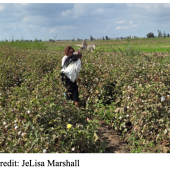
Abstract: With the outbreak of COVID-19, garment workers worldwide faced increasingly hazardous conditions, especially as companies canceled billions of dollars in orders that left millions without pay. From my home office, I navigated tight budgets and deadlines, witnessing firsthand the gap between sustainability initiatives and lived realities. This experience prompted my transition from an industry practitioner to a sustainability educator, informed by Indigenous and African diasporic ways of being, doing, and knowing. My research explores the role of culture in fashion and sustainability. It moves from learning with Indigenous jewelry designers in the Northwest Coast to following cotton from farm to factory in Egypt. By centering Traditional Ecological Knowledge, it demonstrates how the future of fashion depends on ecological responsibility through relational accountability and regenerative practice.
Continue ReadingAbstract: This personal narrative details a transformative journey through a Ph.D. in Sustainability Education at Prescott College, culminating in a dissertation on community gardens in Orange County, California. The inquiry was guided by the core question: How may postcolonial theories and decolonization frameworks inform the practices and understandings of community gardens, particularly regarding inclusivity, cultural relevance, and the empowerment of marginalized communities? I reflect on the profound shift from an idealized, objective view of research to an embodied, relational, and deeply personal approach. This journey, rooted in a personal identity as a gay Latino man, exposed the complexities of colonialism and my own positionality, sparking a powerful emotional and intellectual transformation. The article highlights how methods such as post-qualitative inquiry, visual ethnography, and walking ethnography provide a space for authentic engagement and the co-creation of meaning. Ultimately, I share key lessons for the field of sustainability education, including the power of personal transformation, the need to embrace decolonization as a lived practice, and the potential of community gardens as sites for transformative learning. The narrative concludes with a call to action for educators and practitioners to embark on their own journeys of self-discovery, emphasizing that every small act of connection can be a catalyst for a more just and equitable world.
Continue Reading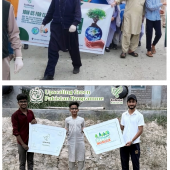
Abstract: Pakistan faces an urgent climate crisis that disproportionately affects its youth and vulnerable communities. At the same time, the country’s rapidly expanding digital connectivity presents new opportunities to advance climate literacy beyond formal classrooms. This paper examines how digital climate activism can function as a form of non-formal sustainability education under the United Nations’ Action for Climate Empowerment (ACE) framework in Pakistan. Drawing on academic literature, policy analysis, and a case study of a youth-led initiative (EcoRevival Pakistan), the study conceptualizes digital platforms as educational spaces that support climate learning, public awareness, participation, and youth empowerment. The analysis situates Pakistan’s climate vulnerability, youth demographics, and digital landscape within the ACE framework, highlighting how social media, online training, and digital campaigns contribute to climate literacy development. Findings illustrate that youth-led digital initiatives foster experiential learning, systems thinking, and civic engagement while complementing gaps in formal climate education. However, challenges such as digital inequality, uneven access, and limited institutional support constrain broader impact. Building on these insights, the paper proposes a scalable digital climate education and empowerment model tailored to Pakistan’s socio-cultural and technological context. A brief comparative perspective draws lessons from international approaches to climate education and youth engagement. The study concludes with practical recommendations for policymakers, educators, and civil society to strengthen non-formal climate education through digital tools. By positioning digital activism as a sustainability education pathway, this research contributes to scholarship on climate literacy, youth engagement, and Action for Climate Empowerment in the Global South.
Continue Reading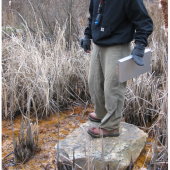
Link to the JSE March 2026 General Issue Table of Contents Simon JSE March 2026 General Issue PDF Abstract: The recent rapid shift towards the adoption of electric vehicles and other low-carbon technology has increased the global demand for strategic minerals. Increased demand for these strategic minerals means nations around the world are working […]
Continue Reading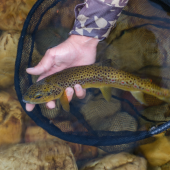
Abstract: In this age of the Anthropocene, of posthumanism, a far more careful, self-reflexive and critical consideration of more-than-human interactions, of our interrelationships with other species, is imperative. This essay takes as its focus the interaction between humans and fish (mainly rainbow trout) in flyfishing, and sportfishing more generally. I consider what happens when an activity originally designed to lead to the death of the fish is turned to different ends, which are aimed at conservation and more ethical treatment of fish. It is a complex and contradictory subject, which vexes and exercises me as much as a flyfisher as an academic. It requires frequent shifts in the scale of one’s thinking from the interrelationships between species as a whole (humans and rainbow trout), to those between individual members of species (the flyfisher and this individual rainbow trout), and it brings into sharp focus the ethics of interrelationships that spread beyond fishing to multiple human-animal engagements, including those involved in farming and hunting, or in eating animal products. In this article I draw on work by fish scientists, animal ethologists, anthropologists, fishing authors, environmental journalists and my own experience of fishing and talking to other fishers for over five decades, to try to engage fully with the range of issues involved.
Continue ReadingAbstract: This case study explores photos taken by youth Park Ambassadors in the Park in a Truck initiative in Philadelphia. Park in a Truck is a community-engaged greenspace initiative that partners with residents in under-resourced neighborhoods to transform vacant lots into parks. Park Ambassadors (aged 10-17) are trained to maintain and manage programs in the neighborhood parks. This case study presents the results of an autophotography project, where Park Ambassadors were invited to capture images and reflections that documented what the parks—and their work within them—meant to them. Main themes of the photos and reflections included aesthetic appreciation, nature observations, and collective activities. This case study offers a personal look at how Park Ambassadors experience and interpret their roles as stewards of neighborhood greenspaces in the Park in a Truck initiative.
Continue Reading
Abstract: The Innovate to Mitigate project has adapted problem-based learning (PBL) for secondary-school students by posing open-ended design challenges and by including a crowdsourcing element to support systematic improvement of student designs. Students were charged with designing feasible innovative strategies to mitigate CO2 emissions. This paper reports on student learning of science practices as defined by the Next Generation Science Standards. The study draws on data from 15 teams of 8th-12th students who participated in the 2024 iteration of the Innovate to Mitigate competition. The competition was implemented in a range of science classrooms that included introductory environmental science, AP environmental science, general science, and physics. Mixed methods analysis reveals that the Innovate to Mitigate PBL learning environment resulted in significant gains in student learning of the practices. Implications for the successful implementation of PBL in a wide range of contexts include the need for iterative design, collaboration, critique, and public communications. These features supported students to design and evaluate investigations, construct evidence-based arguments, and engage in productive discourse, all essential skills for scientific literacy.
Continue Reading
Abstract: This article explores the contemplative practice of deep listening as a method to both understand and embody human-nature relational values for positive transformations. Relational values, which emphasize kinship, reciprocity, and interdependence, expand beyond traditional intrinsic and instrumental value frameworks by centering relationships between humans and the more-than-human world. Drawing on sound studies, Indigenous knowledge, and ecological philosophy, deep listening invites an embodied attentiveness that promotes environmental empathy and ethical relationality. The practice moves beyond abstract conceptualizations to lived sensory experience, opening pathways for reflection, mutual accountability, and a renewed sense of shared identity and well-being within damaged ecological relationships. Case studies from Indigenous stewardship, environmental education and activism, and soundscape ecology illustrate how listening practices reinforce kinship, reciprocity, and a deepened sense of ecological identity, challenging anthropocentric paradigms and promoting multispecies ethics. The article argues that deep listening is an ethical praxis essential for navigating complex ecological crises, grounding transformative environmental engagement in relational awareness and shared responsibility. It focuses on pedagogical and community-based practices through which deep listening cultivates relational values and multispecies care, with potential future applications in environmental activism and governance.
Continue Reading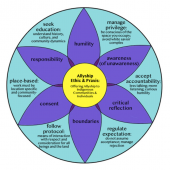
Abstract: As two white women of settler-colonial lineage, Kolette (mother) and Rhiannon (daughter) come to this work with a desire to engage and support decolonization and re-Indigenization of the spaces we navigate. Our guiding question: In what ways might non-Indigenous individuals support the decolonizing work of Indigenous communities and individuals? This project is an intergenerational collaborative autoethnography (CAE) that uses a dialectic format to explore specific, complex questions related to building an ethic and engaging a praxis of Indigenous allyship. A foundational aspect of our autoethnographic work is that of Dr. Haunani-Kay Trask, Kanaka Maoli scholar, educator, and sovereignty activist. Trask’s contribution to this exploration is not direct; instead, her life’s work and influence are cornerstone to the scholarly and professional journey of both women.
Continue ReadingAbstract: In a creative exploration, Nicole Taylor and Xander Garcia engage in a collaborative reflection that entwines visual exploration and metaphor to weave together personal and poetic narratives, academic theories, and observations of a world fragmented by Cartesian dualism. Drawing on personal and lived experiences, place-based and outdoor education, systems thinking, and transformative education, their conversation seeks the possible re-entanglement of humans with the more-than-human world. Taylor and Garcia use wefts and warps as weaving symbols to represent their voices and their lived experiences. Also woven throughout is their journey with theoretical insights and historical roots of the separation of humans from nature (Cartesian dualism and the Capitalocene). With deep grief and curiosity, they effort to make sense of witnessing ecological devastation while also advocating for a movement and language that creates a possible “next,” beyond the Anthropocene. This work, with heartbreak and hope, searches for interconnected roots and community through multi-modal forms of engagement and reciprocity, ultimately envisioning possible paths toward collective re-entanglement, transformative justice, and in-becoming more-than-human.
Continue Reading
Abstract: This study examines how integrating the Four-Dimensional Ecology Education (4DEE) Framework into an undergraduate Food–Energy–Water (FEW) nexus case study assignment shaped sustainability learning and systems thinking in an online introductory environmental studies course. Using pre/post surveys (n = 7 matched responses) and content analysis of final projects (n = 21), the study explored patterns in students’ sustainability-related competencies, including ecological understanding, systems reasoning, human–environment interactions, and cross-cutting sustainability themes. Both quantitative and qualitative analyses indicated similar trends, with students reporting increased familiarity across all 4DEE domains, particularly in ecological concepts, human–environment interactions, and sustainability-oriented themes. Content analysis of final projects reflected these same dimensions, including discussion of ecological mechanisms, application of hydrological and climate-related processes, and clearer articulation of relationships between stakeholders and ecosystems. These patterns suggest that explicitly integrating sustainability-oriented ecological framing into assignment design may strengthen students’ conceptual foundations for interpreting FEW nexus challenges. While not designed to establish causality and limited by a small sample size, this course-based reassessment provides descriptive evidence that structured faculty development opportunities can support the design of sustainability-focused assignments that yield conceptually sophisticated student work.
Continue Reading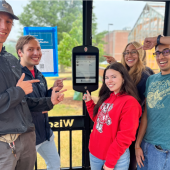
Abstract: Higher education institutions can function as living laboratories for sustainability initiatives that foster innovation and catalyze systemic change. This study examines the educational and professional outcomes of the University of Wisconsin–Madison (UW–Madison) Green Fund, a program using campus as a living laboratory to pilot sustainability initiatives on campus. The Green Fund supports student-initiated projects that address the environmental footprint, social impact, and operating costs of campus facilities. As the campus is utilized to explore sustainable solutions, the university can function as a microcosm for society, allowing for lower risk trials of emerging technologies and processes. A survey was conducted to understand the quantitative and qualitative outcomes of student participation in the Green Fund. The survey questions were aligned with the essential learning outcomes and a leadership framework of the institution. Respondents reported that Green Fund participation benefitted them professionally and academically, including by enhancing their academic and professional confidence, allowing them to explore their interests, and improving their leadership skills. Over 90% of respondents agreed that participating in the Green Fund will make a positive impact at UW–Madison and on their future professional life. In open-response questions, respondents noted the complex, interdisciplinary nature of sustainability as well as their individual interest in sustainability. The results indicate that the Green Fund provides skills and resources that are important for preparing the next generation to address wicked problems locally through serving as a living laboratory for sustainability initiatives. The results also demonstrate how the Green Fund supports campus sustainability and larger institutional sustainability goals, including fostering sustainability education experiences, achieving net-zero emissions, and creating a Zero Waste campus. These findings provide support for other higher education institutions looking to implement or continue a green fund. This work is one of the first to explore the educational and professional outcomes of a campus green fund.
Continue Reading
Abstract: Although participatory photography methods (PPM) have been increasing in scientific research, not many studies are well-known related to PPM and sustainable development, including connections to the United Nations Sustainable Development Goals (SDGs). The purpose of this study is to explore place-based participatory photography (combined auto-photography and photo essay or auto-photographic essay) methods to examine how they support sustainability competencies. Course design included the SDGs connected to a campus sustainability map to support learning in a sustainability higher education classroom. Twenty-five self-selected students in a semester-long sustainability course at the University of Wisconsin–Madison (UW–Madison) explored sustainability concepts connected to their university campus using place-based participatory photography methods. Data was collected from students and consisted of photographs with titles and narratives from the beginning (pre-assessment) and the end (post-assessment) of the semester. The study included member checking with student thematic analysis and inter-rater reliability of coding. In findings, student participants’ data had more connections to the intrapersonal competency in the pre-assessment than the post-assessment. The post-assessment findings indicated that participatory photography methods (PPM) connected to a campus sustainability map and the SDGs strengthened the knowledge and systems thinking competencies as connected to socio-environmental systems. PPM did not lend itself well to strategic thinking or technical skills related to sustainability competencies. This participatory photography study adds valuable insight into supporting the sustainability competencies related to the SDGs.
Continue Reading
Abstract: To better prepare students for the sustainability challenges of the future, the K-12 sector needs a system that encourages multidisciplinary and interdisciplinary collaboration to successfully implement sustainability education (Parry & Metzger, 2023; Timm & Barth, 2021; Zguir et al., 2021). This research is a mixed-methods case study that uses Kotter’s theory of change to prioritize Education for Sustainable Development (ESD) in the curriculum and extra-curricular activities of the Nightingale-Bamford School, which is a K-12, private, all-girls school located on the Upper East side of New York City. The aim is to explore the impact the changes have on both faculty and students. Teachers that were a part of the change process voluntarily participated in surveys and interviews. Students that experienced the curriculum and service-learning changes also participated in interviews. The development and implementation of the program increased the willingness of faculty to engage in ESD, had mitigating effects on self-efficacy, and had a small impact on the faculty’s knowledge of pedagogical approaches. The ESD program increased the intention of students to act on the Sustainable Development Goals (SDGs). The results indicate that Kotter’s theory of change can be used to impact the professional action competence of faculty to engage in ESD and to positively impact the intention of students to act on the SDGs. More studies are needed to investigate long term impacts of the change process and how the change process impacts faculty and students in other K-12 settings.
Continue Reading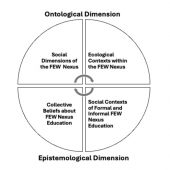
Abstract: Food-Energy-Water (FEW)-Nexus-based education supports understanding complex relationships in FEW systems, promoting socio-ecological systems thinking and decision-making about natural resources and sustainability challenges. Our study centers the perspective of educational practitioners to define and describe FEW-Nexus-based education and identify challenges with FEW-Nexus-based education. Using artifacts from workshops and existing literature, we explored the foundations of an integrated framework for FEW-Nexus-based education. These foundations include ontological and epistemological dimensions, which we used to probe deeply into workshop participants’ responses using directed and thematic content analysis. Thematic analysis resulted in themes within four categories: Ecological Contexts within the FEW-Nexus, Social Dimensions of the FEW-Nexus, Collective Beliefs about FEW-Nexus Education, and Social Contexts of Formal and Informal FEW-Nexus Education.
Continue Reading
Abstract: Climate Anxiety, or anxiety stemming from an overwhelming fear of the climate crisis, is a growing phenomenon among student populations studying climate, environmental, and sustainability-related subjects (Clayton et al., 2021). When not managed properly, feelings of climate anxiety can lead to a dismissal of the seriousness of the climate crisis and even action paralysis (Hickman et al., 2021; Sangervo et al., 2022). This scoping literature review aims to synthesize the current literature on how students cope with climate anxiety, addressing the research question: How do students experience climate-related hope and anxiety, and how do different interventions or practices influence their motivation to engage in climate action? This review employed a SPIDER approach and PRISMA-ScR guidelines to identify and examine the 12 included pieces of literature through an inductive thematic analysis. This analysis identified three main themes: the complex relationship between climate anxiety and pro-environmental behaviors, the role of hope as a coping strategy, and education-focused interventions for coping with climate anxiety. This analysis highlighted tools that can be utilized in education to help students manage climate anxiety, foster critical hope, and maintain motivation to engage in pro-environmental behaviors. This literature review supports the call for academic institutions to integrate well-being support for their students studying climate-related subjects. It suggests further research on coping strategies to develop critical hope among undergraduate students.
Continue Reading
 Journal of Sustainability Education is licensed under a Creative Commons Attribution License.


