Youth in a Park Building and Maintenance Program in Philadelphia: An Autophotography Project
Link to the JSE March 2026 General Issue Table of Contents
McIntire et al JSE March 2026 General Issue PDF
Abstract: This case study explores photos taken by youth Park Ambassadors in the Park in a Truck initiative in Philadelphia. Park in a Truck is a community-engaged greenspace initiative that partners with residents in under-resourced neighborhoods to transform vacant lots into parks. Park Ambassadors (aged 10-17) are trained to maintain and manage programs in the neighborhood parks. This case study presents the results of an autophotography project, where Park Ambassadors were invited to capture images and reflections that documented what the parks—and their work within them—meant to them. Main themes of the photos and reflections included aesthetic appreciation, nature observations, and collective activities. This case study offers a personal look at how Park Ambassadors experience and interpret their roles as stewards of neighborhood greenspaces in the Park in a Truck initiative.
Keywords: Urban Parks, Youth, Neighborhood, Autophotography
This case study explores photos and accompanying narratives taken by youth participants in the Park in a Truck (PiaT) initiative in Philadelphia. PiaT is a community-engaged greenspace initiative that partners with residents in under-resourced neighborhoods to transform vacant lots into vibrant, meaningful public spaces (McIntire et al., 2025). The process begins with acquiring a vacant lot and organizing a neighborhood team. PiaT facilitators then work with residents to assess the site’s physical characteristics and co-design the new park based on the community’s vision, needs, and aspirations. Once the design is finalized, PiaT coordinates the delivery of building materials—loaded onto a truck and brought directly to the site. Community members actively participate in constructing the park, reinforcing collective ownership and pride (Philadelphia City Planning Commission, 2021).
A cornerstone of the program is the Park Ambassador initiative, a paid internship for neighborhood youth aged 10–17. With a foundation of Positive Youth Development, the Park Ambassador training program combines classroom learning and hands-on fieldwork, so youth can explore topics such as leadership, civic engagement, landscape design, event planning, and ecology, while emphasizing the existing assets, resilience, and local culture of their communities (Larson, 2000). The six-week training program positions young people as environmental stewards and storytellers in their neighborhoods, equipping them to lead park events, organize cleanups, and advocate for their communities. In doing so, the Park Ambassador program affirms the value and potential of these neighborhoods—through the eyes and energy of their youngest leaders.
After working on various PiaT projects over the past seven years, we’ve consistently heard that Park Ambassadors enjoy the program and take pride in their work. While this feedback has been encouraging, it has remained largely anecdotal. Until now, we had not systematically gathered data on their perspectives, particularly regarding their experiences with park activities.
To better understand their views and give voice to their experiences, we introduced an autophotography project during the Park Ambassador training and work periods in spring and summer 2024. Glaw et. al (2017) defines autophotography as a qualitative visual methodology in which participants take photographs of their environment so that the researcher can “see the world through the participant’s eyes” (pg. 2). Noland (2006) notes that autophotography is a particularly valuable methodology when researching the experiences of marginalized groups because it allows participants to “speak for themselves” and helps researchers avoid potentially culturally biased research instruments (pg. 2). For the autophotography project, Park Ambassadors were invited to capture images with (optional) narrative reflections that documented what the parks—and their work within them—meant to them. This case study presents the findings from the autophotography project, offering a personal- and participant focused- look at how Park Ambassadors experience and interpret their roles as stewards of neighborhood greenspaces within the PiaT initiative.
Autophotography Project
Periodically, during training or work sessions, the directors of PiaT asked Park Ambassadors to take photos to document activities that transpired in the park and add narrative reflection on their photographs. Cameras were instant print cameras, which automatically processed and printed pictures. Photos had adhesive on the back, so Park Ambassadors could adhere them directly to a pre-prepared folio which had space for two pictures and accompanying narratives. Between April and October 2024, 13 Park Ambassadors completed 23 separate folios in response to the prompt, “What’s going on in the park today?” Three primary themes emerged as the most common across photos and narratives: aesthetic appreciation, nature observations, and collective activities. In the section below, we present these themes. We used pseudonyms to protect the anonymity of the Park Ambassadors.
Theme 1: Aesthetic Appreciation
The most common theme in the photographs and descriptive narratives was an appreciation of the aesthetics of plants and trees in the park space. Many participants noted that flowers, plants, and trees in the park were “pretty” or “colorful” and described specific examples of colors they found particularly visually pleasing. Many participants specifically described or evaluated the park space in terms akin to discussing a piece of art. For example, Aza took a photo (Figure 1) of orange marigolds surrounded by brown soil and dried leaves and noted, “I love the orange flowers, it’s so pretty and adds a pop of color.”
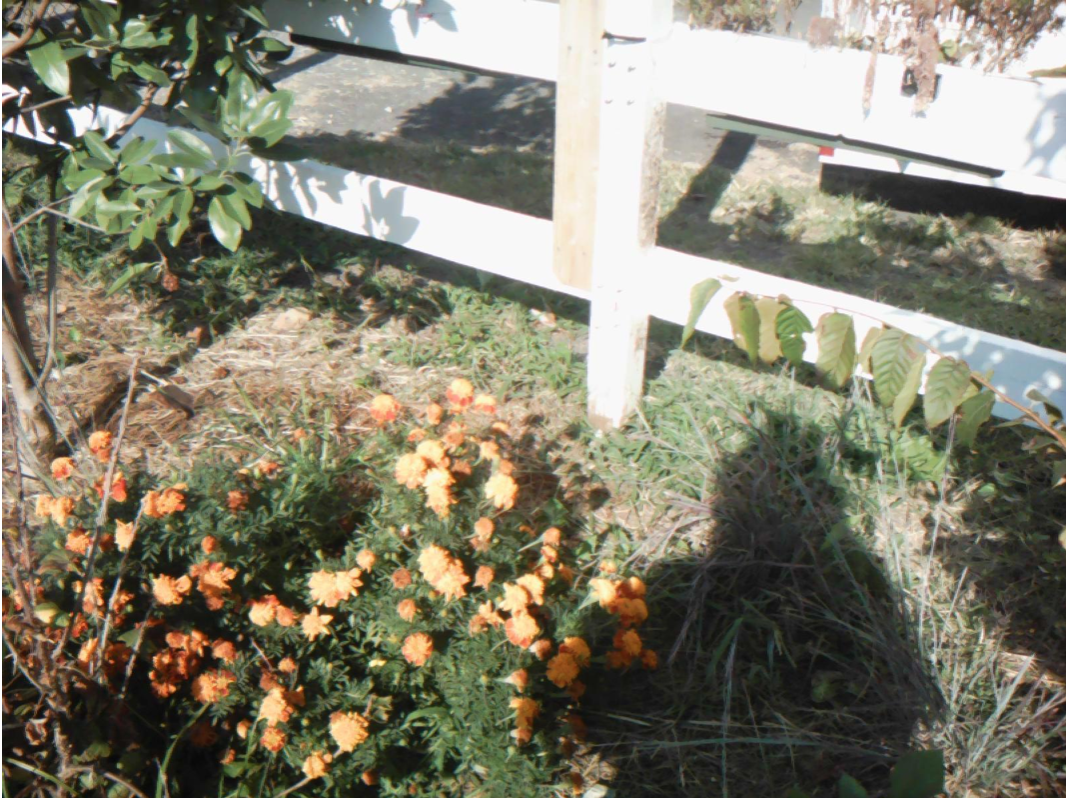
Figure 1. Park Aesthetics by Aza
Tyrese took a photo (Figure 2) of a seating area surrounded by purple black adder flowers and wrote about “a lot of colorful things happening in this picture to the point where it’s very bright scenery.”

Figure 2. Park Aesthetics I by Tyrese
Tyrese also took a second photo (Figure 3) on the same day showing a landscape of a dark green conifer, writing, “In this one it’s very gloomy but a bit of light on a corner like it’s light and dark.”
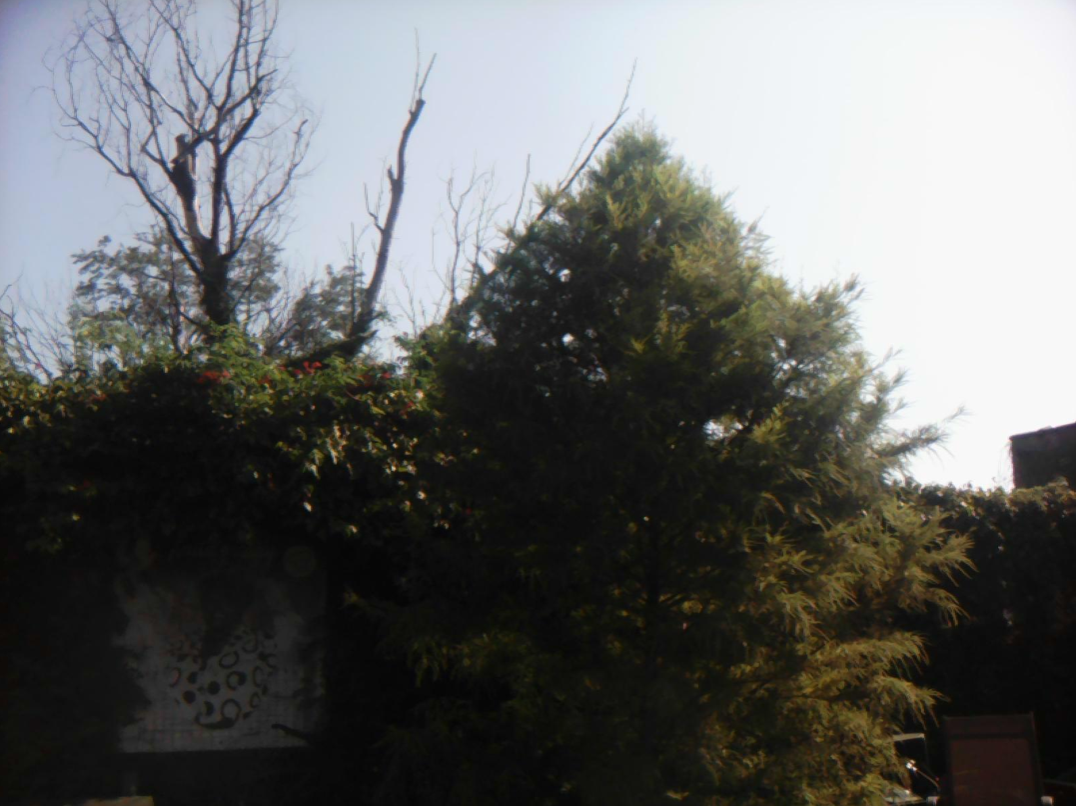
Figure 3. Park Aesthetics II by Tyrese
Some participants connected visual observations with other aesthetic reactions, for example, Donnel who took a photo of trees darkened by low light (Figure 4) and wrote “I like the dark and light with the leaves it feels like a music studio.”
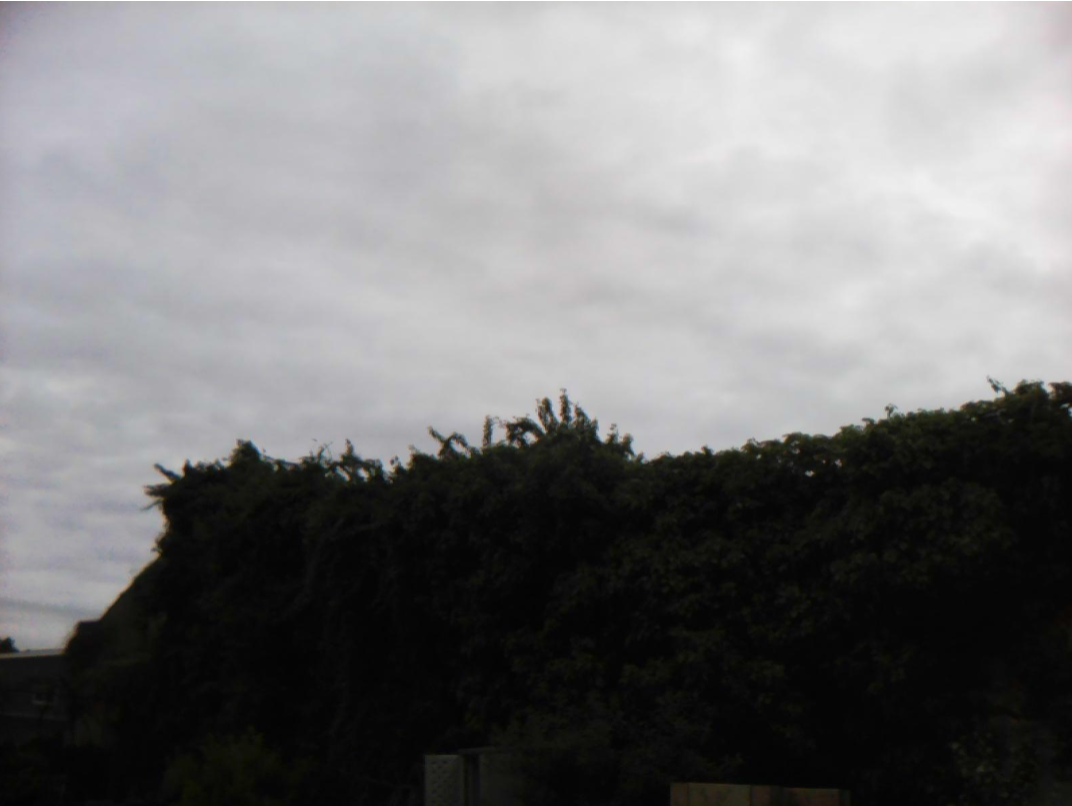
Figure 4. Park Aesthetics by Donnel
Theme 2: Nature Observations
A focus on aesthetics carried over into participants’ objective observations of how plants and trees were growing or changing in the park space and, sometimes, noting personal reactions to the changes they observed. For example, Maya took a photo (Figure 5) of two recently planted trees and wrote, “Happy to see the tree grow bigger.”

Figure 5. Nature Observations by Maya
Taking a photo (Figure 6) of a patch of strawberries in April, Samuel noted, “I feel like the plant is dead but before it looked like a cute plant.”

Figure 6. Nature Observations by Samuel
Some participants used the camera to document more detailed observations, like Michael who took a close-up photo of strawberry blossoms (not shown) and wrote, “I love this picture because of the red color and the way the flower is formed.”
Theme 3: Collective Activities
Participants also took photos and wrote about positive activities with others, including activities associated with their involvement in the Park Ambassador program and recreational activities taking place at the park with other community members. Examples of these types of narratives all used first person plural, for example participants noting “we planted” or “we built.” Several participants focused on collective acts of stewardship. For example, Jessica took one photo of someone planting bushes (Figure 7a) and another photo of tree saplings next to row houses (Figure 7b). Accompanying these photos she wrote, “I feel good that we are growing stuff that regular kids don’t and get new experiences” and, “I feel good that we growing trees which help environment.”
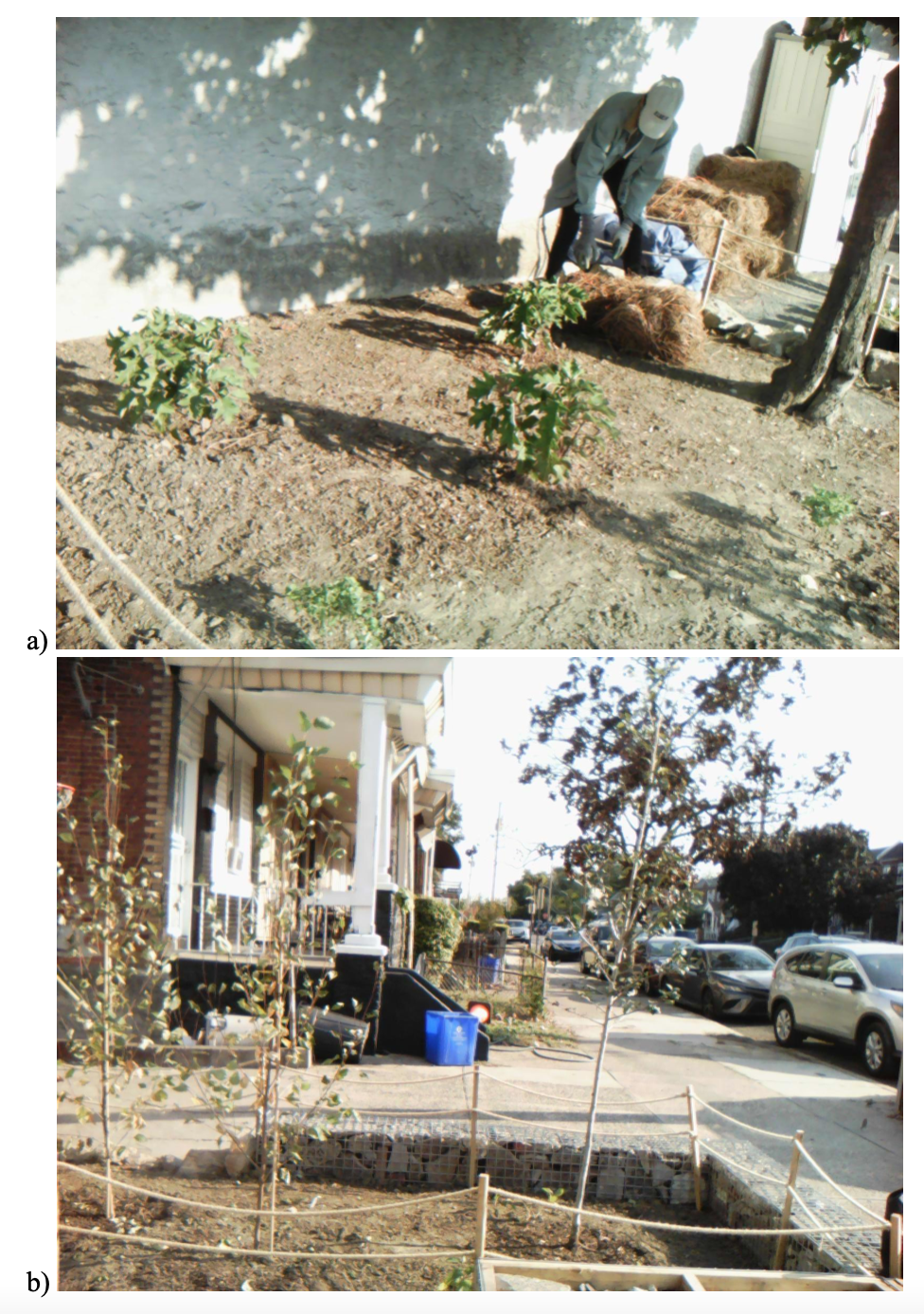
Figure 7. Collective Activities by Jessica
Other participants focused more on the collective effort needed to build and maintain the park, for example Daymond who took a photo of two Park Ambassadors building park hardscape (not shown) and wrote, “I like the teamwork and communication.”
Discussion
We asked youth involved in the Park Ambassador program to take pictures of park activities and write a brief reflection on their photographs. The photos and reflections produced by this autophotography activity were categorized into three main themes: aesthetic appreciation, nature observations, and collective activities. From the photos and reflections, we learn not just about the content of the park-based activities in which Park Ambassadors engaged, but about the feelings and reactions that those activities provoked. Among those who included emotive adjectives in their reflections, all of them were positive adjectives that described feeling good. Further, with the pictures and reflections, there was an emphasis on the positive aspects of nature, suggesting that exposure to nature positively impacted the emotional affect and mood of Park Ambassadors during the program. Dunlop and Rushton (2022) note a growing interest in the links between emotions and environmental attitudes, intentions, and behavioural change as well as the need for “emotionally-responsive pedagogies in education for environmental sustainability” (pg. 14). We suggest that concrete- and practically doable- activities such as the autophotography project described in this case study can offer researchers and practitioners valuable and contemporaneous insights into the emotional responses of youth participants in environmental initiatives, insights that can support the development of such emotionally-responsive pedagogies.
Finally, it is clear by the use of collectivist language that the Park Ambassadors felt like they were working as a team to plant flowers, shrubs and trees, and build hardscapes to beautify and improve physical spaces in the environment. Reflecting goals of Positive Youth Development (Ardoin, 2022) and community environmental education (Aguilar, 2018), participants used the sharing of authority and decision-making power afforded them by the Park Ambassador program structure as a springboard to developing a collective efficacy, the sense of “achieving more together than they could alone” (North American Association of Environmental Educators, 2024, pg. 4).
Conclusion
The autophotography project gave Park Ambassadors the opportunity to document park activities and reflect on how those experiences made them feel. While the project served as an enjoyable and creative outlet, it also offered valuable insight into how youth participants engage with and are affected by their roles in the program. Their reflections reveal that initiatives like PiaT—which engage neighborhood residents in the design, construction, and care of local parks—have an impact beyond the physical transformation of space. These efforts shape the perspectives of the individuals involved about themselves, their neighborhoods, and the potential for collective action. Through the lens of the Park Ambassadors, this study highlights how place-based programs can nurture not only greener neighborhoods but stronger, more connected communities.
References
Aguilar, O. M. (2018). Examining the literature to reveal the nature of community EE/ESD programs and research. Environmental education research, 24(1), 26-49. https://doi.org/10.1080/02673843.2022.2147442
Ardoin, N. M., Bowers, A. W., Kannan, A., & O’Connor, K. (2022). Positive youth development outcomes and environmental education: a review of research. International Journal of Adolescence and Youth, 27(1), 475–492. https://doi.org/10.1080/02673843.2022.2147442
Dunlop, L., & Rushton, E. A. C. (2022). Education for Environmental Sustainability and the
Emotions: Implications for Educational Practice. Sustainability, 14(8), 4441. https://doi.org/10.3390/su14084441
Glaw, X., Inder, K., Kable, A., & Hazelton, M. (2017). Visual Methodologies in Qualitative Research: Autophotography and Photo Elicitation Applied to Mental Health Research: Autophotography and Photo Elicitation Applied to Mental Health Research. International Journal of Qualitative Methods, 16(1). https://doi.org/10.1177/1609406917748215
Larson, R. W. (2000). Toward a psychology of positive youth development. American Psychologist, 55(1), 170.
McIntire, R. K., Douglas, K., Shockley, A., Harris, D., & Gay, V. (2025). Community-Designed Park-Building and Maintenance With the Park in a Truck Initiative. Health Promotion Practice. https://doi.org/10.1177/15248399251315721
Noland, C. (2006). Auto-Photography as Research Practice: Identity and Self-Esteem Research. Journal of Research Practice, 2(1).
North American Association of Environmental Educators (2024, June) Environmental Education Strategies That Support Positive Youth Development. EE Works. https://naaee.org/sites/default/files/2024-06/eeWORKS-Positive-Youth-Development-Strategies-Access.pdf
Philadelphia City Planning Commission. (2021). Park in a Truck. Retrieved July 23 from https://citizensplanninginstitute.org/park-in-a-truck-home/


 Russell K. McIntire PhD MPH: Russell McIntire is an Associate Professor in the College of Health at Lehigh University. He researches relationships between parks, gardening and greening interventions, and chronic disease. He teaches public health classes in epidemiology and environmental health.
  Katie Bucher PhD: Katie Bucher is an Associate Professor of education at Muhlenberg College in Allentown, PA. She teaches courses in educational psychology and early childhood education in which she integrates environmental education content and experiences for pre-service teachers.
  Kim Douglas RLA, ASLA, LEED, GA: Kim Douglas is an Associate Professor and Director of the Landscape Architecture program at Thomas Jefferson University. Kim started the Park in a Truck initiative in 2019.
  Alisa Shockley PhD: Alisa Shockley is a geographer and West Philadelphia native whose research focuses on the experience of gun violence and space among Black Women co-victims.