A Case Study in K-12 Education for Sustainable Development

Link to JSE March 2026 Table of Contents
Link to Article PDF
Abstract: To better prepare students for the sustainability challenges of the future, the K-12 sector needs a system that encourages multidisciplinary and interdisciplinary collaboration to successfully implement sustainability education (Parry & Metzger, 2023; Timm & Barth, 2021; Zguir et al., 2021). This research is a mixed-methods case study that uses Kotter’s theory of change to prioritize Education for Sustainable Development (ESD) in the curriculum and extra-curricular activities of the Nightingale-Bamford School, which is a K-12, private, all-girls school located on the Upper East side of New York City. The aim is to explore the impact the changes have on both faculty and students. Teachers that were a part of the change process voluntarily participated in surveys and interviews. Students that experienced the curriculum and service-learning changes also participated in interviews. The development and implementation of the program increased the willingness of faculty to engage in ESD, had mitigating effects on self-efficacy, and had a small impact on the faculty’s knowledge of pedagogical approaches. The ESD program increased the intention of students to act on the Sustainable Development Goals (SDGs). The results indicate that Kotter’s theory of change can be used to impact the professional action competence of faculty to engage in ESD and to positively impact the intention of students to act on the SDGs. More studies are needed to investigate long term impacts of the change process and how the change process impacts faculty and students in other K-12 settings.
Keywords: Professional action competence; Kotter’s change theory; K-12 school
Introduction
To develop skills, attitudes and behaviors not addressed in the classroom, institutions administer extra-curricular programs. Although the impact is usually not as reliable or as robust as the curricular program (Bartkus et al., 2012), such experiences hold the potential to contribute to student learning in powerful ways by providing opportunities for students to apply their knowledge into real-world settings (Parker, 1996; Wankel & Wankel, 2016). When the objectives of extra-curricular and curricular programs are aligned, student learning is augmented (Biggs et al., 2022). A meta-analysis of service-learning, an educational approach that integrates community service with curricular objectives, has shown significant gains in application of learned knowledge when the two programs are aligned (Celio et al., 2011). Curricular learning outcomes are improved when they are designed in conjunction with extra-curricular activities. This case study explores the impact of aligning curriculum and extra-curricular activities around the Sustainable Development Goals (SDGs) and education for sustainability.
The development of key sustainability competencies is foundational to education for sustainable development (ESD) (Feinstein & Carlton, 2013). Competency-based education has demonstrated an impact on sustainability related knowledge, skills, and dispositions, something that traditional curricula – those which use transmissive methodologies – does not accomplish (Laurie et al., 2016; Nolet, 2016; Ssosse et al., 2021; Sterling, 2001; UNESCO, 2014). Transmissive methodologies are teacher-centered educational strategies where knowledge is directly conveyed from the teacher (or text) to the student. The aim of this study is to prioritize ESD in both the curriculum and extra-curriculum of a K-12 school and explore the impact the changes have on both faculty and students. Through collaborations with faculty and school leadership, the sustainability competencies were identified, defined, and rubrics for progressing towards those competencies in each subject were designed. The students were also asked to align their extra-curricular activities with the SDGs and reflect on their experiences.
Research Question
To what extent does developing and implementing an education program with curricular goals linked to sustainability competencies and extra-curricular goals linked to the SDGs:
- Impact the Professional Action Competence (PAC) of faculty to engage in Education for Sustainable Development (ESD); and
- Influence student’s intention to act on the Sustainable Development Goals (SDGs)?
Context
The Nightingale-Bamford School (most commonly referred to as “Nightingale”) – is in Manhattan. Nightingale was founded in 1920 and is located on the Upper East Side of New York City. It is generally ranked among the top all-girls schools in the United States. It has an annual enrollment of about 680 students, with just over 30% being students of color. The student to faculty ratio is 6:1, with 35% being employees of color. Nightingale’s mission is to “inspire girls to go beyond barriers,” and its vision is for “students to be joyful learners who have the intellectual depth and the courage to be critical thinkers, compassionate citizens, and agents of their own lives; in doing so, we advanced equity for the betterment of all” (Nightingale).
Theoretical Framework
Kotter’s theory of change (2012) guided the implementation of the education program while the research explored the impact of these changes on faculty and students. Kotter’s eight-step model has proven applicable in K-12 situations (Salaman & Broten, 2017) and can help create a supportive system that drives change by empowering teachers’ efforts to be targeted, direct, and strategic (Cooper et al., 2016). Successful change with Kotter’s model in K-12 education requires full stakeholder engagement of faculty.
Table 1 outlines the timeline, people involved, and action taken at each step of Kotter’s model.
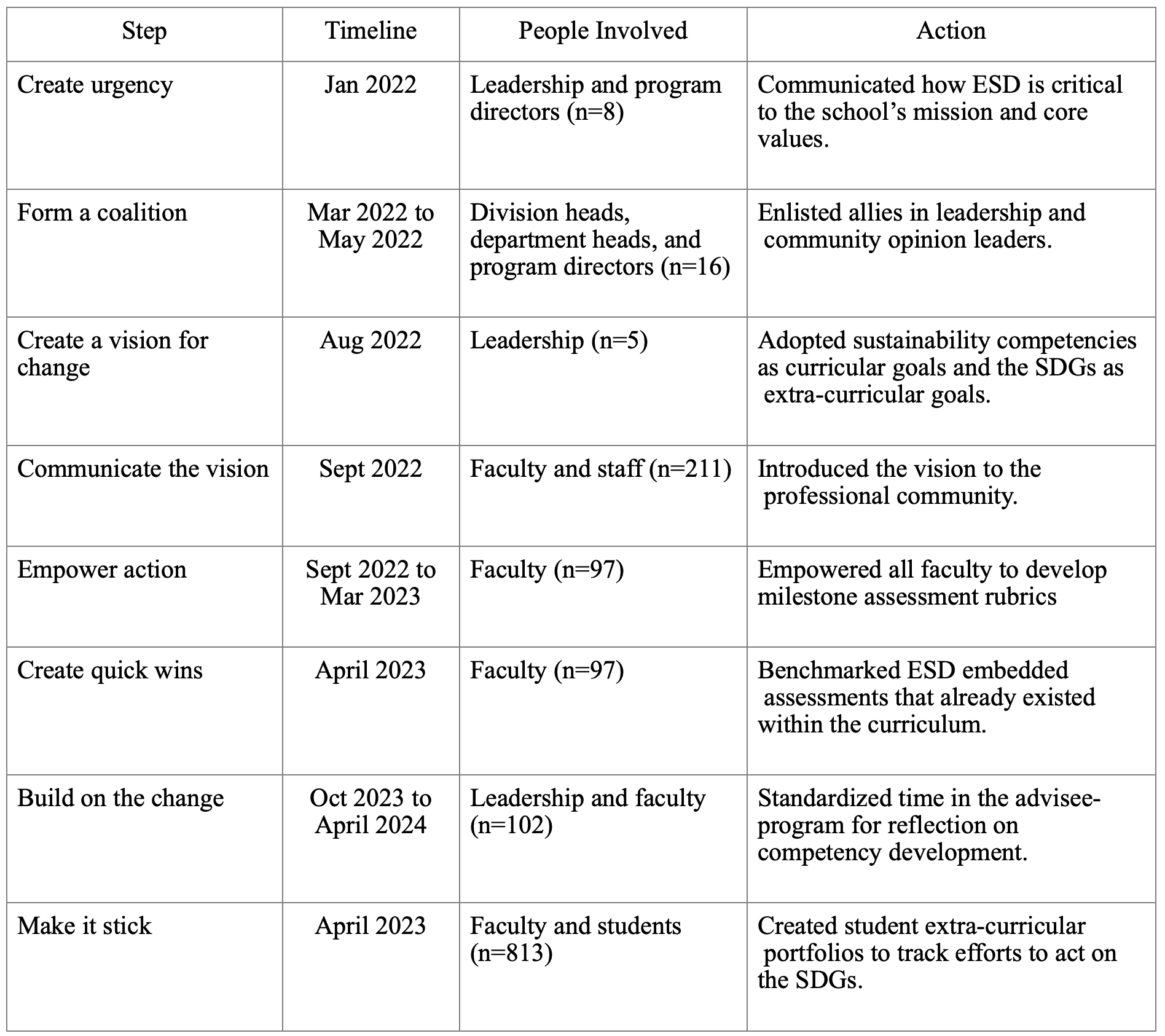
Table 1. Outline of the Actions Taken at Nightingale in Kotter’s Model of Change
According to Nolet (2009), one can best intellectually and personally engage with the tensions caused by the interconnectedness of systems by acquiring the knowledge, skills, attitudes, and behaviors (competencies) associated with sustainability literacy. Unfortunately, instructors have fallen short when teaching sustainability courses, even with the intention of developing sustainability competencies, because they only assess for knowledge and skills (ability) when they also need to assess for attitudes and behaviors (willingness) (Shephard, 2022). Competency-based sustainability education requires the integration of topical knowledge and skills from multiple disciplines, with the stated intention of directing attitudes and changing behaviors (Brundiers et al., 2021). At Nightingale, using Kotter’s theory of change, the educational program was altered to allow knowledge and skills to be directly assessed in the curriculum while associated attitudes and behaviors were assessed in the extra-curricular activities.
At Nightingale, the sustainability competencies targeted were systems thinking, futures thinking, values thinking, collaboration, and strategic action. All faculty (n=104) were involved in an eight-month process to create five rubrics, one for each sustainability competency, that informed to what level students were being assessed in their courses for the knowledge and skills associated with each competency. Each rubric listed five milestone performance assessments, where milestone one reflected a novice understanding and milestone five reflected a more complex understanding. See Appendix A for the milestone assessment rubrics. The rubrics were subsequently transcribed into the school’s learning management system, enabling the ongoing benchmarking of performance assessments currently employed in classes.
The SDGs were used as a framework for extra-curricular activities. A portfolio workbook created in Google Sheets was used for middle and upper school students to track their extra-curricular actions with their faculty advisors. Students at Nightingale met biweekly with their advisors. With the new educational program, it is during these meetings that students accessed the learning management system to learn when they have been assessed for the sustainability competences, to what milestones they have been assessed, to reflect on their learning experiences with their advisors, and to determine how to apply their knowledge and skills to act on the SDGs. The new educational program was introduced to students in April 2024 during workshops in a day-long Earth Day symposium.
For the purposes of this study, Professional Action Competence (PAC) is seen as a composite personal attribute, akin to the concept described by Jensen and Schnack (1997), where competence comprises knowledge, skills, and willingness to act. Action is seen as self-determined and directed towards change. In this way, the concept incorporates a sense of agency, self-confidence, and willingness to act in relation to any given issue or field. While acknowledging that the concept has been further developed in relation to sustainable development, for example, by Sass et al (2020) who introduces the specific concept of Action Competence in Sustainable Development (ACiSD), this study remains open to how PAC might manifest itself in the Nightingale context.
This study also draws on three key theoretical and measurement frameworks to explore the impacts on teachers’ PAC and students’ intentions. We reference the Teachers’ Sense of Self-Efficacy Scale (TSES), a widely utilized instrument that quantifies teachers’ beliefs in their ability to successfully execute specific teaching tasks across various domains (Klassen et al., 2009). Two prominent social-psychological models: the Theory of Reasoned Action (TRA), which posits that an individual’s behavioral intention is determined by their attitude toward the behavior and subjective norms (Hale et al., 2002), and its extension, the Theory of Planned Behavior (TPB). The TPB adds the crucial construct of perceived behavioral control to the model, offering a more comprehensive framework for predicting intentions and behaviors, particularly when volitional control is incomplete (Ajzen, 1991). In this study TPB and TRA are used to contextualize and explore the impact Kotter’s change process had on student intention to act on the SDGs.
Significance of the Study
There is little evidence supporting the effectiveness of education for sustainable development in the K-12 sector (Alifa et al., 2025; Olsson et al., 2022; Waltner et al., 2019). Even in higher education, a large majority of those studies that strive to assess student’s sustainability competencies have major flaws in the analysis, unclear learning objectives, or a lack of baseline assessment (Redman et al., 2020). To ensure that K-12 education can graduate sustainability literate young adults, studies are needed that show the effect of ESD. This study addresses the gap in the research by prioritizing ESD in both the curriculum and extra-curriculum of a K-12 school, and exploring the impact the changes have on both faculty and students.
The first research question explores how changes at Nightingale impacted the Professional Action Competence (PAC) of faculty to engage in Education for Sustainable Development (ESD). This is crucial to the success of the program at Nightingale because it affects teacher behaviors, values, objectives, communication, and practices (Sass et al., 2020). Studies have shown that targeting action competence empowers individuals to be active participants and to construct strategies that solve ESD-related problems (Chen & Liu, 2020). There is very little case study work on the implementation of PAC in K-12 teacher education (Lohmann et al., 2021) and more studies are needed to demonstrate which processes realize PAC of faculty to engage in ESD (Husamah et al., 2022; Van Poeck & Vandenabeele, 2012). This case study provides insight into how a change theory impacts the PAC in K-12 faculty when faculty are a part of the design and implementation process.
The second research question asks how the changes at Nightingale influence students’ intention to act on the Sustainable Development Goals (SDGs). Competency acquisition requires knowledge and skills, along with changes in attitudes and behaviors (Shephard, 2022). Nightingale faculty designed an educational program based on the five sustainability competencies as overall curricular goals and acting on the SDGs as an overall extra-curricular goal for students. When faculty develop a shared understanding of competency-based teaching, students can be expected to gain the necessary knowledge and skills for competency acquisition (Ashby et al., 2018). Teachers can also affect students’ attitudes through the development of strong and supportive teacher-student relationships (Urdan & Arguenta-Vogel, 2019), which supports Nightingale’s decision to involve its advisor-advisee program. Successfully acting on the SDGs requires a means to update and reflect on sustainability related knowledge and skills (Risopoulos-Pichler et al., 2020). Nightingale developed a system for students to update and reflect on competency development, with the intention of affecting the competency acquisition needed to act on the SDGs.
Students that are motivated to act on the SDGs have demonstrated concrete actions that directly connect to one or more of the 17 goals through student organizations (Borges et al., 2017). However, global trends in the media have little impact on students’ concerns for the SDGs; studies are needed to show when education programs effectively raise students’ concerns (Okubo et al., 2021; Yuan et al., 2022). Survey results have shown that sustainability related attitudes and behaviors naturally dip in adolescence (Olsson & Gericke, 2016) so studies are needed to evaluate determinants that will improve engagement with adolescents and boost student preference for the SDGs (Alvarez-Risco et al., 2021). This case study provides insight into how a change theory impacts the intention of students to act on the SDGs.
Materials and Methods
In this study, the following changes were made at Nightingale, between April 2022 and May 2024, to make ESD a leading priority for all faculty:
- Key competences for sustainability literacy – futures thinking, systems thinking, values thinking, collaboration, and strategic thinking (Wiek et al., 2011; Redman & Wiek, 2021) – were identified as the main academic outcomes for graduates.
- Milestone assessments (curriculum embedded performance assessments) were established to measure and track competency development. Current milestone assessments were benchmarked.
- Time was standardized in the school’s advisee-advisor program to reflect on competency development based on classes students had already taken and classes they could take in the future.
- A digital portfolio was created so students could track the alignment of their extra-curricular activities to the UN Sustainable Development Goals (SDGs).
Table 2 shows when data were collected from faculty and students.
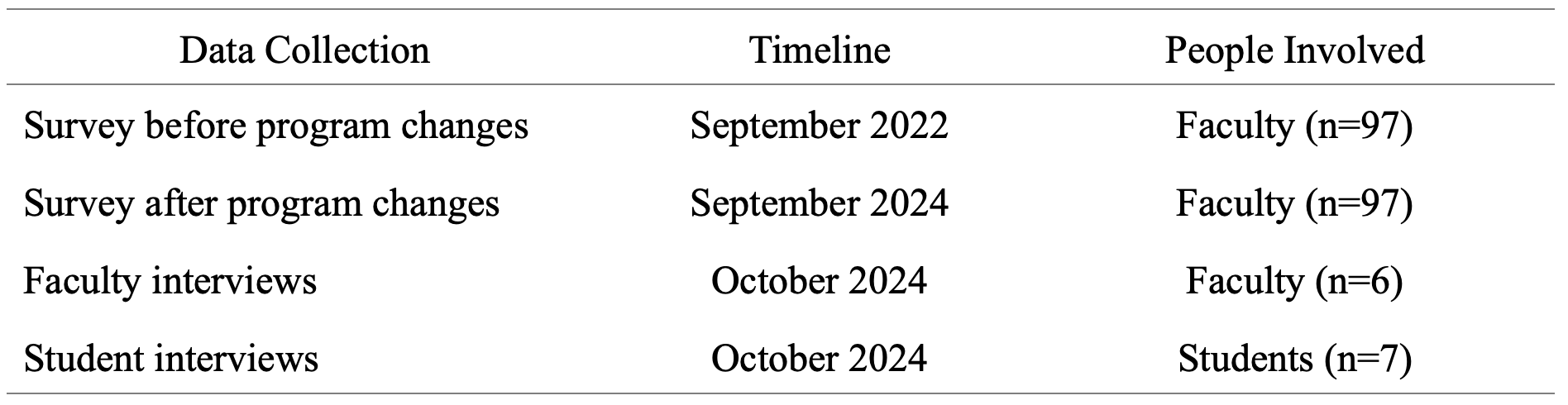
Table 2. Data Collection Timeline
First, there was a survey to measure the faculty willingness, self-efficacy, and the knowledge of pedagogical approaches needed to engage in ESD. Secondly, after the aforementioned changes were made, the same survey was administered to the faculty to see how these variables changed. Thirdly, faculty were interviewed to go deeper into the motivations of their survey answers. Finally, students were interviewed to explore whether the changes influenced their intentions to act on the SDGs.
The PAC survey used (Sass et al., 2022) is included in Appendix B. Three key components (variables) of PAC were measured: self-efficacy (SE), pedagogical knowledge (PK), and willingness (W) to engage in ESD. Ten questions were associated with SE and W, and eleven questions were associated with PK. Each question used a Likert Scale from one to five, with one being “strongly disagree” and five being “strongly agree”.
The PAC survey was administered to all full-time K-12 faculty at Nightingale-Bamford School; 65 of 97 faculty members (67%) responded to the pre-survey and 64 of 97 faculty members (66%) to the post-survey. The participant pool was 75% women and 25% men. The most common ethnicity was White (65%), with the rest split between Hispanic/Latino (12%) and Black/African American (13%). Being a case study that affected all teaching faculty, it was important to give all eligible individuals the option to participate.
Table 3 organizes respondents by the division in which they taught and by the number of years they taught at Nightingale.
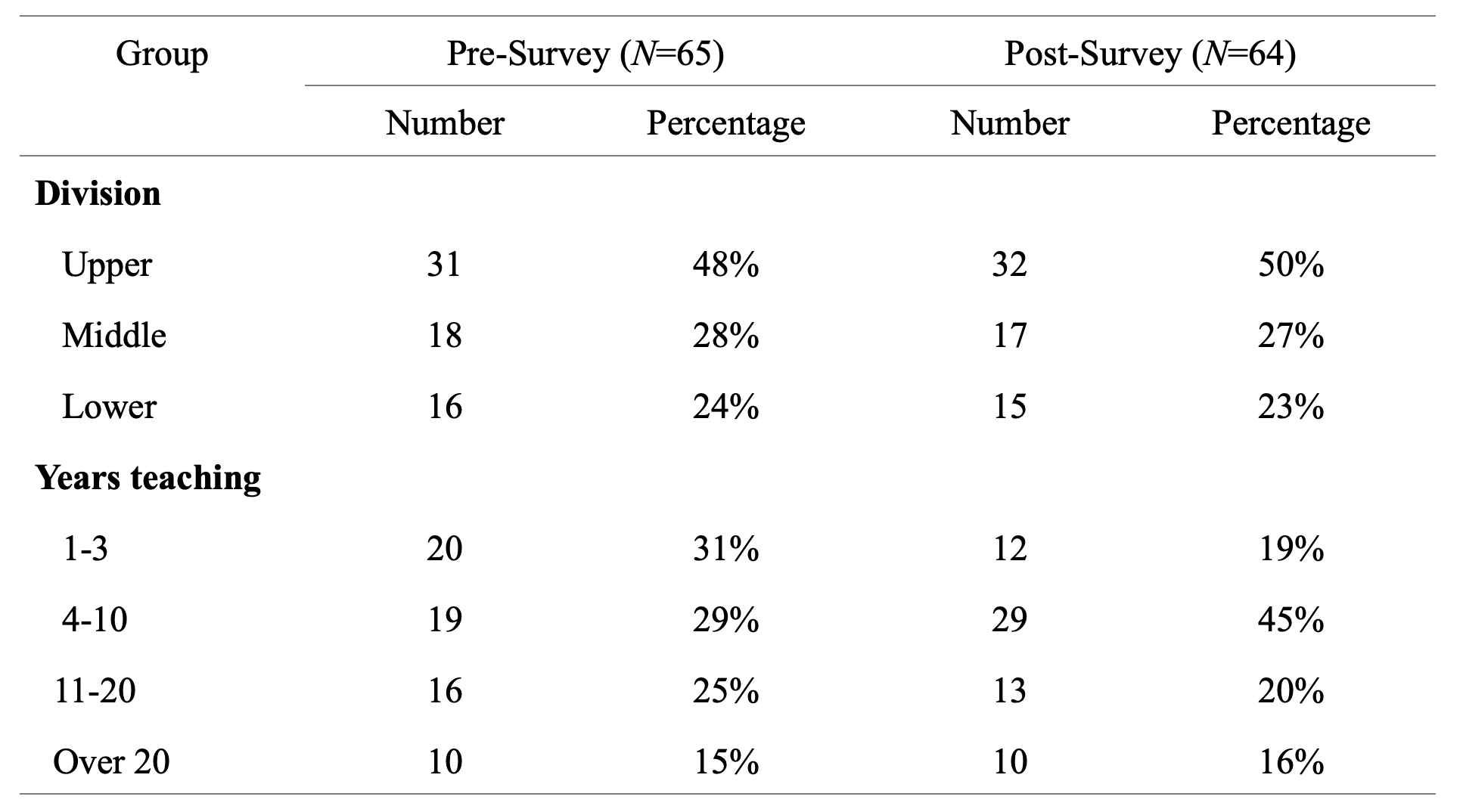
Table 3. Demographic Data
For both surveys, close to or exactly half of the respondents taught in the upper school with the rest split similarly between middle and lower school. There was a much larger difference in the number of years taught at Nightingale. In the pre-survey, 31% of respondents taught for 1-3 years and 29% taught for 4-10 years. In the post-survey, only 19% of respondents taught for 1-3 years, while 45% taught for 4-10 years. The results were similar for respondents that taught between 11-20 years and for respondents that taught over 20 years. While a majority of the respondents took both surveys, employment changes over the two-year change process and individual decisions to opt out of either survey hindered perfectly homogenous sampling.
For the faculty interviews, we developed a list of five interview questions to help answer the first research question – how do the changes at Nightingale impact the Professional Action Competence (PAC) of faculty to engage in Education for Sustainable Development (ESD)? For the student interviews, we developed a list of five interview questions to help answer the second research question – how do the changes at Nightingale influence student’s intention to act on the Sustainable Development Goals (SDGs)? See Appendix C for lists of both the faculty and student interview questions.
The inclusion criteria for interviewing faculty were Nightingale upper and middle school faculty who took the survey both before and after the competency-based education program was produced. Although the total response rate was 65%, only 38 of faculty (39.2%) fitted the inclusion criteria.
For the student interviews, the participant pool comprised students between the ages of 14 and 16 enrolled at the Nightingale-Bamford School. The most common race was White (70%), with the rest evenly split between Hispanic/Latino and Black/African American. The inclusion criteria for interviewing students included 11th graders who had started the SDG extra-curricular portfolios with their advisors. The recruitment pool was 25 students.
Validity & Reliability
The reliability of the survey’s Likert scale questions was measured using Cronbach’s alpha. Table 4 lists the Cronbach’s alpha values for the different subscales (SE, PK, and W) as well as for the PAC instrument as a whole.
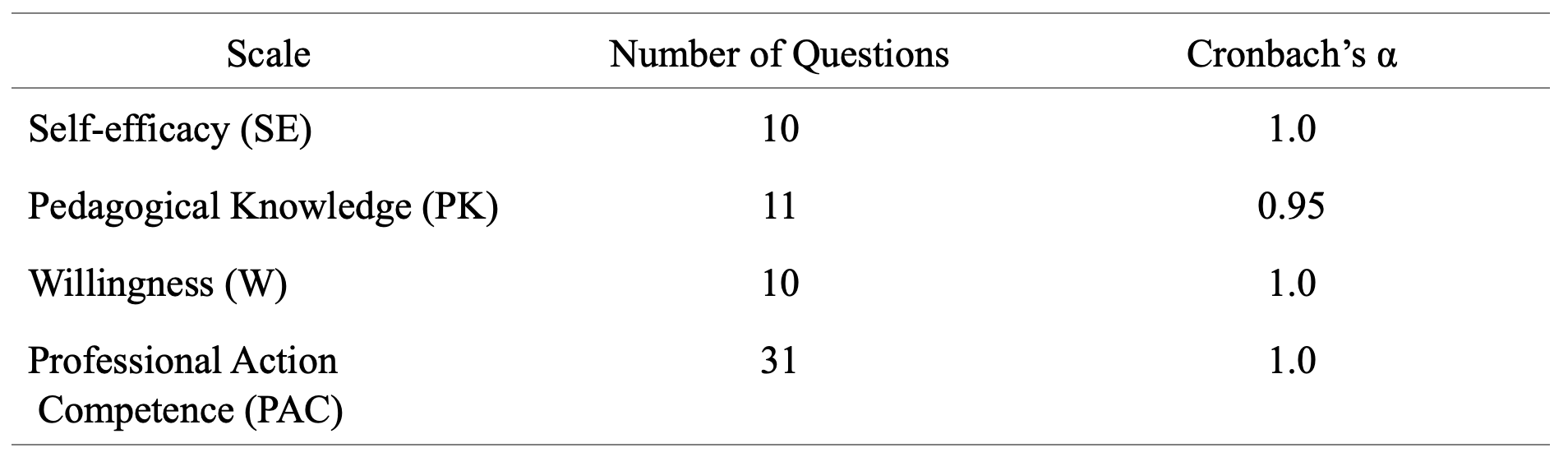
Table 4. Cronbach’s Alpha for SE, PK, W and PAC (N = 65)
The value of Cronbach’s alpha was 1.0 for the sets of questions measuring SE and W. The value was 0.95 for the set of questions measuring PK. The PAC instrument as a whole had a Cronbach’s alpha value of 1.0. These values indicated high reliability for the instrument as well as strong consistency among all the variables that determine PAC.
Sass et al. (2022) ensured criterion validity of the survey using confirmatory factor analysis. For content validity, the 10-item Comm.Pass Scale developed by Moeller and Grassinger (2013) informed the questions measuring willingness. The Teachers Self-Efficacy Scale for Education for Sustainable Development (TSESESD) and the perceived Pedagogical Content Knowledge (pPCK) scales (Malandrakis et al., 2019) informed questions measuring the self-efficacy and pedagogical knowledge items, respectively. In terms of face validity, members of the leadership team at Nightingale inspected the survey and provided feedback for clarity and unambiguity of items, appropriateness of grammar, sentence structure, and adequacy of instruction.
For both faculty and student interviews, reliability was ensured by increasing the number of participants until saturation was reached, and more specifically, checking for inter-coder reliability by inviting another researcher to check the coding using Krippendorff’s alpha and discussing disagreements. Content and face validity was ensured by having the interview questions reviewed by both members of the dissertation committee and members of the leadership team at Nightingale. Criterion validity was ensured by using triangulation during data analysis via a convergent mixed methods research design.
Procedure
The procedure had four stages. First, the PAC survey was administered to faculty (n=97) before the sustainability competency-based education program was created. Secondly, the PAC survey was administered again to faculty after the program was created. Thirdly, members of the faculty were interviewed. Lastly, members of the student body were interviewed.
The study received Institutional Review Board (IRB) approval before the procedure began. The PAC survey was introduced to the faculty in August of 2022 during an all-school meeting where it was explained that participation was completely voluntary and the results would be recorded anonymously using Qualtrics. No identifying information was collected in the survey. The survey opened with a page explaining informed consent. After the meeting, a survey link was sent to all faculty who were given one week to respond with a reminder two days before the survey closed. No additional information was given regarding why they were being surveyed, except that in the following two years faculty and staff would work to “actively create the school that our students need to thrive in the future,” a quote from the Nightingale Head of School’s welcome back speech that he gave earlier that day. The PAC survey was reintroduced to the faculty in September of 2024, following the same procedures.
Data Analysis
Data related to the first research question was analyzed using univariate analysis with Microsoft Excel (frequency distribution, central tendency, and dispersion) to describe the general properties of the measured variables in the PAC survey. A two-sample t-test with Microsoft Excel was used to determine whether the survey’s variables changed significantly. Parametric Statistic tests, such as the t-test, are understood to be appropriate methods for analyzing Likert scale data (Boone & Boone, 2012; Mircioiu & Alkinson, 2017; Norman, 2010).
Audio transcripts from the faculty interviews were analyzed thematically using Haltinner’s method (Haltinner, n.d.) to explore their perspectives, values, and beliefs, as well as to identify commonalities and differences. This helped to arrive at a more nuanced understanding of the faculty’s willingness, self-efficacy, and pedagogical knowledge to engage in ESD. The method included the following steps: organizing the raw text into a format suitable for coding, reducing the text into meaning units, capturing the main ideas of these meaning units by placing them into categories, and finally declaring themes that emerged from these categories.
Each faculty interview was coded soon after the interview, a process that continued until saturation was reached. This was confirmed by having another researcher follow the process. As a convergent mixed-methods study, the quantitative and qualitative results were compared and contrasted.
The second research question was addressed using qualitative data from the student interviews; again, using Haltinner’s method, this time with the audio transcripts from the student interviews, to perform thematic analysis. This helped to achieve a nuanced understanding of the student’s intention to act on the SDGs. The steps paralleled those used with the faculty interviews, using process coding and interviewing until saturation was reached.
Results
Quantitative Findings from the Faculty
The mean and standard deviation for PAC were calculated for each of their component variables (see Table 5), both from the pre-survey and from the post-survey responses. Two-sample t-tests determined whether the mean of PAC and its component variables changed.
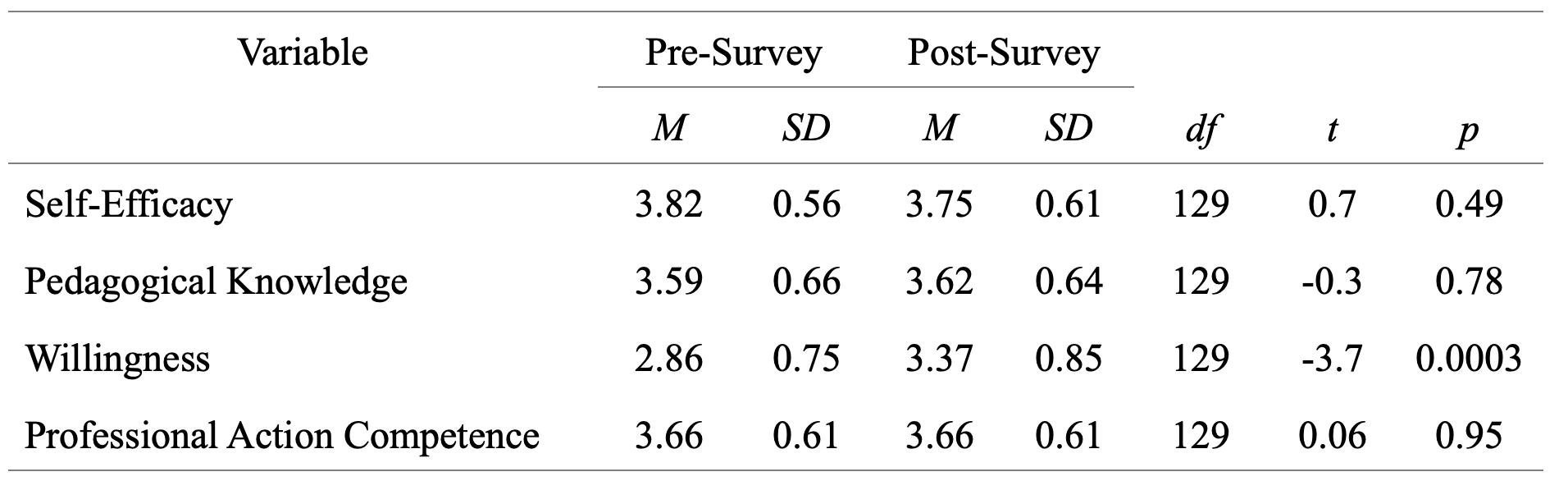
Table 5. Statistical Analysis Between the Pre- and Post-Survey Responses
The questions in the surveys used a Likert Scale from one to five, with one being “strongly disagree” and five being “strongly agree.” The means for two of the three PAC variables in the pre-survey scored above 3.0. All three of the PAC variables scored above 3.0 in the post-survey. Self-efficacy and pedagogical knowledge showed very little change. Willingness did increase by over 0.5, from M=2.86, SD=0.75 to M=3.37, SD=0.85. The composite PAC scores remained exactly the same with a M=3.66, SD=0.6. The only change that was statistically significant (p-value below 0.001) was for the willingness indices.
In looking at the demographic subgroups (see Appendix D), there was a 0.46 or greater change in the mean for willingness in the upper school and the lower school but not in the middle school (0.12). There were also large changes in the mean for willingness (> 0.50) for teachers that taught at Nightingale for 1-3 years, 4-10 years, and 11-20 years, but not for over 20 years (0.32). There were no large changes in PAC or any of its other variables across the demographic subgroups (all < 0.40).
Qualitative Findings from the Faculty
Six faculty members were interviewed before reaching saturation with process coding. Following the procedure suggested by Saldana (2021), gerunds were used to connote conceptual actions in the data. Then, instead of using single words to group the codes into categories, each code’s symbolic and subtextual meaning was considered. The use of an open, inductive coding method allowed categories to emerge organically. Codes were clustered under eight categories: student engagement, competency-based education, social knowledge, interdisciplinary approach, active learning, disposition, eagerness, and preparedness. These categories best captured the main ideas reflected in the process codes. Table 6 lists the number of codes from each interviewee that fell under a given category.
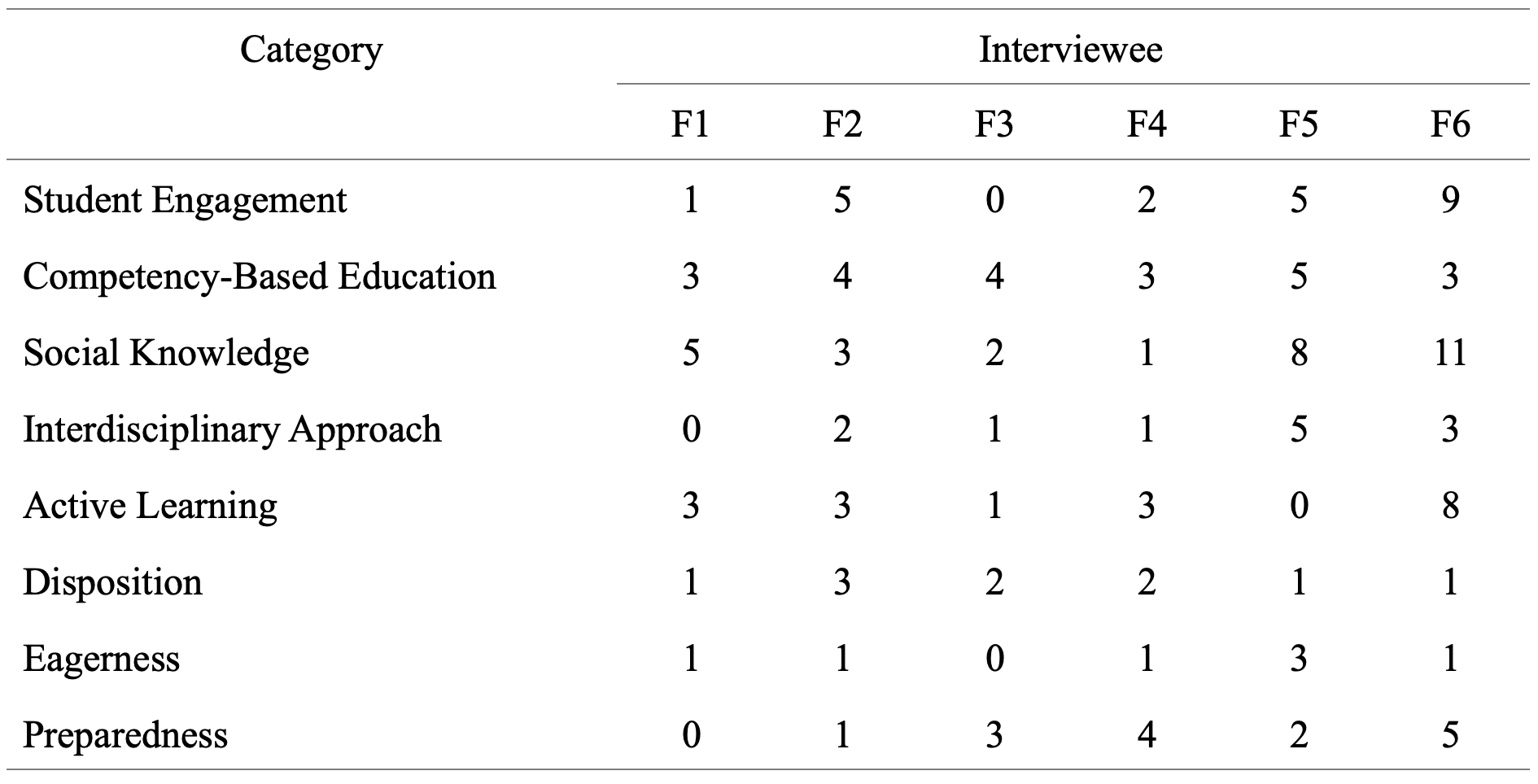
Table 6. Number of Codes per Faculty Interviewee for each Category
One other researcher followed the same process to check for inter-coder reliability. The Krippendorff’s alpha of 87% demonstrated high reliability in the coding process. The second researcher identified an equal number of categories, using names that were either identical or synonyms (i.e. using “temperament” instead of “disposition”).
Figure 1 shows the relationship between the categories and the component variables of the faculty’s PAC to engage in ESD.
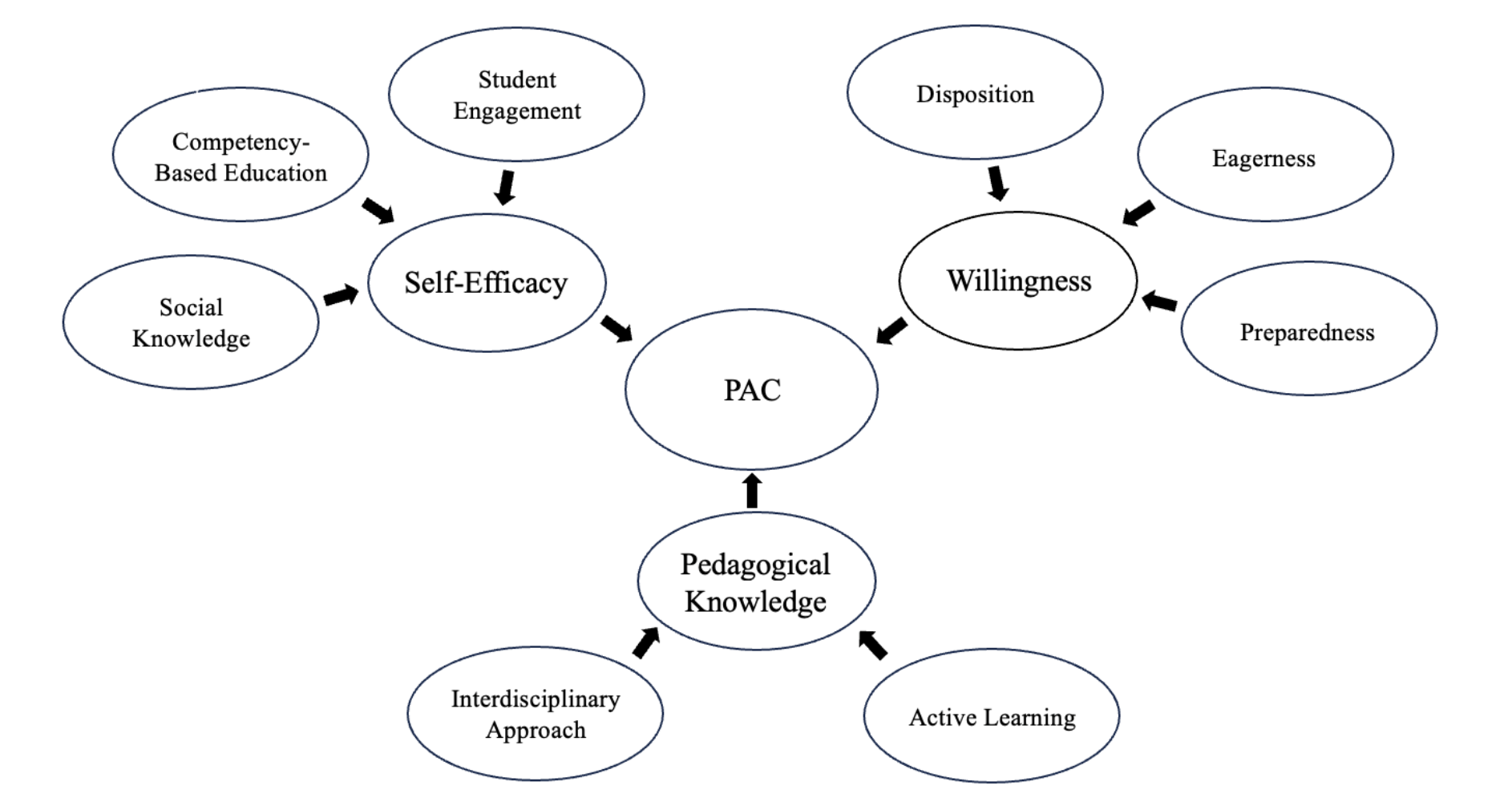
Figure 1. Relationships Between Nightingale Faculty Categories
Five resultant themes emerged from both the categories themselves and the relationships between the categories and PAC. The diagram defines PAC more precisely in this context. The resultant themes included the following:
- Increase in readiness to engage students through competency-based education
- Decrease in social knowledge
- Increase in eagerness and preparedness, accompanying a change in disposition
- Interdisciplinary approaches are important to ESD
- Active learning is important to ESD
The first theme reflected an increase in Nightingale faculty’s readiness to engage students through competency-based education. As shown in Figure 1, both a deeper familiarity with competency-based education and with processes that increase student engagement can improve self-efficacy. The faculty started thinking of sustainability competencies as “core to education for social transformation” (F4). In terms of systems thinking, a competency that resonated most strongly across the disciplines, faculty appreciated how “values are always a part of those systems” (F4). As Kotter’s change process evolved, faculty became “more intentional about highlighting competencies…more intentional about where they’re happening and how, and perhaps taking a look at what works best, and enhancing it” (F2) in their lessons. Faculty “developed competency-based learning outcomes and thought about them more deliberately…tracking development with clear milestones” (F1). Faculty were challenged in deriving appropriate assessments, saying they “probably don’t assess as well as they should” (F1). But they felt that ESD made Nightingale “uniquely positioned as a school to be able to equip students for the challenges, opportunities of the future” (F6). Competency-based education in sustainability will “advance their curriculum to a higher degree” (F2). The change process left faculty “optimistic that we can do whatever it is related to sustainability (F6)” and “feeling good about the work that we do in an independent school” (F2).
The second theme reflected a decrease in Nightingale faculty social knowledge. Social knowledge refers to cultural and situational context which can serve as the biggest barrier to ESD development (Redman, 2013). As shown in Figure 1, social knowledge can influence self-efficacy. Faculty noted that the change process created a social context which had them “thinking about where your work slots into a sort of mind shift…broadens the scope…no longer thinking of it in terms of just environmental, or financial, but more holistic” (F6). While this shift was welcomed, faculty noted a conflict in messaging from leadership regarding other academic initiatives that seemed disjointed from ESD outcomes. For example, one faculty stated, “I don’t know who I’m showing that thing that they wanted” (F6). Conflicting agendas led to “meetings that were frustrating and meetings that were good” (F2). A common theme emerged saying that faculty needed “clear directives with follow-up” (F1) and “more academic leadership” (F4). By the end of the change process, while faculty were confident that they could personally execute ESD, the confluence of academic initiatives that were competing for time made it a “real, legitimate problem to ask department heads” (F1) for the required effort.
The third theme reflected an increase in Nightingale faculty eagerness and preparedness, accompanying a change in disposition. As shown in Figure 1, eagerness, preparedness, and a fitting disposition can improve willingness. Faculty became eager to give students the transferable “knowledge and information they need to do and to undertake a big ESD project, as this is a value that they will have later on, both in college and their professional careers” (F2). They began to optimistically feel that “with sustainability competencies…this is the air we’re breathing” (F3). In regard to ESD, it was admitted that “if we can make it more normal in America for it to be integrated,…that’s better for the kids” (F3). Faculty also felt more prepared. They learned that many departmental objectives “relate pretty easily to…sustainable development and education around sustainability” (F6) and that the faculty teams “are really flexible about becoming more competency oriented” (F4) in their teaching. Many faculty have “tried to do it in their own classrooms, but it’s hard to think like that” (F3). Faculty admit that “we still have more we can do when we’re trying to educate for sustainability” (F6). Finally, the general disposition towards competency-based education for sustainability became more favorable. The overall sentiment for students was that “giving them the competencies that they need to do and to undertake a big project – this is a value that they will have later on, both in college and their professional careers” (F5).
The final two themes both reflect an increased understanding of which pedagogical approaches are important for ESD. The fourth theme stated that interdisciplinary approaches are important to ESD and the fifth theme stated that active learning is important to ESD. Nightingale faculty did not express an increased knowledge of pedagogical approaches, but rather which familiar ones would be more effective. Faculty highlighted the importance of “collaboration with other departments, working on extra-curricular projects together” (F3), establishing more “integration at a horizontal level” (F6), developing projects that require students to “cross over from math class to science class” (F2), and “realizing that history and language classes have so much that we could do together” (F4). Faculty quickly understood that disciplinary boundaries would need to come down in order to teach competencies so that “kids aren’t thinking in a siloed way” (F2). Though faculty didn’t articulate specific teaching methods, they did realize the need for more active learning applications. Faculty noted that teaching methods need “to be something out of the realm of just lecturing” (F1). Students need time to “intentionally apply these things…pushing them into real-world situations in terms of being more a values thinker, so that they recognize their own values that are going into their decisions” (F5). Students must be put in circumstances where they are “interacting with the world, listing the stakeholders effected in varying situations and apply their knowledge to solve real problems” (F1). Faculty stated that teachers don’t always “want to do strategic action related projects with students…because it means much more time and resources” (F4). However, they realized that it was vitally important to ESD.
Mixed Methods Analysis
According to the quantitative analysis, the PAC mean score of Nightingale faculty did not change. Since the PAC is determined by three variables, there would need to be similar movement in more than just one of those variables for the PAC mean score to either increase or decrease. The individual variables, however, were impacted by the change process. The convergence of the quantitative and qualitative analysis gives some salient information.
Self-efficacy did not show a large change when comparing Nightingale faculty before the change process to after the change process. Qualitative analysis, however, showed that self-efficacy was impacted. As faculty became more familiar with competency-based education, they were more confident in their ability to implement it. Their increased confidence also led to increased student engagement. On the other hand, their social knowledge decreased due to challenges and obstacles created from competing academic objectives. There were elements that elevated self-efficacy, while others lowered self-efficacy, leading to a mitigating result that supports the quantitative findings.
Quantitative results for willingness showed a large increase when comparing Nightingale faculty before the change process, to after the change process. Qualitative analysis supported this finding. The overall disposition towards competency-based education in ESD was positive, as faculty welcomed the challenge and recognized its importance. Faculty were eager to engage in ESD. They also felt prepared to change their curricula accordingly, or at the very least, embark on the professional development needed to change their curricula.
Quantitative results for knowledge of pedagogical approaches to engage in ESD did not show a large difference when comparing Nightingale faculty before the change process to after the change process. Qualitative analysis supported this finding. Faculty noted that both interdisciplinary approaches and active learning methodologies were both vital to ESD. However, the faculty did not learn or develop any new active learning methodologies in the change process.
Qualitative Findings from the Students
Seven students were interviewed before reaching saturation. The same process coding method was used as for the faculty interviews. Codes were clustered to form five categories: value judgement, subjective norms, difficulty, and habit. These categories best captured the main ideas reflected in the process codes. Table 7 lists the number of codes from each interviewee that fell under a given category.
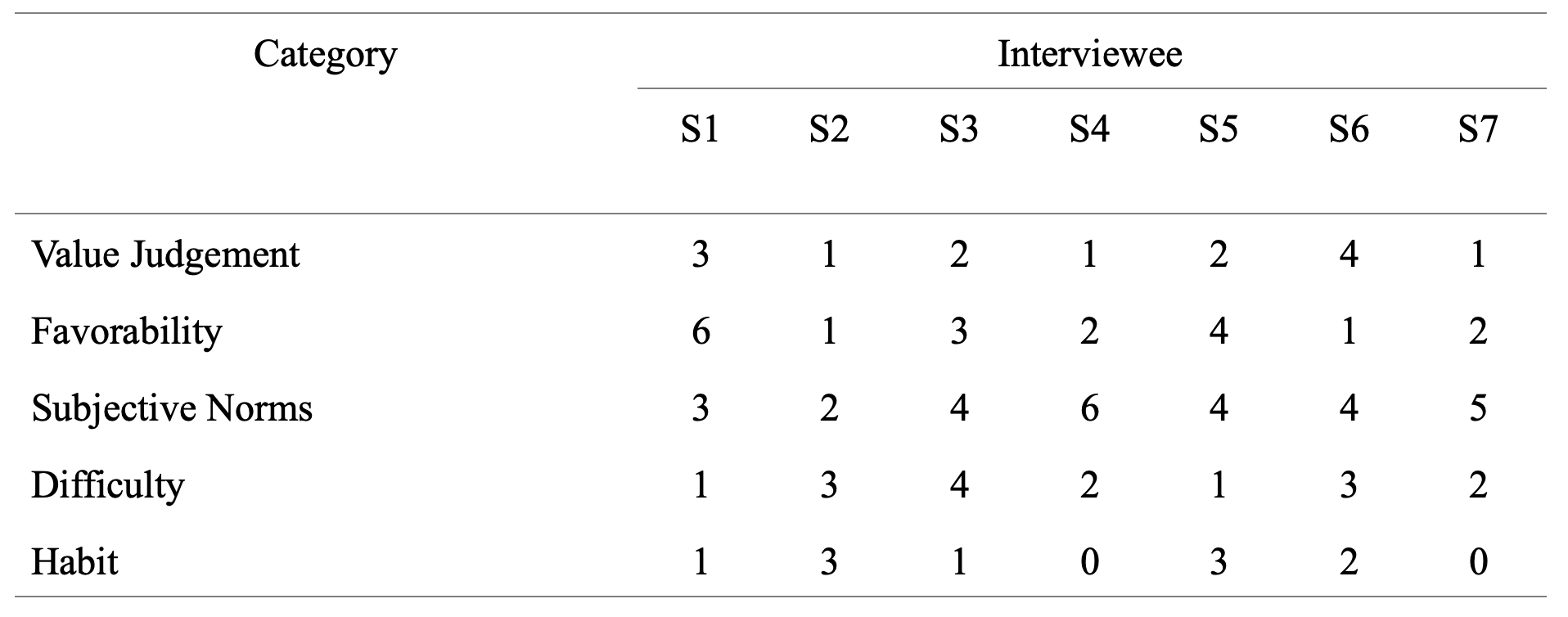
Table 7. Number of Codes per Student Interviewee for each Category
Another researcher followed the same process to check for inter-coder reliability. The Krippendorff’s alpha of 80% demonstrated high reliability in the coding process. The second researcher identified four categories, leaving out “Habit,”, using names that were either identical or synonyms. After a short discussion, the second researcher agreed that all five categories should be reflected in the coding process. Figure 2 diagrams the relationship between the categories and student intention to act on the SDGs.
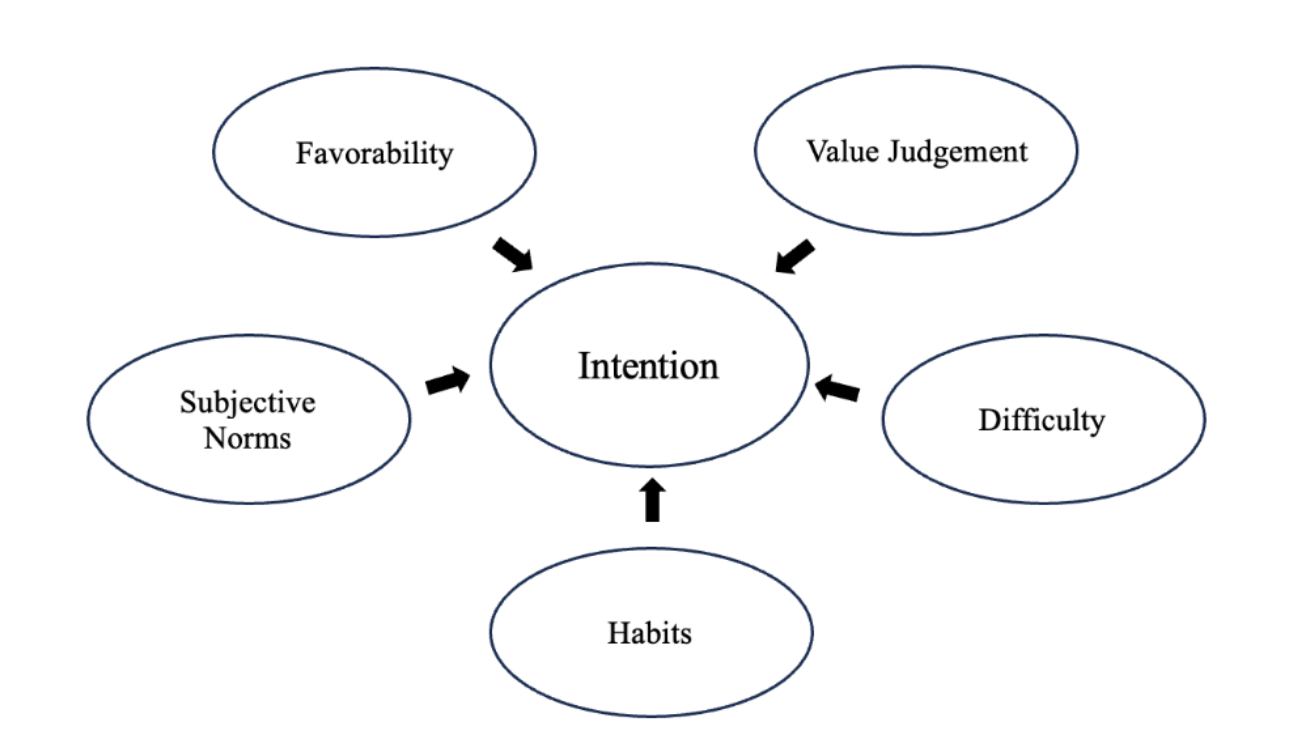
Figure 2. Relationship Between Nightingale Student Categories
Four resultant themes emerged from the relationship between the categories and student intention to act on the SDGs. The resultant themes included the following:
- Acting on the SDGs is essential
- ESD will make sustainability efforts more successful
- Making a difference will be difficult
- Helping others is a behavioral norm
The first theme reflected a realization in Nightingale students that acting on the SDGs is essential. As shown in Figure 2, seeing a behavior as valuable and being in favor of performing the behavior both suggest intention. For example, according to Nightingale students, acting on the SDGs is “very important because it’s basically related to our future here on Earth” (S6). In fact, to them, “ignoring the problems is probably worse” (S6). Students highlighted many of the SDGs by name, including Life on Land, Climate Change, Quality Education, Reducing Inequalities, and Zero Hunger among the most concerning, noting that spending time and effort to solve them will be very important. They were in favor of adjusting their current service choices to be more aligned with the SDGs because service would “be more meaningful if it can be applied to the future” (S1). Students want to contribute to the solutions implied by the SDGs, even if they do “not see the impacts immediately” (S1). Admittingly, they will “if given the opportunity…attack some of these goals in our education” (S6).
The second theme states that ESD will make sustainability efforts more successful. As shown in Figure 2, when the subjective norms of a community support certain behaviors, the intention of community members to perform those behaviors increases. The change process at Nightingale created an education program with curricular goals linked to sustainability competencies and extra-curricular goals linked to the SDGs. The changes introduced new norms that students viewed positively. With traditional education they thought “you’re kind of maybe learning information and then putting it on paper, and then you kind of forget about it” (S4). But with competence-based education, “when you, like, think about it….it kind of seems like it’s preparing us in some way” (S7). Students appreciated how ESD “focuses more on sustainable development goals” (S5). It “definitely stood out as surprising that there were already so many sustainability connections already in the curriculum…providing opportunities for obvious growth” (S6). Students realized that “ESD provides opportunity…the things that we do in the curriculum can actually, like, have that type of impact” (S7). The students thought that “sustainability is something that not a lot of schools do, but is very important in how we go forward in the world” (S3). The change process made students think about how they should behave in a society struggling to reach the SDGs.
As stated in the third theme, Nightingale students believed that making a difference will be difficult. As shown in Figure 2, the perceived difficulty associated with a task influences the intention to embark on that task. The SDGs are “17 massive problems that we haven’t solved” (S2). Students “feel like, kind of, that the solutions are out of our control…if one person does something, does it really matter with such an overwhelming problem?” (S1). The situation is “scary to think about…climate change, homelessness, poverty, racism, ocean health” (S2) and “the whole concept of, like, trying to solve a problem while there is a whole another set of problems is, like, discouraging” (S4). Fortunately, the potential suggested by ESD makes students hopeful, as they think “it seems like something that could work. And if it does get implemented and done the right way, it could make a really big difference in the world” (S3). With competency-based education, and the structured opportunity to act on the SDGs, students believe that their “generation will be able to make more changes than are currently happening right now” (S6).
The fourth theme revealed that helping others is a behavioral norm at Nightingale. At Nightingale, for example, students work many hours of community service. This reflects the school ethos of fostering meaningful relationships and valuing difference as a source of strength and means of growth. While this theme predates the change process, it is likely to make an important contribution to the outcomes and should not be overlooked. The data shows that Nightingale students feel like they are “having some sort of impact and doing something good for the world” (S5). In particular, they feel “strongly about helping other people” (S3). It is “very meaningful, like helping others and not focusing on just the Upper East Side, because there is so much here that no one else benefits from” (S1). One student specifically referred to a student she tutors saying, “I really enjoy that because I feel like I’m actually having some sort of impact and being helpful to her, which is really nice” (S7). Students at Nightingale equate having a real impact on others as a sign of success. Habits can influence the intention to behave a certain way. While habits are something that might influence students’ intentions to act on the SDGs, they were likely not developed by the change process.
Discussion
According to the survey results, the faculty generally agreed with the statements that measured PAC, both before and after the change process. Statements related to two of the component variables, self-efficacy and knowledge of pedagogical approaches, also earned general agreement of faculty both before and after the change process. The third variable, willingness, is the one that changed from a general disagreement to a general agreement. Nightingale could use these results to focus future programming on sustainability pedological content knowledge as an essential part of boosting PAC.
Faculty Willingness and Pedagogical Knowledge
Using Kotter’s change theory helped increase faculty willingness to engage in ESD by increasing their eagerness and preparedness, accompanying a positive change in disposition. Including faculty in the change process was central to Kotter’s theory of change, particularly in stages 4-6, as the stages were designed to empower action from teachers. Kotter’s model has been shown to create supportive systems that help teachers develop and drive change by empowering teachers’ efforts to be targeted, direct, and strategic (Cooper et al., 2016). The actions taken in these stages also helped Nightingale faculty identify which pedagogical approaches would be most appropriate in ESD. Interdisciplinary approaches are vital to the success of ESD (Olsson et al., 2022; Redman, 2013; Ssosse et al., 2021), and Nightingale faculty identified these as particularly important. Faculty also noted that active learning approaches are important. The change process did not, however, lead to an increased knowledge of pedagogical approaches. Experiential learning, problem-based learning, and real-world learning are all central to ESD (Redman, 2013). While faculty would agree that these are important approaches, if first given a description of these methods, they would not necessarily know how to employ them. The last stages of Kotter’s theory set the stage for faculty to begin developing curricula that would teach students sustainability competencies, both through institutional directives and professional development incentives. It is expected that as faculty develop new units and lessons, they will learn about and use the most impactful pedagogical approaches.
Faculty Self-Efficacy
Impacts on self-efficacy were more nuanced. The Teachers’ Sense of Self-Efficacy Scale (TSES), used to measure self-efficacy in K-12 teachers includes, three major categories: instructional strategies, student engagement, and classroom management (Klassen et al., 2009). Kotter’s change process led to an increase in readiness of faculty to engage students through competency-based education. Competency-based education is a new instructional strategy for Nightingale that faculty saw as a powerful means to engage students, two central components of TSES. However, faculty also identified a decrease in social knowledge. Classroom management is also a central component of TSES, so if social knowledge decreased, classroom management could certainly be adversely affected.
Nightingale faculty pointed to a lack of effective communication from leadership during the change process. Ineffective communication during the change process complicated the situational context for ESD development. A meta-analysis of 200 reflective case studies which employed Kotter’s theory of change unsuccessfully, identified a lack of effective communication from leadership to be the most common reason for failure (Jones et al., 2019). The same failure was identified as among the most problematic in K-12 change efforts at the district level (Nitta et al., 2009). Kotter’s change process led to mixed impacts on self-efficacy.
The cultural and situational context needed for Nightingale to successfully create the necessary competency-based education program was established during the first few stages of Kotter’s change theory. However, unforeseen circumstances in year two of the change process destabilized the context. Two of the most integral community leaders that helped implement the change theory were the Associate Head of School and the Director of Strategic Initiatives. At the same time, there was significant turnover in key leadership positions. There were changes in the upper school division head, middle school division head, facilities director, and several grade-level dean positions. There was also restructuring among leadership, including a new Chief Administrative Officer largely responsible for facilitating efficient communication within the community. Kotter’s theory of change is not meant to be employed as a linear model, in that change agents may need to circle back to previous stages as circumstances necessitate (Kotter & Cohen, 2012). At Nightingale, circumstances required revisiting step 2, form a coalition, during April and May of 2024. Twenty separate individual and group meetings were held with department heads, program directors, class deans, and members of leadership to help realign the coalition. The challenges created by personal change were reflected in a decrease in the social knowledge among the faculty, contributing to the overall mixed impact on self-efficacy.
Student Intention
While the impact of Kotter’s change process on PAC of faculty was mixed, the impact on student’s intention to act on the SDGs was much more consistent. Students were not introduced to the new educational program until the last stage of Kotter’s change process. Regardless, the initial impact was noticeable. According to the Theory of Reasoned Action (TRA), an individual’s attitude (involving both judgement upon whether a behavior is good or bad and whether the individual is in favor or against performing the behavior) and an individual’s subjective norm influences intention (Hale et al., 2002). Students said that acting on the SDGs is essential, stating that it is both good and that they are in favor of the behavior. Students also said that ESD will make sustainability efforts more successful, believing that the norm created by the new education program will be useful. According to the Theory of Planned Behavior (TPB), an extension of TRA, perceived behavioral control (the perception of how easy or difficult a given task is), also influences intention (Ajzen, 1991). While students admitted that making a difference would be difficult, they were still hopeful and expressed a strong desire to help if provided a structure that showed them how to help. Finally, habit can also be a very influential determinant of intention and behavior (Montano & Kasprzyk, 2015). While Kotter’s theory of change would not be responsible for evolving this desire to help, it was able to capitalize on the existing behavior and habit to help to develop an intention to act on the SDGs.
Implications
The results imply that Kotter’ s theory of change can be used to impact the PAC of faculty, in K-12 institutions, to engage in ESD. The results also imply that Kotter’ s theory of change can be used to positively impact the intention of students in K-12 institutions, to act on the SDGs.
Implications for the PAC of Faculty
Even though results show that the PAC of faculty was impacted, the results also show that more research is needed to determine whether or not the change process can significantly increase the PAC of faculty. The study involved guiding Nightingale through a two-year process to develop the education program and collecting quantitative and qualitative data shortly after the education program was developed, and almost immediately after implementation began. It is reasonable to hypothesize that with more time to implement the program, with a focus on both clear, concise communication from leadership and emphasis on sustainability pedagogical content knowledge, the PAC will continue to be affected and potentially increase. In addition, more research will help show if the change process has more impact on PAC when its variables among an institution’s faculty have lower initial mean Likert scores. At Nightingale, the only variable starting with lower mean Likert scores was willingness, and that variable was clearly the most impacted. In regard to self-efficacy, the results imply that specifically linking curricular goals to sustainability competences in the change process will positively foster this belief, as well as foster willingness. Faculty felt an increased readiness to engage in sustainability related topics after being involved in the change process, with the only expressed doubt coming from unclear administrative expectations. It is very possible that the doubt will be alleviated as faculty have more experience implementing the program.
Implication for Student Engagement in ESD
According to the TRA and TPB, intention is the most important determinant of behavior (Montano & Kasprzyk, 2015). It follows that since developing sustainability competencies is foundational to ESD (Feinstein & Carlton, 2013), and competency development calls for behavior that is solutions orientated (Shephard, 2022), Kotter’s theory of change can be used to positively impact sustainability competency development and its associated behaviors. Again, with more time to implement the program, the one element of intention that the results suggested might delay student action (perceived behavioral control), could be more positively impacted. The extra-curricular goals of the education program created at Nightingale were linked to the SDGs. Continued application of these goals would show students how to be part of the solution, making action realistic and even inviting.
The education program was structured to give students time to metacognitively reflect on the sustainability related knowledge and skills they learned in their classes and to decide whether they want to engage in sustainability related community service. Courses alone prepare students for sustainable development awareness, but not necessarily sustainable development behavior (Istenic Starcic et al., 2018). The education program connected the classroom learning with extra-curricular behaviors. Appropriate attitudes and their associated behaviors are developed when students have a degree of autonomy and agency (Urdan & Arguenta-Vogel, 2019). Intentions have the greatest impact on behavior when participants have control over their decision to enact that behavior and when circumstances of performance are conducive to habit formation (Webb & Sheeran, 2006). Student intentions to act on the SDGs were already impacted with very little time for implementation of Nightingale’s ESD program. With continued time for implementation, student behaviors would be expected to change.
Implication for Kotter’s Theory of Change
In this case study, the intention was to apply Kotter’s change theory by following the linear, eight-step model. However, there were two steps that stood out as more critical to the process, in terms of both time and community involvement: form a coalition (step 2) and empower action (step 5). There were also several occasions which demanded a return to these same two steps to ensure successful application. Figure 3 below highlights departures made from the linear model.
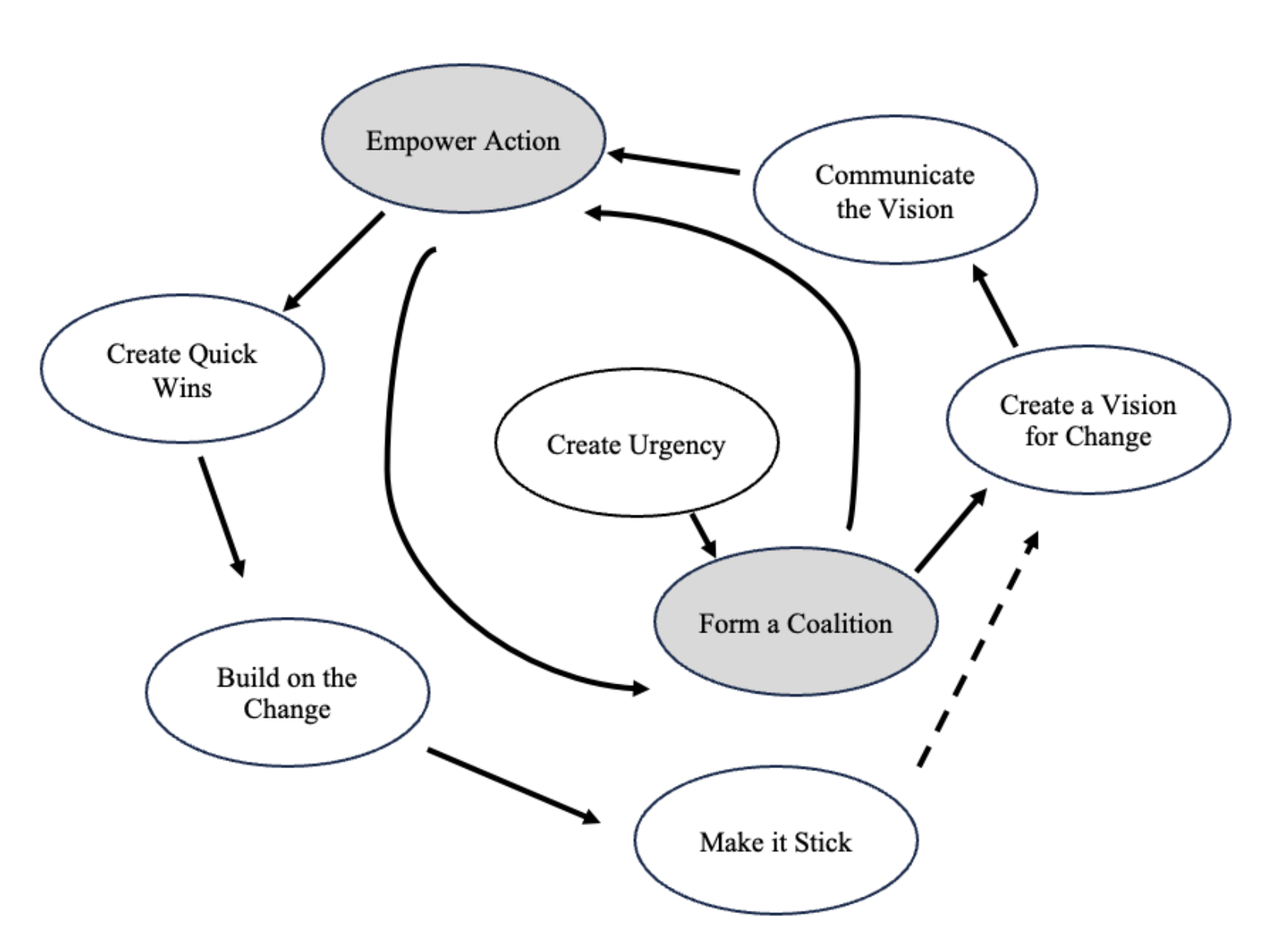
Figure 3. Departures from Kotter’s Theory of Change
This research reveals the need for a more iterative model. In Figure 3, form a coalition (step 2) and empower action (step 5) are shaded because these steps emerged as critical anchors to the process. Step 5 was not just a midpoint, but it acted as both a bottleneck and breakthrough zone in the process, beginning a necessary feedback loop that continuously recalibrated leadership alignment, faculty buy-in, and clarity of purpose. This active feedback loop was vital as the community worked through the rest of the change process. The two steps were essential levers of momentum to strengthen and reform coalitions. Successful application of Kotter’s Theory of Change was most dependent upon meaningful, inclusive, repeated engagement of faculty and administration. Finally, since ESD requires an interdisciplinary approach that emphasizes student agency, educational strategies that are used to prepare learners must evolve with the innovations and adjustments in science, society, and policy. The change model then must reflect a return to create a vision for change (step 3), symbolizing a continuous evolution of change so that new parts of the vision can be advanced. The dashed lines in Figure 3 emphasize the return, transforming the original model from linear to circular. ESD, like sustainable development itself, is shown to be a process rather than an outcome. By embedding ESD, schools can influence student behavior by encouraging sustainable habits, fostering environmental responsibility, and promoting ethical decision-making.
Kotter’s theory of change impacted the PAC of Nightingale faculty to engage in ESD. PAC is determined by the willingness, self-efficacy, and knowledge of pedagogical approaches to engage in ESD. The change process increased the willingness of faculty, had mitigating effects on self-efficacy, and a small impact on the faculty’s knowledge of pedagogical approaches. Kotter’s theory of change impacted the intention of Nightingale students to act on the SDGs. The results pointed to increased intention. The study implies that the change process could be used to impact PAC of K-12 faculty to engage in ESD and the intention of students to act on the SDGs. The results show that developing and implementing an education program with curricular goals linked to sustainability competencies and co-curricular goals linked to the SDGs impacts the PAC of faculty to engage in ESD and influences the student’s intention to act on the SDGs.
References
Ajzen, I. (1991). The theory of planned behavior. Organizational Behavior and Human Decision, 50, 179-211. https://doi.org/10.1016/0749-5978(91)90020-T
Alifa, F., Rahayu, S., Sulistina, O., & Alsulami, N. M. (2025). Toward sustainability: Evaluating ESD implementation in K-12 Schools: A systematic review. J-PEK (Jurnal Pembelajaran Kimia), 10(1), 58-79.
Alvarez-Risco, A., Del-Aguila-Arcentales, S., Rosen, M. A., Garcia-Ibarra, V., Maycotte-Felkel, S., & Martinez-Toro, G. M. (2021). Expectations and interests of university students in COVID-19 times about sustainable development goals: Evidence from Columbia, Ecuador, Mexico, and Peru. Sustainability, 13(6), 3306. https://doi.org/10.3390/su13063306
Ashby, I., Caskurlu, S., & Exter, M. (2018). Evolving roles of faculty at an emerging hybrid competency-based transdisciplinary program. The Journal of Competency-Based Education, 3(1), e1059. https://doi.org/10.1002/cbe2.1059
Bartkus, K., Nemelka, B., Nemelka, M., & Gardner, P. (2012). Clarifying the meaning of extracurricular activity: A literature review of definitions. American Journal of Business Education, 5(6), 693-704.
Biggs, J., Tang, C., & Kennedy, G. (2022). Teaching for quality learning at university (5th ed.). McGraw-Hill Education.
Boone, H. N., & Boone, D. A. (2012). Analyzing likert data. The Journal of Extension, 50(2), 48.
Borges, J. C., Cezarino, L. O., Ferreira, T. C., Sala, O. T. M., Unglaub, D. L., & Caldana, A. C. F. (2017). Student organizations and communities of practice: Actions for the 2030 agenda for sustainable development. The International Journal of Management Education, 15(2), 172-182.
Brandt, J., Barth, M., Hale, A., & Merritt, E. (2022). Developing ESD-specific professional action competence for teachers: Knowledge, skills, and attitudes in implementing ESD at the school level. Environmental Education Research, 28(12), 1691-1729. https://doi.org/10.1080/13504622.2022.2064973
Brundiers, K., Barth, M., Cebrian, G., Cohen, M., Diaz, L., Doucette-Remington, S.,…Zint, M. (2021). Key competencies in sustainability in higher education – toward an agreed-upon reference framework. Sustainability Science, 16(1), 13-29. https://doi.org/10.1007/s11625-020-00838-2
Celio, C., Durlak, J., & Dymnicki, A. (2011). A meta-analysis of the impact of service-learning on students. Journal of Experiential Education, 34(2), 164-181. https://doi.org/10.5193/JEE34.2.164
Chen, S. Y., & Liu, S. Y. (2020). Developing students’ action competence for a sustainable future: A review of educational research. Sustainability, 12(4), 1374.
Cooper, K., Stanulis, R., Brondyk, S., Hamilton, E., Macaluso, M., & Meier, J. (2016). The teacher leadership process: Attempting change within embedded systems. Journal of Educational Change, 17, 85-113.
Feinstein, N. W., & Carlton, G. (2013). Education for sustainability in the K-12 educational system of the United States. In R. McKeown & V. Nolet (Eds.), Schooling for sustainable development in Canada in the United States (pp. 37-49). Springer, Dordrecht.
Hale, J. L., Householder, B. J., & Greene, K. L. (2002). The theory of reasoned action. In J. Dillard & M. Pfau (Eds.), The persuasion handbook: Developments in theory and practice (pp. 259-286). Sage Publications, Inc.
Haltinner, U. (n.d.). Thematic reduction process. Retrieved February 25, 2044.
Husamah, H., Suwono, H., Nur, H., & Dharmawan, A. (2022). Action competencies for sustainability and its implication to environmental education for prospective science teachers: A systematic literature review. Eurasia Journal of Mathematics, Science and Technology Education, 18(8), em2138.
Istenic Starcic, A., Terlevic, M., Lin, L., & Lebenicnik, M. (2018). Designing learning for sustainable development: Digital practices as boundary crossers and predictors of sustainable lifestyles. Sustainability, 10(6), 2030. https://doi.org/10.3390/su10062030
Jensen, B. B., & Schnack, K. (1997). The action competence approach in environmental education. Environmental Education Research, 3(2), 163-178.
Jones, J., Firth, J., Hannibal, C., & Ogunseyin, M. (2019). Factors contributing to organizational change success or failure: A qualitative meta-analysis of 200 reflective case studies. In Evidence-based initiatives for organizational change and development (pp. 155-178). IGI Global.
Klassen, R. M., Bong, M., Usher, E. L., Chong, W. H., Huan, V. S., Wong, I. Y., & Georgiou, T. (2009). Exploring the validity of a teacher’ self-efficacy scale in five countries. Contemporary Educational Psychology, 34(1), 67-76.
Kotter, J. (2012). Leading change. Harvard Business Press.
Kotter, J. P., & Cohen, D. S. (2012). The heart of change: Real-life stories of how people change their organizations. Harvard Business Press.
Laurie, R., Nonoyama-Tarumi, Y., Mckeown, R., & Hopkins, C. (2016). Contributions of education for sustainable development (ESD) to quality education: A synthesis of research. Journal of Education for Sustainable Development, 10(2), 226-242.
Lohmann, J., Breithecker, J., Ohl, U., Gieb-Stuber, P., & Brandl-Bredenbeck, H. P. (2021). Teachers’ professional action competence in education for sustainable development: A systematic review from the perspective of physical education. Sustainability, 13(23), 13343.
Malandrakis, G., Papadopoulou, P., Gavrilakis, C., & Mogias, A. (2019). An education for sustainable development self-efficacy scale for primary pre-service teachers: Construction and validation. The Journal of Environmental Education, 50(1), 23-36. https://doi.org/10.1080/00958964.2018.1492366
Miller, R. (2015). Learning, the future, and complexity. An essay on the emergence of futures literacy. European Journal of Education, 50(4), 513-523.
Mircioiu, C., & Alkinson, J. (2017). A comparison of parametric and non-parametric methods applied to a Likert scale. Pharmacy, 5(2), 26.
Moeller, J., & Grassinger, R. (2013). A review of passion concepts and their overlaps with commitment: Opening a can of worms [Doctoral dissertation, Erfurt University], www.db-thueringen.de/servlets/MCRFileNodeServlet/dbt_derivate_00029036/DissJuliaMoeller.pdf.
Montano, D. E., & Kasprzyk, D. (2015). Theory of reasoned action, theory of planned behavior, and the integrated behavioral model. In K. Glanz, B. Rimer, & K. Viswanath (Eds.), Health behavior: Theory, research and practice (pp. 95-124). Jossey-Bass.
Nightingale (n.d.). Welcome to Nightingale. Retrieved January 2, 2023, from
www.nightingale.org/welcome-to-nightingale/
Nitta, K., Wrobel, S., Jimmerson-Eddings, H., & Jimmerson-Eddings, E. (2009). Leading change of a school district reorganization. Public Performance & Management Review, 32(3), 463-488. https://doi.org/10.2753/PMR1530-9576320305
Nolet, V. (2009). Preparing sustainability-literate teachers. Teachers College Record, 111(2), 409-442.
Nolet, V. (2016). Educating for sustainability: Principles and practices for teachers. Routledge.
Norman, G. (2010). Likert scales, levels of measurement and the “laws” of statistics. Advances in Health Sciences Education, 15, 625-632.
Okubo, K., Yu, J., Osani, S., & Serrona, K. R. B. (2021). Present issues and efforts to integrate sustainable development goals in a local senior high school in Japan: A case study. Journal of Urban Management, 10(1), 57-68.
Olsson, D., & Gericke, N. (2016). The adolescent dip in students’ sustainability consciousness – implications for education for sustainable development. The Journal of Environmental Education, 47(1), 35-51.
Olsson, D., Gericke, N., & Boeve-de Pauw, J. (2022). The effectiveness of education for sustainable development revisited – a longitudinal study on secondary students’ action competence for sustainability. Environmental Education Research, 28(3), 405-429. https://doi.org/10.1080/13504622.2022.2033170
Parker, K. (1996). Pragmatism and environmental thought. In A. Light & E. Katz (Eds.), Environmental pragmatism (pp. 21-37). Routledge.
Parry, S., & Metzger, E. (2023). Barriers to learning for sustainability: A teacher perspective. Sustainable Earth Reviews, 6(1), 2.
Redman, A., & Wiek, A. (2021). Competencies for advancing transformations towards sustainability. Frontiers in Education, 6(785163). https://doi.org/10.3389/feduc.2021.785163
Redman, A., Wiek, A., & Barth, M. (2020). Current practice of assessing students’ sustainability competencies: A review of tools. Sustainability Science, 16(1), 117-135. https://doi.org/10.1007/s11625-020-00855-1
Redman, E. (2013). Advancing educational pedagogy for sustainability: Developing and implementing programs to transform behaviors. International Journal of Environmental Science Education, 8(1), 1-34.
Redman, E. (2013). Opportunities and challenges for integrating sustainability education into k-12 schools: Case study phoenix, AZ. Journal of Teacher Education for Sustainability, 15(2), 5-24.
Rieckmann, M., Mindt, L., & Gardiner, S. (2017). Education for sustainable development goals. UNESCO.
Risopoulos-Pichler, F., Daghofer, F., & Steiner, G. (2020). Competences for solving complex problems: A cross-sectional survey on higher education for sustainability learning and transdisciplinarity. Sustainability, 12(15), 6016. https://doi.org/10.3390/su12156016
Salaman, Y., & Broten, N. (2017). An analysis of John P. Kotter’s leading change. Macat Library.
Saldana, J. (2021). The coding manual for qualitative researchers (4th ed.). Sage.
Sass, W., Boeve-de Pauw, J., Olsson, D., Gericke, N., De Maeyer, S., & Van Petegem, P. (2020). Redefining action competence: The case of sustainable development. The Journal of Environmental Education, 51(4), 292-305.
Sass, W., Claes, E., Pauw, J. B., De Maeyer, S., Schelfhout, W., Van Petegem, P., & Isac, M. M. (2022). Measuring professional action competence in education for sustainable development (PACesd). Environmental Education Research, 28(2), 260-275. https://doi.org/10.1080/13504622.2021.1976731
Sass, W., De Maeyer, S., Boeve-de Pauw, J., & Van Petegem, P. (2023). Honing action competence in sustainable development: What happens in classrooms matters. Environment, Development and Sustainability, 25(4), 3649-3670.
Shephard, K. (2022). On the educational difference between being able and being willing. In P. Vare, N. Lausselet, & M. Rieckmann (Eds.), Competences in education for sustainable development: Critical perspectives (pp. 45-52). Springer International Publishing AG.
Ssosse, Q., Wagner, J., & Hopper, C. (2021). Assessing the impact of ESD: Methods, challenges, results. Sustainability, 13(5), 2854.
Sterling, S. (2001). Sustainable education: Re-visioning learning and change. Green Books.
Timm, J. M., & Barth, M. (2021). Making education for sustainable development happen in elementary schools: The role of teachers. Environmental Education Research, 27(1), 50-66.
UNESCO. (2014). UNESCO roadmap for implementing the global action programme on education for sustainable development. sustainabledevelopment.un.org/index.php?page=view&type=400&nr=1674&menu=35
Urdan, T., & Arguenta-Vogel, A. (2019). Student attitudes and academic achievement: Antecedents and consequences. In D. Albarracin & B. Johnson (Eds.), The handbook of attitudes, volume 2: Applications (2nd ed., pp. 527-561). Routledge.
Van Poeck, K., & Vandenabeele, J. (2012). Learning from sustainable development: Education in the light of public issues. Environmental Education Research, 18(4), 541-552.
Waltner, E., Riefs, W., & Mischo, C. (2019). Development and validation of an instrument for measuring student sustainability competencies. Sustainability, 11(6), 1717.
Wankel, L. A., & Wankel, C. (2016). An overview of integrating curricular and co-curricular endeavors to enhance student outcomes. In L. Wankel & C. Wankel (Eds.), Integrating curricular and co-curricular endeavors to enhance student outcomes (pp. 3-12). Emerald Group Publishing.
Webb, T., & Sheeran, P. (2006). Does changing behavioral intentions engender behavior change? A meta-analysis of the experimental evidence. Psychological Bulletin, 132(2), 249-268. https://doi.org/10.1037/0033-2909.132.2.249
Wiek, A., Bernstein, M., Foley, M., Cohen, M., Forrest, N., Kuzdas, C.,…Withycombe Keeler, L. (2015). Operationalising competencies in higher education for sustainable development. In M. Barth, G. Michelsen, M. Rieckmann, & I. Thomas (Eds.), Handbook of higher education for sustainable development (pp. 241-260). Routledge.
Wiek, A., Withycombe, L., & Redman, C. L. (2011). Key competencies in sustainability: A reference framework for academic program development. Sustainability Science, 6(2), 203-218. https://doi.org/10.1007/s11625-011-0132-6
Yuan, X., Yu, L., Wu, H., She, H., Luo, J., & Li, X. (2022). Sustainable development goals (SDGs) priorities of senior high school students and global public: Recommendations for implementing education for sustainable development (ESD). Education Research International, 2022.
Zguir, M. F., Dubis, S., & Koc, M. (2021). Embedding Education for Sustainable Development (ESD) and SDGs values in curriculum: A comparative review on Qatar, Singapore and New Zealand. Journal of Cleaner Production, 319, 128534.


 Frank Barros teaches STEM classes at the Nightingale-Bamford School in NYC. He has also worked as a sustainability director and consultant for K-12 schools for over twenty years.
  Dr. Redman is the Director of the Educational Sustainability Doctoral Program and Associate Professor in the School of Education at the University of Wisconsin-Stevens Point. Her previous higher education positions were at Leuphana University of Luneburg and the National Autonomous University of Mexico. Her PhD is in Sustainability from Arizona State University.
  Paul Vare leads the Doctor of Education programme at the University of Gloucestershire where he also conducts research which included the development of the Rounder Sense of Purpose educator competence framework. He is Chair of the National Association for Environmental Education-UK and academic advisor to the UN Economic Commission for Europe’s (UNECE) Steering Committee on education for sustainable Development (ESD) having co-authored the UNECE ESD Strategy in 2005.