





Abstract: Pakistan faces an urgent climate crisis that disproportionately affects its youth and vulnerable communities. At the same time, the country’s rapidly expanding digital connectivity presents new opportunities to advance climate literacy beyond formal classrooms. This paper examines how digital climate activism can function as a form of non-formal sustainability education under the United Nations’ Action for Climate Empowerment (ACE) framework in Pakistan. Drawing on academic literature, policy analysis, and a case study of a youth-led initiative (EcoRevival Pakistan), the study conceptualizes digital platforms as educational spaces that support climate learning, public awareness, participation, and youth empowerment. The analysis situates Pakistan’s climate vulnerability, youth demographics, and digital landscape within the ACE framework, highlighting how social media, online training, and digital campaigns contribute to climate literacy development. Findings illustrate that youth-led digital initiatives foster experiential learning, systems thinking, and civic engagement while complementing gaps in formal climate education. However, challenges such as digital inequality, uneven access, and limited institutional support constrain broader impact. Building on these insights, the paper proposes a scalable digital climate education and empowerment model tailored to Pakistan’s socio-cultural and technological context. A brief comparative perspective draws lessons from international approaches to climate education and youth engagement. The study concludes with practical recommendations for policymakers, educators, and civil society to strengthen non-formal climate education through digital tools. By positioning digital activism as a sustainability education pathway, this research contributes to scholarship on climate literacy, youth engagement, and Action for Climate Empowerment in the Global South.
Continue Reading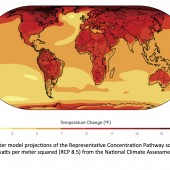
Energy education, vital though it is, remains incomplete if it doesn’t explicitly address the impacts of human activities, specifically the combustion of buried solar energy/fossil fuels, on the environment in general and climate system in particular. Projections based on current emission trends indicate a likely increase of the radiative forcing of energy in the Earth system from around three waters per meter squared today to over eight by the year 2100, substantially heating the planet in the process. Efforts to avoid or minimize the connection between human energy consumption and changing climate amount to a form of science denial through omission. In order to address the causes, effects, and risks of climate change and appreciate the range of options to minimize negative impacts and maximize resilience, energy and climate literacy efforts should be combined and ideally infused throughout the curriculum.
Continue Reading
 Journal of Sustainability Education is licensed under a Creative Commons Attribution License.


