




Abstract: This article examines a professional development workshop aimed at introducing faculty to transformative learning approaches for teaching sustainability-related content. The small-scale, exploratory case study used data from surveys and a focus group to gain preliminary insights into faculty’s engagement with the Burns Model of Sustainability Pedagogy after the workshop. Findings revealed a shift in participants’ pedagogical approaches towards problem-based learning, role play, and simulations, and away from didactic lectures. Participants highlighted the model’s potential to enhance learners’ sense of place, illuminate complex problem interconnections, develop critical thinking skills, and question power dynamics. Potential implementation challenges included time constraints, the need for faculty support, and assistance in developing place-based, project-based, and experiential learning experiences. Despite a strong inclination to integrate the model’s components, synthesizing the dimensions proved challenging for participants. The study underscores the necessity for incremental improvements to course design and long-term institutional support to effectively adopt sustainability pedagogy in higher education.
Continue Reading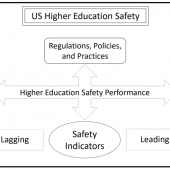
Abstract: Sustainability education in higher education often emphasizes curriculum and student learning, yet institutions also learn through operational practices and assessment systems. This study examines the relationship between campus sustainability engagement and occupational safety outcomes at U.S. higher education institutions using data from the Sustainability Tracking, Assessment and Rating System (STARS) (AASHE, 2025). Institutional characteristics, campus size, and STARS recognition levels were analyzed to assess whether stronger sustainability engagement is associated with lower rates of work-related injuries and illnesses. Findings suggest that institutions with higher sustainability engagement tend to report fewer occupational injuries and illnesses, suggesting a relationship between sustainability engagement and attention to worker safety. From a sustainability education perspective, these results demonstrate how assessment frameworks such as STARS can support institutional learning and sustainability education by linking performance data to planning and continuous improvement (Lozano et al., 2013). Integrating occupational safety into sustainability assessment reinforces safety as a sustainability outcome and illustrates how sustainability education extends beyond the classroom into everyday institutional practice.
Continue Reading
 Journal of Sustainability Education is licensed under a Creative Commons Attribution License.


