





Held near Siena, Italy, our 3-week summer abroad program, The Mindful Palette of Stonehill College, combines art, gastronomy, and agricultural studies that strive for cultural mindfulness through holistic and experiential learning processes. A strong belief in sustainability, both philosophically and praxis, underlie these unique experiences. We share the complexities of attaining a sense of mindfulness with modern expectations and preconceptions. We address strategies to convince and support students to not only taste-test but to learn and embrace another culture and the environment through interdisciplinary activities and media formats. Through immersive and hands-on learning, we explore the intersections of food culture and the arts, so that students gain a comprehensive understanding of the impact of the handmade and the value of personal labor. A nose-to-tail mindset defines how and what materials we use. Until the modern era, art-making, food preparation, and scientific experiments were born out of the kitchen, both as laboratory and studio. The hearth was also the heart of the home—and therefore defined the family and cultural identity. Artistic practices that begin with the origins of our resources and have connections to the kitchen fortify our lessons and touch upon many of the aspects we find most important in the act of mindful learning—awareness of the self and the other, and our material’s origins and potential uses. They result in seeing how the daily and divine are one and the same.
Continue Reading
Journal of Sustainability Education senior editor Amanda Bielawski sits down with Megan Schufreider, director of education for the California Academy of Sciences to discuss how climate change is creating more demand for water-related curricular resources, with a specific emphasis on the importance of teaching about virtual water footprints. The Q&A interview concludes with a list of water-related curricular resources, including various water footprint calculators, available to both educators and the public.
Continue Reading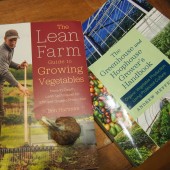
Two books dealing with sustainable agriculture are reviewed as resources for teaching: The Greenhouse and Hoophouse Grower’s Handbook and The Lean Farm Guide to Growing Vegetables. Both fill important gaps in the field.
Continue ReadingEditorial Overview by Antonio Lopez, John Cabot University, Rome, Italy; Theresa Redmond, Appalachian State University U.S.; Jeff Share, University of California, Los Angeles, U.S.; and Clare Hintz, Journal of Sustainability Education, U.S. Introduction Ecomedia: the Metaphor that Makes a Difference by Antonio Lopez, John Cabot University, Rome, Italy Book Review Book Review: Why […]
Continue Reading
Link to the JSE March 2026 General Issue Table of Contents Simon JSE March 2026 General Issue PDF Abstract: The recent rapid shift towards the adoption of electric vehicles and other low-carbon technology has increased the global demand for strategic minerals. Increased demand for these strategic minerals means nations around the world are working […]
Continue Reading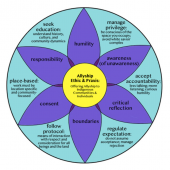
Abstract: As two white women of settler-colonial lineage, Kolette (mother) and Rhiannon (daughter) come to this work with a desire to engage and support decolonization and re-Indigenization of the spaces we navigate. Our guiding question: In what ways might non-Indigenous individuals support the decolonizing work of Indigenous communities and individuals? This project is an intergenerational collaborative autoethnography (CAE) that uses a dialectic format to explore specific, complex questions related to building an ethic and engaging a praxis of Indigenous allyship. A foundational aspect of our autoethnographic work is that of Dr. Haunani-Kay Trask, Kanaka Maoli scholar, educator, and sovereignty activist. Trask’s contribution to this exploration is not direct; instead, her life’s work and influence are cornerstone to the scholarly and professional journey of both women.
Continue ReadingAbstract: In a creative exploration, Nicole Taylor and Xander Garcia engage in a collaborative reflection that entwines visual exploration and metaphor to weave together personal and poetic narratives, academic theories, and observations of a world fragmented by Cartesian dualism. Drawing on personal and lived experiences, place-based and outdoor education, systems thinking, and transformative education, their conversation seeks the possible re-entanglement of humans with the more-than-human world. Taylor and Garcia use wefts and warps as weaving symbols to represent their voices and their lived experiences. Also woven throughout is their journey with theoretical insights and historical roots of the separation of humans from nature (Cartesian dualism and the Capitalocene). With deep grief and curiosity, they effort to make sense of witnessing ecological devastation while also advocating for a movement and language that creates a possible “next,” beyond the Anthropocene. This work, with heartbreak and hope, searches for interconnected roots and community through multi-modal forms of engagement and reciprocity, ultimately envisioning possible paths toward collective re-entanglement, transformative justice, and in-becoming more-than-human.
Continue Reading
Abstract: This study examines how integrating the Four-Dimensional Ecology Education (4DEE) Framework into an undergraduate Food–Energy–Water (FEW) nexus case study assignment shaped sustainability learning and systems thinking in an online introductory environmental studies course. Using pre/post surveys (n = 7 matched responses) and content analysis of final projects (n = 21), the study explored patterns in students’ sustainability-related competencies, including ecological understanding, systems reasoning, human–environment interactions, and cross-cutting sustainability themes. Both quantitative and qualitative analyses indicated similar trends, with students reporting increased familiarity across all 4DEE domains, particularly in ecological concepts, human–environment interactions, and sustainability-oriented themes. Content analysis of final projects reflected these same dimensions, including discussion of ecological mechanisms, application of hydrological and climate-related processes, and clearer articulation of relationships between stakeholders and ecosystems. These patterns suggest that explicitly integrating sustainability-oriented ecological framing into assignment design may strengthen students’ conceptual foundations for interpreting FEW nexus challenges. While not designed to establish causality and limited by a small sample size, this course-based reassessment provides descriptive evidence that structured faculty development opportunities can support the design of sustainability-focused assignments that yield conceptually sophisticated student work.
Continue Reading
Abstract: Although participatory photography methods (PPM) have been increasing in scientific research, not many studies are well-known related to PPM and sustainable development, including connections to the United Nations Sustainable Development Goals (SDGs). The purpose of this study is to explore place-based participatory photography (combined auto-photography and photo essay or auto-photographic essay) methods to examine how they support sustainability competencies. Course design included the SDGs connected to a campus sustainability map to support learning in a sustainability higher education classroom. Twenty-five self-selected students in a semester-long sustainability course at the University of Wisconsin–Madison (UW–Madison) explored sustainability concepts connected to their university campus using place-based participatory photography methods. Data was collected from students and consisted of photographs with titles and narratives from the beginning (pre-assessment) and the end (post-assessment) of the semester. The study included member checking with student thematic analysis and inter-rater reliability of coding. In findings, student participants’ data had more connections to the intrapersonal competency in the pre-assessment than the post-assessment. The post-assessment findings indicated that participatory photography methods (PPM) connected to a campus sustainability map and the SDGs strengthened the knowledge and systems thinking competencies as connected to socio-environmental systems. PPM did not lend itself well to strategic thinking or technical skills related to sustainability competencies. This participatory photography study adds valuable insight into supporting the sustainability competencies related to the SDGs.
Continue Reading
Abstract: To better prepare students for the sustainability challenges of the future, the K-12 sector needs a system that encourages multidisciplinary and interdisciplinary collaboration to successfully implement sustainability education (Parry & Metzger, 2023; Timm & Barth, 2021; Zguir et al., 2021). This research is a mixed-methods case study that uses Kotter’s theory of change to prioritize Education for Sustainable Development (ESD) in the curriculum and extra-curricular activities of the Nightingale-Bamford School, which is a K-12, private, all-girls school located on the Upper East side of New York City. The aim is to explore the impact the changes have on both faculty and students. Teachers that were a part of the change process voluntarily participated in surveys and interviews. Students that experienced the curriculum and service-learning changes also participated in interviews. The development and implementation of the program increased the willingness of faculty to engage in ESD, had mitigating effects on self-efficacy, and had a small impact on the faculty’s knowledge of pedagogical approaches. The ESD program increased the intention of students to act on the Sustainable Development Goals (SDGs). The results indicate that Kotter’s theory of change can be used to impact the professional action competence of faculty to engage in ESD and to positively impact the intention of students to act on the SDGs. More studies are needed to investigate long term impacts of the change process and how the change process impacts faculty and students in other K-12 settings.
Continue Reading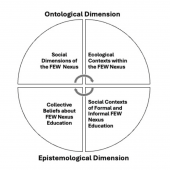
Abstract: Food-Energy-Water (FEW)-Nexus-based education supports understanding complex relationships in FEW systems, promoting socio-ecological systems thinking and decision-making about natural resources and sustainability challenges. Our study centers the perspective of educational practitioners to define and describe FEW-Nexus-based education and identify challenges with FEW-Nexus-based education. Using artifacts from workshops and existing literature, we explored the foundations of an integrated framework for FEW-Nexus-based education. These foundations include ontological and epistemological dimensions, which we used to probe deeply into workshop participants’ responses using directed and thematic content analysis. Thematic analysis resulted in themes within four categories: Ecological Contexts within the FEW-Nexus, Social Dimensions of the FEW-Nexus, Collective Beliefs about FEW-Nexus Education, and Social Contexts of Formal and Informal FEW-Nexus Education.
Continue Reading
Abstract: This article describes the importance of having students study the relationship between climate change and migration as phenomena currently impacting millions of people now and more so in the future. Teachers can have students examine how their communities develop resilience or mitigation practices to cope with climate change impacts to reduce the need to migrate, study the history of migration due to different reasons, the use of positive and negative language employed to describe migrants, and the portrayals of migration in literature as well as in the media, movies, or documentaries, in ways that lead to their perceiving the need to address the climate crisis.
Continue Reading
Abstract. This article centers around photos that I took during the 2009 Toronto garbage strike, revealing how garbage transformed Toronto’s busy streets. While these photos are more than a decade old, they remain relevant and symbolic of a broader socio-political issue: municipal solid waste, known as everyday trash. It is the stuff that fills garbage bags and recycling bins like newspapers, plastic water bottles, and food waste. Municipal solid waste is a major global issue, with more than a billion tons created annually around the world. In this article, I take a metaphorical dumpster dive into this trash crisis. I list resources and activities that educators can use to start talking trash in K-12 and post-secondary classrooms. Special emphasis is placed on what I am calling, ‘Trash Dialogues’.
Continue Reading
Abstract: The present survey-based study assesses the cognitive, affective, and behavioral outcomes associated with student participation in a virtual, bi-national, mentored undergraduate research experience focused on sustainability issues in the regions of southeastern Europe through which the Danube River flows. The perceived gains in ability, beliefs, and benefits enabled through this fully virtual iteration of the pedagogical model suggest that programs that integrate multiple high-impact practices (in this case, undergraduate research and global learning), have the potential to be transformative for participating students, regardless of their country of origin, and to contribute towards the growth of an increasingly diverse and globally oriented STEM workforce and to foster the next generation of global citizens actively engaged in the work of environmental sustainability. Findings also reflect upon the growing need to develop similar virtual exchange modalities to tackle systemic equity and access issues in sustainability education, and the need to advance assessment tools that are both culturally responsive and broadly relevant in bi-national/transnational courses and/or programming.
Continue Reading
Abstract: Sustainability education (SE) is a transdisciplinary field. Diverse disciplines support behaviors that consider interrelationships among our environmental and social systems, including our educational systems. Educational systems are complex systems and should be considered as such to promote SE and to understand the nature of complexity and the learners themselves as living systems. One such example is higher education. Supporting SE in higher education involves considering all the components within the system, including the educator as they design their approach. Teaching pedagogy should be holistic and experiential to engage learners in different sustainability learning paradigms. Learning about sustainability content (learning about sustainability), putting learning into practice (learning for sustainability), and having a sustainability mindset (learning as sustainability) are all features of such a system. These learning paradigms and teaching approaches help to support the knowledge and skills necessary to build sustainability literacy. Along with defining these components of a SE system, consideration should be given to the competencies that support sustainability literacy. The sustainability teaching-learning system can be organized into categories of foundational sustainability competencies: intrapersonal, knowledge, skills, and behavioral. Connecting these competencies to sustainability content and concepts allows flexibility and emergent learning for educators and learners alike in higher education settings.
Continue ReadingAbstract: In this essay, I discuss the important objectives for education for sustainability, given the challenges that we face, and the serious shortcomings in our knowledge systems. I stress the need to consider sustainability as if both the environment and people matter. I argue that, because a deep understanding of the sustainability challenges can lead to despair, it is important to provide grounds for realistic hope, by showing how positive change is possible, and is being made to happen, across the world. Addressing the sustainability challenge will depend on our ability to enhance human well-being while minimizing material and energy resource flows. Fortunately, the science of well-being shows that, while wealth and consumption contribute to happiness and well-being, rich social relationships, treating everyone with dignity and compassion, and a meaningful, purposeful life, are as important.
Continue Reading
Abstract: Universities are sustainability trailblazers, achieving a more sustainable future through research, community, and education. Critical to their pursuit of sustainability is ensuring that university stakeholders are supportive of university sustainability priorities. As a large stakeholder group, undergraduate students can exert a significant impact on sustainability priorities at the university and thus play a pivotal role in its sustainable development. However, research finds this group is often underutilized in university sustainable development. This paper accordingly examines opportunities to enhance student involvement in university sustainability. Over two research phases, the inquiry explores student evaluations of university sustainability initiatives through a classroom assignment and focus group interviews. Findings reveal that students’ perspectives of the university’s sustainability priorities do not align with what they feel is essential for the student experience. In the focus groups, students provide insight for how to create “buy-in” for university sustainability. The final phase of the inquiry applies the research findings in a service-learning consulting experience. Student teams work on a sustainability consulting project to implement suggestions for connecting university sustainability initiatives to the student experience. The service-learning consulting project allows students to apply their knowledge and skills to real sustainability challenges and, in turn, helps the university connect important sustainability initiatives to the student experience.
Continue ReadingLink to the JSE December 2024 CECR Issue Table of Contents “Our beautiful Earth is becoming inhospitable to us. How should educators, researchers, and knowledge creators respond to this existential threat? By accepting an unpalatable truth: our mainstream approach to learning, education, and research is actively co-producing the very opposite of what we need […]
Continue Reading
Abstract: This article provides an overview and reflective narrative of a partnership between Grand Valley State University (GVSU) and Ducks Unlimited (DU) to build mutually benefiting relationships with agricultural communities to preserve and restore healthy wetlands through sustainable farming practices. The partnership involved GVSU students engaged in Human-Centered Design (HCD) working with DU managers, policy makers, and researchers to observe various sectors of agricultural communities and authentically communicate with stakeholders. Through the design thinking process of empathy, ideation, and defining concepts and values, students developed educational programs and protypes focusing on communication efforts aimed towards a new generation of farmers who study agricultural sciences and natural resources. The article observes and analyzes a multi-semester case study that demonstrates best practices in sustainability education by developing holistic education plans involving systems thinking to implement and lay the groundwork for sustainable agricultural practices. The first project involved an educational programing designed for the FFA National Convention to serve as the launching point for a positive education experience economy to establish DU as a familiar ally in sustainable agriculture practices. The second project is a restoration proposal for 34 acres of farm fields at GVSU to become a multiuse sustainable agriculture and wetlands experiential learning center. The case study provides evidence that students who engage in learning through doing such as visiting restoration sites with regional biologists to observe eco-services, talking with farmers about their livelihoods, and meet with local government representatives to explore the challenges associated with transition areas between suburbia, farms, and forests can provide mutually benefiting solutions to promote sustainable agriculture and wetland preservation. The application of HCD by students enhanced their awareness of grassroots level needs of local communities, governments, and non-profits to create new sustainability initiatives.
Continue Reading
Abstract: Black women activists are scrutinized and discredited in the press which contributes to the withdrawal of support for their work and the deterioration of their well-being. This is particularly salient for Patrisse Cullors, the most public facing organizer connected to Black Lives Matter (BLM). Although Black women activists understand how sexism and racism contribute to their delegitimization, and though there is burgeoning research on journalism’s role in the demoralization of BLM, research that engages with methods centering Black women’s experiences is lacking. By using Black feminism as the main lens through which to consider Black women activists’ treatment, an analysis of scripted media tropes and news articles revealed four truths: 1) Black women activists are not allowed to thrive; 2) The media harms Black women activists in two ways; 3) False narratives don’t die; and 4) Optics are valued over truth. Some discoveries can be applied to Black women, Black activists who are not women, and activists who are not Black and not women. Further research is needed to assess how other intersections impact Black women activists, and future studies regarding trans, nonbinary, and gender non-conforming activists is necessary to determine media effects on the most targeted in activist communities.
Continue Reading
This paper examines the history and globalization of anti-fat bias and diet culture, highlighting how these ideologies have been perpetuated by both governmental and non-governmental actors, beginning with white European colonizers. Throughout history, fat bodies have been commodified, stigmatized, and pathologized, with the rise of global media and public health campaigns further reinforcing these harmful narratives. The paper explores how anti-fat bias has been entrenched within biomedical and mental health fields and examines the far-reaching consequences on individuals and societies. Additionally, it provides actionable steps for mental health professionals, educators, and policymakers to address these injustices through social justice frameworks, counselor self-reflection, and inclusive pedagogical practices. Ultimately, the paper calls for systemic change to confront weight-based discrimination and promote body diversity as an essential component of health and equity.
Continue Reading
Abstract: Diversity, equity, and inclusion (DEI) are more than buzzwords. They are concepts that promote sustainable, civic-minded, non-discriminatory environments in academic, professional, and personal lives. DEI work may be accomplished in many ways; one option in academia may be providing professional development workshops targeted to faculty. This article explores how the author (full-time faculty member at a community college) created a collaborative professional development workshop—using community engaged critical research and participatory action research—for community college faculty, staff, and students and based on interactive tasks in first-year composition classes. The article provides context for the urgent need for DEI work, in part, through the disruption of supremacist pedagogy. It also explains and reflects on the in-class activities and workshop outcomes.
Continue Reading
Higher education institutions (HEIs), educating the leaders of tomorrow and influencing regional trends, have been implementing sustainable practices for decades. Though many of these practices are effective, their functionality can be negated by a variety of institutional barriers. These difficulties vary, including lack of followthrough and maintenance, poor interdepartmental communication, absence of coordination, and fragmentation of information. Often, these problems can be attributed to an unsustainable institutional culture. Like many other universities, the University of Wisconsin-Milwaukee (UWM) experiences these sustainability challenges. UWM is exploring ways in which ArcGIS StoryMaps, a place-focused storytelling platform, can begin solving interdepartmental communication problems within sustainability as a community-accessible information centralization and outreach tool.
Continue ReadingThis article explores community engaged critical research (CECR) with youth climate activists and their adult facilitators to examine U.S. policy-making for transformative climate justice. Using post qualitative inquiry and thinking with new materialism, it presents a collaborative approach of building and analyzing assemblages (collections of more-than-human entities) to consider relationality and agency in complex systems. It explores how adults might act for climate justice in solidarity with young people and other entities that have historically been excluded by opening up a youth climate lobby day, thinking beyond current hierarchical approaches to policy-making to foster inclusivity, ethical solidarity, and dynamic intergenerational relationship.
Continue ReadingProtected areas are essential for biodiversity conservation. However, the creation of protected areas often excludes Indigenous Peoples and Local Communities (IPLC), who are seen as a threat to biodiversity, and therefore their access to natural resources becomes restricted. This approach is known as fortress conservation and it is a colonialist approach towards conservation because IPLCs are excluded from decision making and often from their own lands and banned from using natural resources in the areas to be conserved, while only governments and professionals have agency to decide the future of these lands. Approaches to decolonize conservation that attempt to integrate IPLCs´ worldviews, local ecological knowledge (LEK) and practices may be highly efficient in biodiversity conservation as well as local development. In the Argentine Dry Chaco region, Quimilero Project frames its conservation efforts in this inclusive framework, aiming to conserve cultural and biological diversity and seeing both as interconnected. This project involves multiple approaches, based on the principles of horizontality, IPLCs´ empowerment and the co-creation of knowledge and conservation initiatives based both on scientific and on LEK. In this paper we explain our work approach in the Argentine Chaco from a decolonizing perspective. We describe two of our programs, community-based wildlife and hunting monitoring and environmental education, to demonstrate what a decolonial approach to conservation can look like in practice.
Continue Reading
Abstract: At Schumacher College, Dartington, UK in 2008 we introduced the Deep Time Walk – a transformative learning experience in which college participants walk 4.6km in the countryside of the Dartington Estate representing the entire 4,600 million years of our planet’s history. The aim of the walk is to increase the ecological awareness of participants by giving them an embodied experience of the immense age of our Earth. At certain points during the walk a facilitator explains key events in earth history, such as the formation of the planet and the first appearance of living cells. Here we assess the effectiveness of the Deep Time Walk offered to eleven distinct groups of walkers during 2022 -2023. Participants on each of the eleven Deep Time Walks were asked to respond to a simple questionnaire asking them to quantify how much of seven qualities they felt immediately before and immediately after their walk (these were: Awe and Wonder, Sense of Earth’s Ancientness, Connection to Nature, Consequences of the Crisis, Hope, Commitment to Personal Change and Commitment to Political Change) . In total, 153 participants took part in the eleven walks and responded to the questionnaire. Analysis of the data showed a highly statistically significant increase across all seven qualities (p<0.00001 for each quality), suggesting that the Deep Time Walk is an effective means for developing and enhancing ecological awareness and commitment to action in these times of severe global crisis. Qualitative data were not collected during this phase of the study due to time limitations during walks. We recognise the importance of this kind of data and are devising ways of gathering it for both past and future walks.
Continue Reading
Abstract: One way to disrupt traditional Eurocentric teaching practices is through modifying curriculum in classes. Particularly, in an English Composition 101 course, an ongoing assignment called the Poetry Journal may assist students in thinking critically and reflexively. The concept was inspired by a high school English teacher, Brett Vogelsinger (2016), called “4 Reasons to Start Class with a Poem Each Day.” His four reasons: 1. Poems are short; 2. Poems are intense; 3. Poems connect (to other readings); 4. Poems inspire (writing). When building the assignment for a community college class, an instructor may make intentional (disruptive) choices for the poems. This article explores the project, which is grounded in culturally sustaining (Paris, 2021) and disruptive pedagogies (San Pedro, 2018)—both of which encourage the rethinking and dismantling of traditional Eurocentric-based instruction—and how the author (full-time faculty at a community college) applied said pedagogies to a specific in-class student activity to engage students in critical and reflexive thinking.
Continue Reading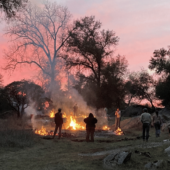
Abstract: The Keepers of the Flame Initiative, now in its fifth year, is a dynamic partnership between cultural fire practitioners, UC Davis faculty, and a diverse study body. This experiential learning initiative at the University of California, Davis centers Indigenous Fire Workshops, focusing on cultural fire. By centering Indigenous science and teaching approaches, this initiative inherently becomes high impact. High Impact Practices (HIPs) are pivotal educational interventions that promote holistic student development and experiential learning. These practices encompass features such as setting appropriately high expectations, experiences with diverse people and circumstances, sustained student engagement over an extended period, meaningful interaction with faculty and peers, public demonstration of learning, real-world relevance of classroom learning, and structured opportunities for reflection. The Keepers of the Flame Initiative incorporates two types of powerful high impact practices: collaborative group projects and community-based learning. These educational practices significantly enrich student learning and particularly benefit historically underserved students as well as broader student populations. I analyze HIP features within the Keepers of the Flame Initiative using survey data gathered in winter 2023, while also delving into the importance of Indigenous-led educational approaches. Indigenous perspectives and educators are crucial in broadening educational approaches, providing a pathway to uphold sovereignty of diverse knowledge systems, and nurturing a sense of responsibility towards land stewardship and environmental justice.
Continue Reading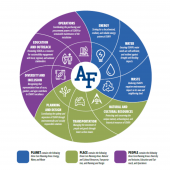
ABSTRACT: In this paper we offer an approach to sustainability-related education that can help students integrate the lessons they are learning in the classrooms to the type of real-world applications they will encounter in the workplace. We believe that by using our campus as a living-learning laboratory and engaging students in hands-on projects within a campus lab that directly contribute to one of their institution’s leading sustainability initiatives, we can unlock the highest levels of educational achievement and student satisfaction. We describe our course as intentionally designed because we have developed it with a specific purpose that goes beyond the stated learning objectives. Our course not only addresses recognized institutional and course-level educational outcomes, but also uses a community engagement approach that also directly supports important aspects of an enterprise-wide Sustainability Strategic Plan. We present relevant literature, highlight the significance of our approach to sustainability education, and describe its impact at our institution and in the community. We then offer detailed descriptions of our course’s activities, discuss lessons-learned and suggest future potential avenues of research and application. We hope this case study may prove to be an exemplar or a catalyst for other institutions of higher education as well as inspire further research aimed at improving sustainability education.
Continue Reading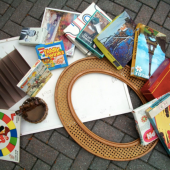
Abstract: This photo essay illustrates my journey of decluttering my childhood home. I have spent eight-months decluttering so far. Interestingly, I initially planned to declutter quietly and not document my experience. But the more I decluttered, the more I felt there was a story to tell, a cautionary tale of sorts. In this essay, I document my reflections on decluttering and raise questions about Western consumer culture. Logos and brand names have intentionally been edited/removed from photos.
Continue Reading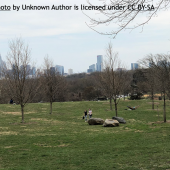
Abstract: This case study discusses the implementation of a park audit project with undergraduate college students in teacher education and public health programs. With a focus on drawing attention to the importance of urban green spaces in these two professional fields, the design of this project extended course activities into local parks. Students prepared to conduct park audits by engaging with course material focused on the importance of urban green spaces for individual health and children’s development, as well as inequities in access to high quality parks. The capstone of the course project was the audit of parks using the Community Parks Audit Tool (CPAT) in which each student assessed several parks in their local communities and documented their findings. This article discusses the contextual relevance of this project, its value in increasing attention to environmental considerations in the education and public health fields, as well as student responses to the implementation of the project in these specific classes.
Continue Reading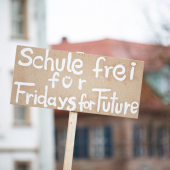
Abstract: The contribution first outlines the state of research on the relatively new Fridays for Future (FFF) movement and categorises first studies particularly from a German perspective, to provide a basis for a further differentiation in this field of research. In this context, fundamental aspects of the movement are presented. The self-concept of the German Fridays for Future movement in terms of a young protest movement with a global orientation is then compared against the educational tasks stipulated in the school legislation of the federal states (Bundesländer) with their societal-educational objectives. The contribution focuses on the question in how far the self-concept of the German branch of the FFF movement as an international protest movement and the activists’ engagement for climate protection and political participation is reflected in the educational objectives stipulated in school legislation. Statements are analysed regarding climate and environmental protection, participation and democracy and transnational references in the school legislation. A link can be found between the self-concept of the Fridays for Future movement and school legislation, but this does not resolve the conflict between the school strikes and compulsory schooling – a conflict that is intended by FFF to highlight the perceived urgency of the cause. Schools, educational administrators and educational policymakers are thereby urged to take a stance.
Continue Reading
Abstract: The West Virginia Climate Change Professional Development (WVCCPD) Project was developed in 2019 as an effort to engage West Virginia K-12 teachers and informal educators in climate change professional development to encourage learning and action. Started by astronomy educators who are passionate about climate change, the project has been an experiment that has iteratively grown each year. By bringing in social science experts, communication specialists, community activists, master teachers, and learning how to best support teachers and their students through misconceptions and empowering action, we have engaged over 130 W.Va. educators. WVCCPD represents a promising case study for how educators can come together across disciplines and institutions to build an engaging climate change learning community, even in West Virginia, an area that is known for fossil fuel extraction. We hope this paper informs other teacher education practitioners.
Continue Reading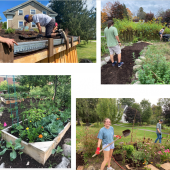
Abstract: This case-study supports the implementation and social investment in university campus community gardens as an interdisciplinary resource for academic research, extra-curricular activities, and community building. Using a permaculture design model, the St. Lawrence University community permaculture garden in Canton, New York State exists to enhance the diverse academic curriculum and varied community engagement opportunities to provide experiential and interdisciplinary learning opportunities for students, faculty, staff, and remaining stakeholders. This case-study will focus on one of St. Lawrence University’s student-led clubs, its operations, history, and challenges (e.g., participant transience). Our findings suggest that campus permaculture gardens require adequate investment, including financial and academic support. The development of a conceptual seasonal and academic community calendar provides a fundamental framework for operations and governance. The sheer number of opportunities and broad capacity of the club and the presence of physical student space brings meaningful accessibility and community engagement. Over time, the club and garden has remained resilient due to a holistic approach which keeps the bigger picture in mind. Each year the club faces a variety of challenges and obstacles, yet such experiences have provided opportunity for adaptation and evolution. Recommendations can be used to support a replicable model for other educational environments and communities in both urban and rural areas, interested in developing a permaculture garden as a resource that improves social cohesion during a time of ecological fatigue, social unrest, the COVID-19 pandemic, and climate change.
Continue ReadingThe Journal of Sustainability Education (JSE) serves as a forum for academics, organizers, educators, and practitioners to share, critique, and promote research, practices, and initiatives that foster the integration of economic, ecological, and social-cultural dimensions of sustainability within formal and non-formal educational contexts. This special issue centers on Community Engaged Critical Research (CECR) as a […]
Continue Reading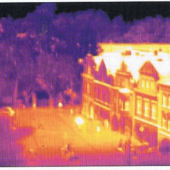
Abstract: A brief history of climatological science sets the stage for understanding the rise of the greenhouse gas thesis. That science is true as far as it goes, justifying our confidence, but it is an incomplete assessment of climatic systems. We have spent 40 years accepting the “pot lid” as the cause of the pot boiling over. That the “sun-warmed surface” impacts climate has been known for nearly 200 years. But greenhouse science failed to incorporate that and other scientific findings on urbanism, water cycles, and land management practices. To remedy this, I propose a broad climatic paradigm to address the actual cause of warming and provide a far more hopeful future with ample opportunities to resolve over-heating more completely, locally, and in a matter of months, years, or maybe decades, instead of centuries. Lastly, I discuss the significance of paradigm change, a new approach, and an expanded curriculum as challenges to sustainability education.
Continue Reading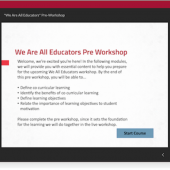
Abstract: Staff members play an important role in guiding students through living lab sustainability projects at Harvard University. Since there are significant opportunities for co-curricular learning in these settings, we created the “We Are All Educators” professional development workshop to empower those staff members to optimize and track student learning throughout these projects. In this case study, we will briefly summarize key principles of CCL and discuss its benefits as a tool for sustainability education in higher education. We will also describe our planning and implementation process for the workshop, the content of our training materials, and the results. Finally, we will end with key takeaways, as our workshop may be applicable to co-curricular learning in a variety of higher education contexts.
Continue Reading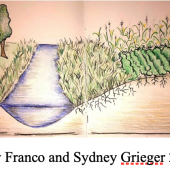
Abstract: This study examined how placemaking curricula shaped teacher candidate (candidate) knowledge, dispositions, and skills to understand, appreciate, and sustain local diversity, as evidenced through candidate reflections and products created in an elementary teacher education course integrating civic science concepts and practices into elementary classrooms. This study explored how placemaking curricula engaged community stakeholders in meaningful shared inquiry on real-world challenges, while meeting state science education standards. Placemaking inquiry projects developed by candidates focused on soil and water conservation, and sustaining diversity in schoolyard spaces. Curricula engaged candidates in learning soil and water conservation techniques from local farmers and conservation leaders, then developing and sharing co-authored civic science children’s books on conservation topics aligned to grade-level standards. As further placemaking curricula, candidates partnered with elementary teachers and students to guide schoolyard observations, designs, and models constructed to sustain diverse abilities, cultures, and ecologies. Presentations to parents and peers celebrated shared insights.
Continue Reading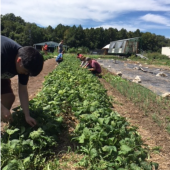
Abstract: This research explores the role that place attachment and place meaning towards an urban farm play in predicting undergraduate students’ civic-mindedness, an important factor in sustainability and social change. In 2017 and 2018, three STEM courses at a private university in the Midwest incorporated a local urban farm as a physical and conceptual context for teaching course content and sustainability concepts. Each course included a four to six-week long place-based experiential learning (PBEL) module aimed at enhancing undergraduate STEM student learning outcomes, particularly place attachment, situated sustainability meaning-making (SSMM), and civic-mindedness. End-of-course place attachment, SSMM, and civic-mindedness survey data were collected from students involved in these courses and combined with institutionally provided demographic information. Place attachment and SSMM surveys, along with the course in which the students participated, were statistically significant predictors of students’ civic-mindedness score.
Continue Reading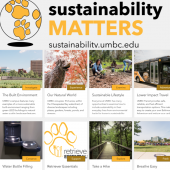
Abstract: Does the use of an interactive GIS web map significantly influence the level of sustainability stakeholder engagement at institutions of higher education? With over 1,000 institutions of higher education across the globe, the AASHE STARS report is one of the main tools available to sustainability professionals. For many institutions, the STARS report serves as a metric of sustainability progress and a source of new ideas and methods, while GIS provides a platform to display information within a context of systems, places, or times. Interactive web GIS allows for digital storytelling and can allow the user to explore specific information pertinent to their interests. This research explores potential links between the use of web GIS platforms and levels of campus engagement as measured by STARS.
Continue ReadingAbstract: I was slow in coming to see the desperate need of sustainability education, in part because of a missed opportunity in my field of outdoor adventure education (OAE). Although a burgeoning set of scholars agree that OAE is strategically placed to educate for sustainability, little change within our discipline has occurred. To encourage the transition, this paper has four central aims. First, I contextualize the implications at stake by summarizing recent scientific predictions around climate change. Second, I differentiate sustainable OAE into the sustainability of OAE (e.g., its practices, footprint size, etc.) and OAE for sustainability (e.g., curricula that promotes education about sustainability), noting that despite long-standing petitions to address both, progress has been made in neither. Third, I celebrate, with others, the inherent potential that OAE has to promote sustainability through its educating in natural environs, within living/learning communities, which utilize physical/sensory, affective and intellectual ways of knowing that inspire critical impulses. Fourth, I outline the central changes that need to occur in order to create sustainable OAE. The foremost change needed is for OAE programs to curricularly commit to promoting a sustainability worldview, including values, knowledge, dispositions, and agency related to environmental, social, and economic justice. However, change of this depth will require a revision of OAE course offerings that allow for multiple and prolonged participant engagement over time. Such engagement, then, necessitates that OAE shift its emphasis from remote and sublime landscapes, to programs that not only connect participants to the places in which they reside, but cultivate a care and affection for them. This appreciation can be created through a combination of adventurous learning and microadventures. In sum, “local landscapes, far more often, as a way of life” encapsulate the changes OAE might make in contribution to the global need of sustainability.
Continue Reading
Abstract: Sustainability education can productively focus on concepts and/or skills, each playing an important role in preparing students to promote sustainability in society. We describe here the skills-based curriculum in an environmental sustainability practicum designed for undergraduate students. Although our curriculum provides training in numerous relevant skills, we focus here on one in particular: scenario planning. Originally developed in the 1970s by Shell Oil to develop robust business strategies in the face of future uncertainties, scenario planning is applicable to any planning domain where future conditions may be driven by the outcome of critical unknowns. For example, planning for effective community resilience in the face of climate change may depend on the degree of government support for renewable energy systems. In this practicum, students work in teams of 3-4 on the same challenge: Assess a specified human-natural system for its vulnerability to climate change in the next 20 years and develop solutions that effectively increase the resilience of the system in the face of uncertainty.
Scenario planning involves six steps: (1) Identify driving forces for future changes; (2 and 3) Identify certainties and uncertainties for future conditions; (4) Rank uncertainties by the degree to which they might affect future conditions; (5) Create a 2×2 grid of possible future scenarios based on the two most influential uncertainties; and (6) Describe the future world in each of these four scenarios. Using creative ideation techniques developed by IDEO for their Human-Centered Design methodology, students then use these four scenarios as the basis for envisioning effective strategies for promoting resilience regardless of how the critical uncertainties unfold (adaptive planning) or for influencing uncertainties to increase the probability that preferred scenarios manifest.

Abstract: We investigated the success of the Koala Conservation and Education Programme conducted in Ballarat, Victoria, Australia from 2000-2009 by interviewing 28 individuals, from various stakeholder groups involved in the project. Transcripts were analysed using grounded theory to identify common themes, keywords and phrases. We conclude that the chosen ‘flagship’ species, the Koala, was crucial for the success of the project which culminated in the adoption of the Koala Plan of Management and habitat overlays into the City of Ballarat’s planning scheme. Local people were concerned about the Koala based on its conservation status nationally and globally rather than because of its local or Victorian status. We conclude that the concept of ‘flagship’ species in the case of the Koala, is more a global than a local construct.
Continue Reading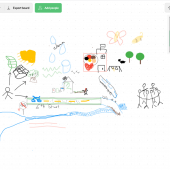
How do we help students (and ourselves as instructors) prepare to engage in sustained action in the face of climate change and its root causes of extraction, inequity, racism and colonialism? In this article, we elaborate on the conceptual and practical challenges in preparing students for sustained action to imagine and enact a compassionate and sustainable future in the face of climate change. We discuss our integrated teaching-research-engagement approach aimed at examining the potential role of compassion as a transformative practice for reducing long-term risks from natural hazards and climate change. We provide summaries of and reflections on a pair of courses taught in 2019 and 2020 that explored, respectively the inner personal dimensions and external relational dimensions of professional work to reduce climate risks. We conclude by detailing some of the lessons we’ve learned in the processes of convening these courses and look to future opportunities for growth and sustained action as educators ourselves.
Continue Reading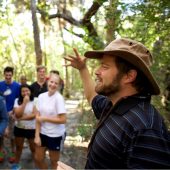
In this paper, I draw from the fields of curriculum studies and the environmental humanities to address the sustainability issues associated with the Anthropocene and to theorize what it means to reinhabit our unique bioregions. I argue that it is time to transgress the fragmented and mono-disciplinary investigations emblematic of the academy by embracing pluralistic ways of knowing and going beyond conventional epistemologies to better understand the cultural forces involved in wicked problems such as climate change. Using autoethnography, I draw from my personal experiences related to higher education for sustainable development while discussing what it means to better appreciate a problem’s intractability and to hold our assumptions open to questioning. Additionally, I make connections to Donna Harraway’s conception of staying with the trouble in the midst of these socio-ecological turbulent times. Accordingly, I theorize what it means to stay with the trouble by learning to “love the questions” inherent to studying sustainability issues while articulating the roles that reflection, storytelling and transdisciplinary scholarship play in (re)envisioning a future that sustains the (more than) human world.
Continue Reading
Abstract: Three decades ago Julius Nyerere (1990) wrote Challenge to the South. In response to the legacy of colonialism, Nyerere challenged the nations of the Global South to advance their development and to free their people. These concerns are as relevant today as they were in the 1990s. Established for the United Nations Decade of Education Sustainable Development in 2005, there are now over 175 Regional Centres of Expertise (RCEs) on Education for sustainable Development (ESD). This paper offers a case study of RCEs worldwide with a particular focus on challenges, and responses, including a focus on the select Sustainable Development Goals (SDGs) of poverty and health. Further, an account is given of RCEs which have attended to the recognition of Indigenous and traditional ways of knowing.
Continue Reading
Abstract: This editorial discusses the intersection of environmental and racial justice and how the movement has failed to center voices most affected by climate change.
Continue Reading
Abstract: Aldo Leopold’s classic essay, “Thinking Like a Mountain,” has been a touchstone of environmental ethics and sustainability education for over seventy years and continues to challenge and inspire wildlife ecology undergraduate students, and many more. But has it lost some power in the face of mounting evidence of accelerating damage and growing threats to the natural world, threatening biodiversity and human society on a global scale? Students and others now need another Leopold story, one that encapsulates an environmental ethic with a call for urgent action, a metaphor that urges not just change, but rapid transformation.
Continue ReadingLink to the Ecomedia Literacy Table of Contents Lopez et al. Editorial Overview JSE April 2020 Ecomedia Literacy PDF Forward from JSE Editor-in-Chief, Clare Hintz: The Journal of Sustainability Education marks its tenth anniversary year with an issue on Water Literacy (published in March) and this issue, Ecomedia Literacy. From a dream of several Ph.D. […]
Continue ReadingAbstract: The field of media education, emerging within the instrumental vision of modernity, has largely ignored its unspoken modernist assumptions. In this article, we argue the time has come to fully engage an embodied view of media from an evolutionary, ecological perspective—what we might call ecological modernism. This is a perspective that views media as evolving mediations through various material/technical practices, where body knowledge, rather than some idea of objective reality, is understood as the empirical ground for how we come to make sense of ourselves and the world. The focus is then shifted from the problem of subject versus object relationships to how subjects and objects are mutually constitutive. By extension, the juxtaposition of the concept of citizen with the body clarifies yet another crucial dimension of the embodied perspective. Two examples of “citizen”-based media education projects are briefly reviewed from this ecological modernist perspective in order to consider the implications of resituating grounded citizen-oriented media education.
Continue Reading
 Journal of Sustainability Education is licensed under a Creative Commons Attribution License.



